This site is dedicated to bringing you interesting information about the community of St. Jacques which is located on the north side of Fortune Bay in the province of Newfoundland and Labrador, Canada.
Mention the Albatross on many parts of the south coast of Newfoundland and folks will say, “Isn’t that the name of Dr. Fitz-Gerald’s boat?” Of course, the answer is yes. He owned two vessels of that name. The first was sunk in 1916. Within a year he had a second small schooner sailing Fortune Bay where he ministered to the health needs of its residents. This one was also named Albatross. The new Albatross served him for the duration of his medical career and was sold near the end of his life to Chesley Yarn of Mose Ambrose who used her for trading along the coast. Where she went after that, I don’t know.
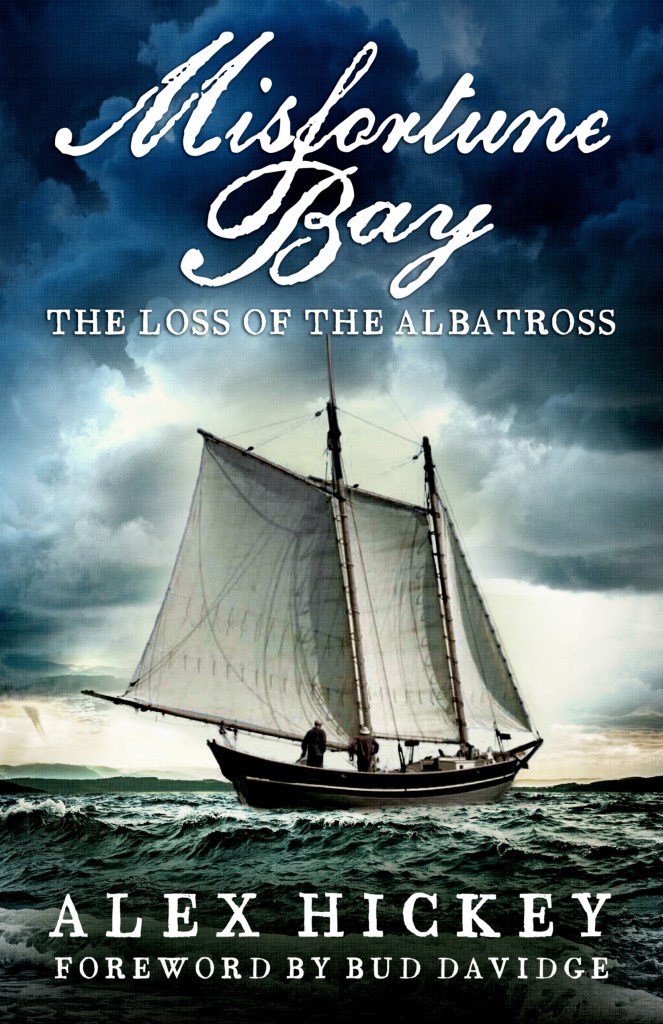
The first Albatross, built by John Cluett of Belleoram to specifications provided by Dr. Fitz-Gerald, is the subject of my book, Misfortune Bay: The Loss of the Albatross. As the publication date for that book neared, I reflected on the fact that no one alive today had ever seen the original Albatross. That would mean that whatever schooner the reader was familiar with would become the ‘Albatross’ in their mind as they read. I have no problem with that. Such is the nature of reading stories.
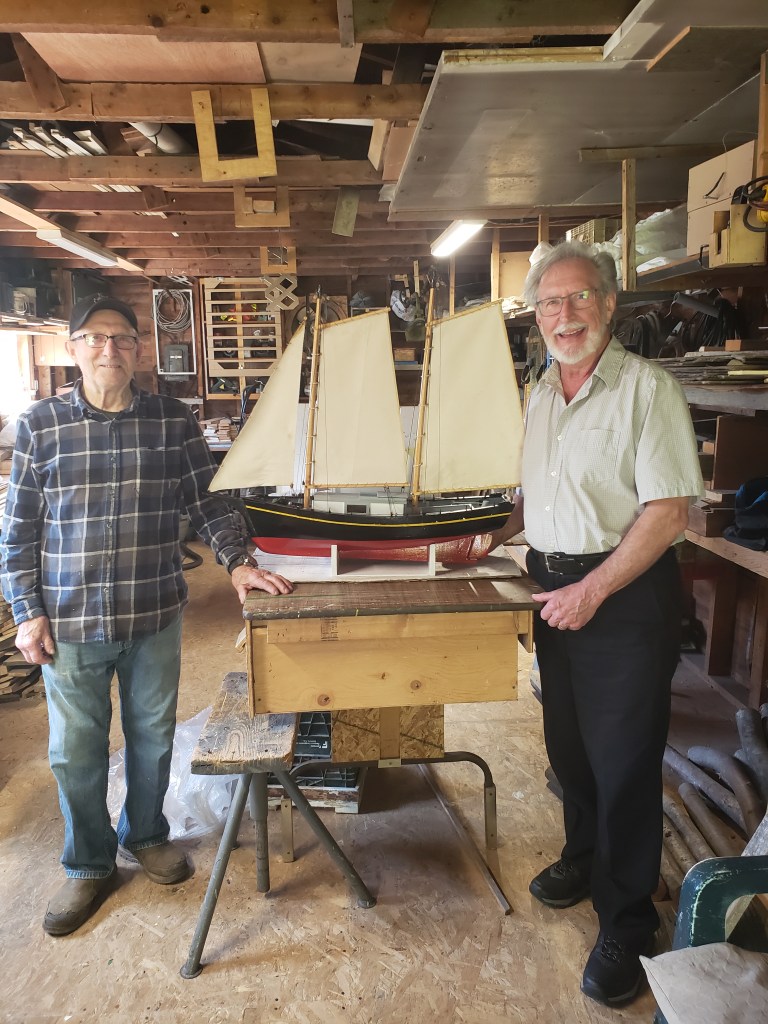
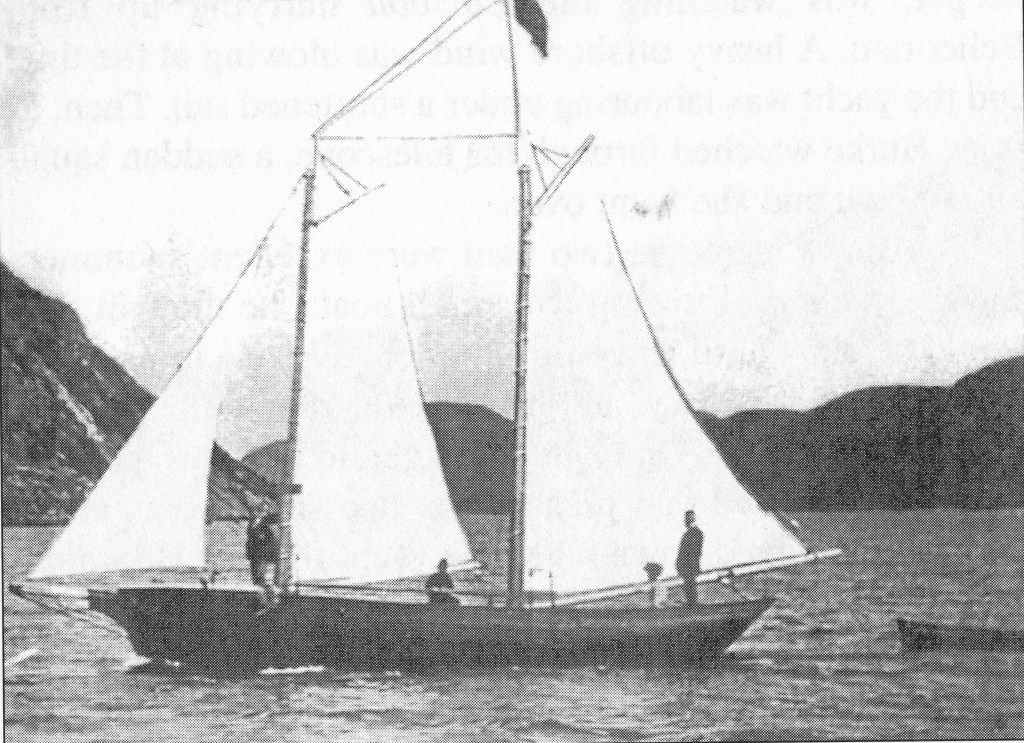
Very few photographs of her exist. Those we do have were included in a biography of Fitz-Gerald, titled The Albatross, written by his grandson Conrad Trelawney Fitz-Gerald in 1935. I included one of them in Misfortune Bay. It occurred to me that I could have a scale model built since all the physical dimensions of the vessel were included in that biography. With those in hand, I went looking for a model boat-builder. I followed a few obvious suggestions but was not able to locate one. Then, I asked my friend Doug Wells in Hr. Breton. He immediately gave me the name of Max Taylor in Baie D’Espoir. Through friends Dave and Doug Jackman from that area, I made contact. Mr. Taylor agreed to give it a try. He doesn’t usually take on custom orders. He builds schooners from his own knowledge and research. He uses detailed templates which he has developed over the years. I sent him a photo of the Albatross, its specifications from the biography and photos of similar-sized Newfoundland schooners. He took a look at the material and told me he’d need a bit of time to clue up a project he was working on. I smiled, for I knew then and there I had reached out to the right person.
A couple of months later I received a call from Mr. Taylor. “She’s finished, or at best I think she is,” he said. I could barely contain my excitement. I felt like driving from St. John’s to the south coast that afternoon! A week later, on a clear, warm, early summer day I set out for the Head of Baie D’Espoir. Mr. Taylor’s directions were perfect. As I drove up the quiet street his shed was easy to spot.
Max Taylor is of a quiet disposition, extremely polite, humble and a great conversationalist. He came out to meet me and walk me back to his workshop. His subtlety was legendary. I entered a long building in his backyard that exuded the most wonderful aromas of different woods, sawdust and paint. This was not a playhouse. There were busy benches, windows that caught the afternoon sun bouncing off the bay, and tidiness that speaks to someone knowing just where to reach to find the things they need. On his workbench that day was a fine-looking schooner receiving paint details, a vessel destined for a niece in New Brunswick. I could hear in his voice the pride and care that was going into every detail because he knew well the eyes that would be soon looking upon it. His eyes followed me as I looked around, knowing I was seeking out the Albatross. He smiled and simply walked to the far end of his shed. I watched as he removed a protective sheet of plastic and brought her to the table in front of me. “I wanted to keep the dust off her,” he said. My eyes befell a vessel that had sunk beneath the waves a hundred and eight years earlier. “She might not be perfect. I couldn’t get a good look at her deck from the picture,” He nodded towards the 8 x 10 black and white photograph pinned to the wall above his workbench. The Albatross was hove out slightly on her port side giving a better view of her hull than deck. “I scaled the dimensions you gave me and drew up my templates and built her from there.” I shook his hand and thanked him for his work. I added, “Neither you nor I will ever meet anyone who saw the original. This is as good as it gets.”
He laughed and said, “I guess you’re right.”
We talked about him, his interests in boats, the history of boat-building and shipyards in Baie D’Espoir and his work history. I learned a lot that afternoon, such as who owned particular operations, when they operated, where they were located and the types of boats they built. I also learned how his hometown of Morrisville got its name. As you’d expect, some boat builders settled there with that family name. We talked about particular vessels, especially one he had built several decades earlier, which was still in use years after he sold her.
Max Taylor, like many men from that area, worked a career with the Hydro development on the Upper Salmon or, as it is sometimes known, the Baie D’Espoir hydro plant. After retirement he ran a small contracting business but all the while those schooners in the back of his head called to him. Eventually, he focussed all his energies on model boat-building. During one of our earlier telephone conversations, he told me about the model dories he builds and sells. I left his workshop that day with the Albatross and a bright yellow dory.
Max spends his good weather months at home breathing the familiar scents of the mostly evergreen forest behind his property, the delicate hints of tar from the pine trees which line his backyard and the sea breezes which sometimes come ashore. There he works with enormous care and attention to detail, taking raw materials, and, piece by piece, assembling them into objects that have art written all over their surface. His calloused fingers show years of hard work but his handshake is like a whisper on the wind. And it is that delicate touch that brings forth such beauty.
As I prepared to leave, Max made sure the Albatross was secured to her moorings in the back of my truck and would not allow me to leave until he was confident she would not move around and get damaged. She made it all the way to St. John’s without a blemish! When I do book signings for Misfortune Bay: The Loss of the Albatross, this Albatross is proudly displayed. I tell everyone the good fortune I had in finding such an excellent craftsman as Mr. Max Taylor of Baie D’Espoir.
Father’s Day is fast approaching. Misfortune Bay: The Loss of the Albatross will make a great gift for any dad who enjoys a good sea story or is deeply interested in the rich and fascinating history of people and ships of Newfoundland and Labrador. Give him a book that will take him back to 1916 and the tragedies and triumphs of men and women whose lives were governed by the ocean at their doorstep. I will be at Coles Bookstore in the Avalon Mall for a book signing from 1:00 to 2:00 on Saturday, June 15th.
Misfortune Bay: The Loss of the Albatross will be on bookstore shelves after June 7th. Pre-order your copy online at Flanker Press today. Online orders over $50.00 receive free shipping. Order with your friends. The book will be available throughout Atlantic Canada where books are sold and as an e-book at major online book sellers.
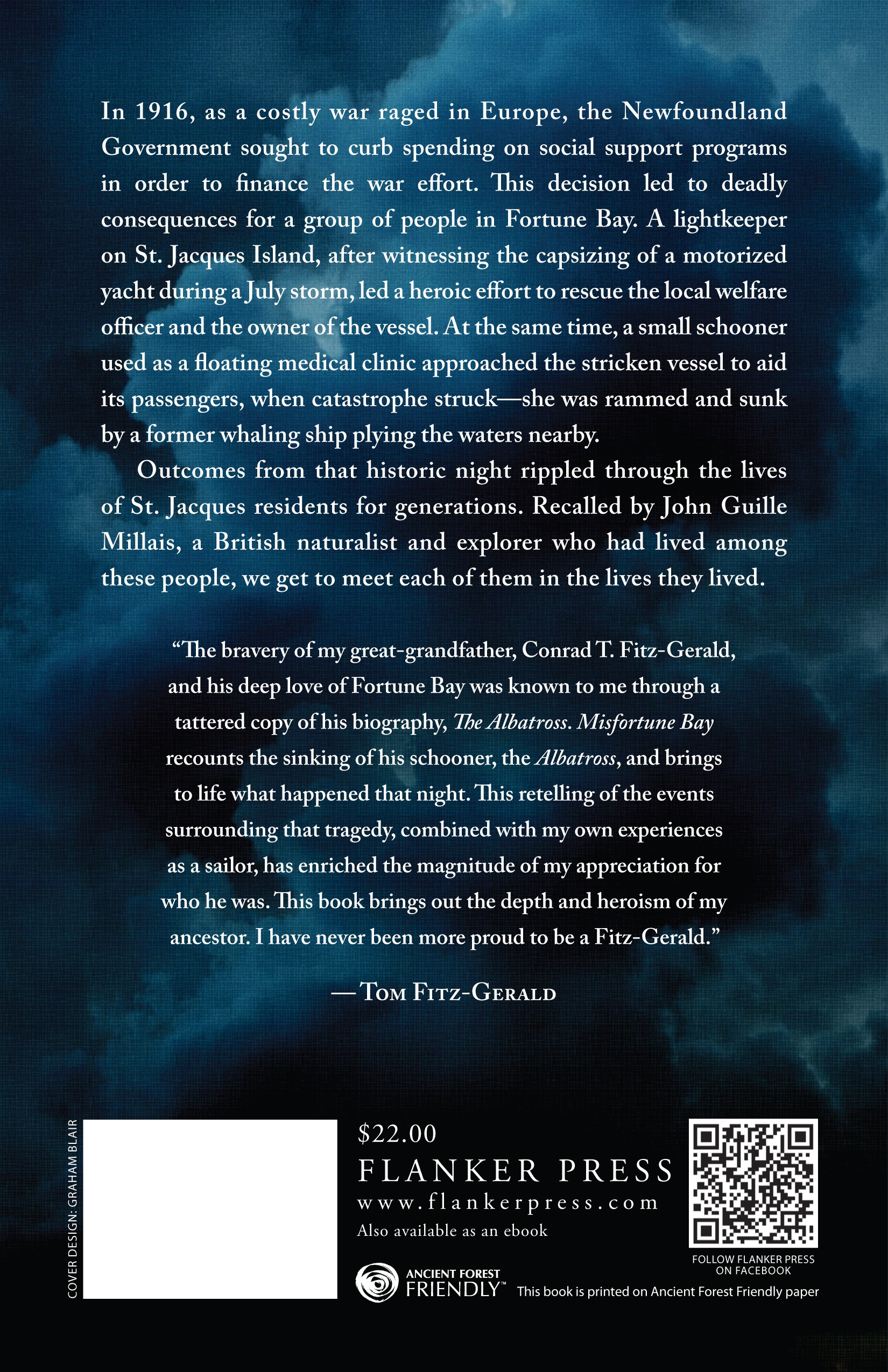
Storytelling is at the heart of how we keep our heritage and culture alive. The story behind Misfortune Bay has been told in brief format by other authors over the years. However, I wanted to know more about what happened, who the characters were and how they lived. This book is the result of my curiosity. It reaches into the lives of those affected by the events of July 1916 in Fortune Bay, explores who they were, and how they all came together on one disastrous evening.
Dr. Conrad Fitz-Gerald, Lightkeeper Isaac Burke, Welfare/Customs Officer Harry Clinton and Telegraph Officer Phillip Ryan were all friends whose journeys intersected many times over the years. That night, the SS Hump, a steel constructed former whaling ship and the Albatross, a small wooden schooner used as a floating medical clinic, converged in stormy waters between St. Jacques and Belleoram. This is their story.
Misfortune Bay is available for pre-order from the publisher, Flanker Press.
More information about Dr. Conrad Fitz-Gerald and his medical schooner, The Albatross may be seen on my Blog page The Albatross.
Time and distance seem to shape our memories of Christmas more than anything else. As Christmases of our childhood and youth fade into the past with the inevitable passage of the years, they take on a nostalgic aura. Central heating was not a luxury in many houses in rural Newfoundland. It just didn’t exist. We can talk about icy cold floor canvas that left your toes numb after a minute of standing barefoot in the morning or fingers without sensation from being exposed to chilling wet mitts from hours of play in the snow. We could also talk about the bitter winds that came in off the ocean that threatened to peel the skin from your face or the chapped lips that cracked with piercing pain every time you moved your lips to eat. Yet, we choose to recall the warm stove in the kitchen where we melted our frozen fingers, where soft, woolen, hand-knit socks hung waiting for eager feet. We talk about watching whitecaps on the harbour and marvel at the recollection of snow drifting past the window and the tasty delights placed before us upon visiting another’s home.
Christmas Eve church services in small communities were great levelling forces. Most residents found it an occasion to step beyond any differences they may have had with a neighbour, to mend fences and share a common experience under the same roof. They brought people together with a communal purpose and reaffirmed being a community. I’ve read accounts of attending such services from recent years, as well as from the fifties, the thirties, and even the 1890s. They all share references to togetherness, even if it was only for an hour or two. You find it in recollections of singing familiar hymns, hearing notable voices, and sitting as a family in the same pew.
We recall arriving early to get a place to sit, or else you’d be standing at the back of the church. We remember the heat from the stove, steam on the windows, the smell of burning candles, the scent released by freshly cut evergreen boughs which decorated the place, and the mingling that occurred after the service ended.
If there was a children’s choir, we tell of watching and listening with enormous pride as the little ones sang their hearts out louder and better than anyone else’s child. The fullness of one’s heart swelling in response and the warm tears that trickled down both cheeks were shared not with words but through a quiet, knowing nod and a genial smile at one’s neighbour. We remember those things, and it makes us feel good for a few minutes, then we move on. If we reflect on those feelings about the Christmas Eve service, we will realize it was not a spontaneous event of an hour’s duration that happened automatically. People invested many hours of their time, day and night, to bring it all together in that warm fuzzy experience we’ve wrapped in ribbons and bows. The choir met with the organist and the clergy to decide which songs and hymns to sing, rehearsed them until they flowed as smoothly as the syrup of the season, and then forfeited the opportunity to witness the event from a pew with their families to bring smiles to the faces of the congregation as a whole. Several people took time out of their day to go into the woods, choose the right branches to cut, harvest and transport them to the church, where others volunteered to trim, shape and tie them into uniform arrangements and decorate the church. That smell of the forest that permeated the church and embedded itself in our memory as the temperature rose was there because a group of people cared enough to collaborate and make it happen.
Frost had been driven from the windows earlier in the day, and the pews had relinquished their chill before the first congregation member arrived because the wood had been harvested months earlier, dried, sawed and split, then stored for winter use. Someone else had lit the fire early afternoon, tended to the stove and returned intermittently throughout the evening to keep it fed with fuel. The floors, pews, walls, windows and altar sparkled with cleanliness as a result of volunteers, who, a week earlier, laboured throughout an afternoon on hands and knees to give everything a fresh lustre.
Brass received an energetic polish from confident hands the day before. Altar linens were laundered, dried and ironed to perfection in someone’s home, then carried to the church for another person whose role it was to prepare the altar for the evening. Vestments were laid out, books positioned on the altar, and opened to the readings of the occasion by familiar fingers. Music sheets were organized in advance by the same hands who practiced playing them for several days.
Bells rang loudly from the steeple, carried across the water and echoed off the surrounding hills and invited everyone to worship because the skill of yanking a rope to create the perfect sound sequence for the event had been learned and practiced over time. Snow on the walk leading to the church door could be seen in piles on both sides, and the steps were bare. Small water puddles meant someone had applied salt to ensure everyone’s safety.
While the last note of the organist followed people down the aisle, an oft-repeated comment accompanied it – “It’s nice to see the church so full. There’s something about Christmas Eve that draws people out. But, by next week, we’ll be back to the regular old crowd.” All three observations give us insight. On Christmas Eve, we all wanted to be part of something bigger than ourselves, and there was a group of dedicated volunteers in the community who, like the stage crew of a theatrical performance, worked diligently and expertly to ensure that experience for us. Years later, as the season draws nigh, our minds wander back to those experiences and fondly remember the sights, sounds, smells and joyous feelings we derived from them. We wax eloquently and readily express regret that such events don’t happen on the scale witnessed years ago. Wouldn’t it be nice to go back, we say to kindred spirits. Indeed, it would. However, there is quite a lot of living in between that would have to be forfeited.
As we recall the Christmases of yesterday with our friends this year, let’s remember that the magic we remember with such affection didn’t occur in a vacuum. Many hands worked diligently behind the scenes to pull the strings to create that magic. Let’s remember them and ask ourselves if we’ve gone the distance lately to make magic happen in someone else’s life. If not, it’s time to help someone else experience a Christmas to remember.
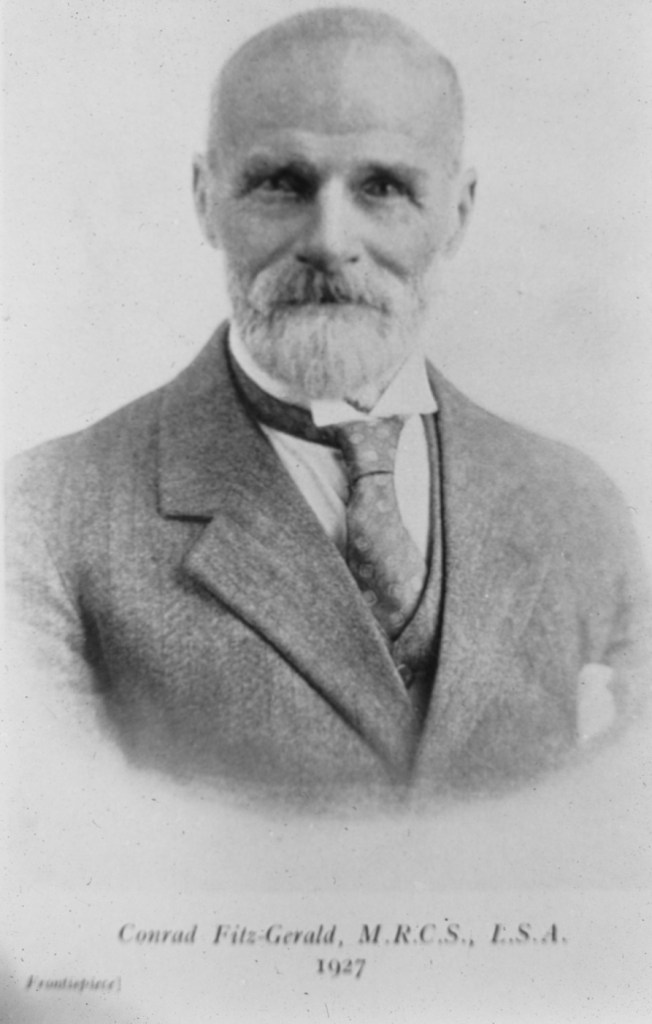
Doctor Conrad Fitz-Gerald lived and worked in St. Jacques from 1902 until his death in 1939. Prior to moving to St. Jacques he had been employed for twenty-seven years by Newman and Company in Harbour Breton as the company doctor. In that capacity he ministered to the medical needs of residents throughout Fortune Bay. The only mode of transportation was either walking overland or by water. At first he used company vessels but soon realized the need for his own.
Dr. Conrad T. Fitz-Gerald M.R.C.S., L.S.A., 1927
A book titled The Albatross, written in 1935 by his grandson, also named Conrad Fitz-Gerald, provides us with a description of getting a small schooner built and outfitted. It gives quite a detailed account of the vessel which was so familiar to the communities around Fortune Bay until its unfortunate loss in 1916.
Dr. Fitz-Gerald approached several people, in Harbour Breton without success, concerning the building of his boat. He was advised to visit Skipper John Cluett of Belleoram which is located about twenty miles further into Fortune Bay. Cluett was well known for his skill in building boats of all types and sizes. A trip to Belleoram ensued and after a lengthy discussion the two reached a contractual agreement. John Cluett agreed that, for a sum of fifty pounds, he would build a yacht of about seven tons. Fifty pounds would be approximately five thousand of today’s Canadian dollars.
Throughout the winter of 1875 Dr. Fitz-Gerald carried out his medical practice visiting all parts of Fortune Bay in Newman and Company sail boats and, as often as not, in row boats or on snowshoes through the wilderness between settlements. By the arrival of spring he had decided that an appropriate name for his new yacht would The Albatross. The albatross is a bird he had seen many times during his years at sea while serving on a British Naval Ship in the southern hemisphere, notably near Australia and India. He had served as ship’s doctor on the seventeen hundred ton sailing ship Anglesey. The author states that Dr. Fitz-Gerald had witnessed those large birds “swooping majestically over breaking seas, and he had thought that if he ever owned a ship he would like it to weather wind and wave as bravely as they did.”
During the winter he acquired a piece of hard wood from which he carved a figure-head for his yacht. After many hours of carving and painting he produced “a beautiful gilded and accurate model of an albatross head,” which he would install on the prow of his ship.
The Albatross in Hr. Breton
On June 15th 1876 the doctor received a message from Skipper John Cluett informing him that his boat had been launched and was waiting for him in Belleoram harbour. With great excitement and anticipation, he arranged for a crew to convey him to Belleoram to take possession of her. His grandson wrote, “As he stepped on the deck of his little schooner he little thought that for forty years she was to be his close companion, conveying him through storms, tempests, and calms on errands of mercy in the service of several hundred rugged fishermen and their families.”
In the logbook of the Albatross, which contained an account of every voyage he made during his many years in Fortune Bay, he recorded the following:
Schooner Albatross, built at Belleoram by John Cluett during the winter of 1875-76.
Length of keel 25 ft.
Length overall 30 ft.
Length of mainmast 30 ft.
Length of foremast 28 ft.
Length of topmast 12 ft.
Beam of 9 ft.
Draught aft. 4 ft. 9 in.
Draught forward 2 ft. 9 in.
The boat was rigged in much the same way as a regular schooner. The Albatross carried “a jib which was attached to a jib boom about twelve feet long, a foresail and mainsail. Just forward of the foremast a ‘gipsy’ windlass was erected.” The masts were about seven inches in diameter at the base and installed to slope slightly backwards towards the stern. The rigging was of rope typically used on most schooners of that day. The builder had placed three rows of reef-points in the mainsail, two in the foresail and one in the jib. Years later he replaced the rope with wire.
The Albatross had a rail eight inches high around the deck. At various points were wooden pins used for the purpose of securing the sail ropes. The cabin, located amidships taking up almost all the space between the masts, was ten feet long and about four and half feet high. Its roof protruded about eighteen inches above the deck. There was enough room inside for two sleeping berths and two seats. Space beneath the seats was used for the storage of food.
There was a space about six feet by five feet by three feet for standing room aft of the mast. This was cut into the deck to allow the helmsman some degree of protection from the weather. Under the deck, between the cabin and the standing room, was the main storage locker which, in addition to food storage, was also used for storing extra canvas, rope and other boating essentials. The author states that “a four-foot iron tiller was attached to the rudder-head, and the steersman from the standing room could control the tiller, main-sheet, fore-sheet and jib-sheet.” Ballast, a critical addition used to keep the boat balanced and steady, was stowed under the beams. Cluett used two tons of iron chain which was probably salvaged from retired vessels.
On June 15th Dr. Fitz-Gerald left Belleoram in charge of his first ship, and the life of the Albatross in Fortune Bay had begun. The following extract is taken from his logbook:
June 15th, 1876.-Left Belleoram at 9 a.m. Wind very light from S.W. to N. Fog dense with very heavy showers. Arrived at English Harbour West (nine miles N.W. from Belleoram) at 3 p.m.
June 16th. – Left English Harbour at daybreak and arrived at Coomb’s Cove (nine miles N.W. from English Harbour) at 4 p.m.
June 17th. – Left Coomb’s Cove a dawning. Wind westerly, foggy, passed many Turrs. About 9:30 a.m. anchored at Harbour Breton. Occupied in painting and fitting out until the 30th.
This was but the beginning of work for Doctor Fitz-Gerald as he laboured to make the Albatross ‘seaworthy and presentable’. Painting was the first order of business – red below the water-line and black above it. A yellow streak about an inch wide was also added which ran the length of the vessel on both sides. He fitted her with two heavy anchors of one of one hundred and twenty pounds and another of eighty pounds to replace the light anchor which came with her. Thirty fathoms of half-inch iron chain was attached to each anchor.
The vessel was examined thoroughly for leaks, including the seams of the deck, and all necessary work done to stop any water seepage. A small window facing the bow was added to the cabin to permitting a view of the deck and allow natural light to enter. It was covered on the outside with an iron grating. A small stove was set up in the starboard for’ard corner suitable for burning wood or coal. Berths were prepared by fitting wooden frames with netting upon which mattresses stuffed with shavings were laid. Eventually, blankets and pillows completed the sleeping quarters.
An emergency rope of two-and-a-half-inch warp, thirty-two fathoms long was coiled and stored on the stern for emergency use. Cabin lockers were filled with such things as a compass, lanterns, a sheath-knife, a lamp, flag, an axe, and various other things he anticipated he would need at sea.
A local cooper in Harbour Breton made a small oak water-keg which was kept aft tucked into the coil of emergency rope. Several of the carpenters employed by Newman and Company a very efficient bilge pump. To complete the deck side additions, iron mooring chocks were installed on each side of the bow and the stern.
In the cabin, according to his grandson, he placed “an important piece of furniture, a medicine chest given to Dr. Fitz-Gerald by his predecessor, Dr. Brunton. This chest was kept filled with useful drugs, and also a supply of surgical instruments. In the after hold a quantity of coal and wood was stored and a zinc-lined bread box. Another box contained cups, plates and cutlery, also some molasses and hard biscuit. Other eatables, such as butter and canned foods, were kept in the lockers. On the walls of the cabin hung a clock, mirror, and several shelves, which as time went on were heaped with many odds and ends.”
When the Albatross was ready for her maiden voyage all that was missing was a lifeboat. A small boat was borrowed and on June 30th1876 with the red ensign flying, and all sails drawing, the Albatross sailed out Harbour Breton harbour into the waters of Fortune Bay for the first time. At the helm was Doctor Conrad Fitz-Gerald accompanied by a two close colleagues for the inaugural voyage. He repeated this journey many times from his home base of Harbour Breton until he left Newman and Company in 1902 after which he moved to St. Jacques and established a private practice. From his clinic he carried on ministering to the medical needs of Fortune Bay residents until old age prevented him from doing so.
In 1916, the Albatross, while on a search and rescue mission, was struck amidships by the S.S. Hump which had joined the search efforts late into the evening. Wrongly assuming the Albatross was the distressed vessel, the captain set a direct course for her mast lights. By the time Doctor Fitz-Gerald realized what the captain of the Hump was probably thinking it was too late to successfully carry out an evasive maneuver. He desperately tried to get out of the way of the Hump but the Hump followed suit thinking the wreck was drifting. The Albatross was a total loss. He commissioned a second, similar vessel, named it the Albatross, which served him until his retirement.
Source
Fitz-Gerald, Conrad Trelawney. The Albatross: Being the Biography of Conrad Fitz-Gerald, M.R.C.S., L.C.A., 1847-1933. Bristol, Great Britain: J. W. Arrowsmith Ltd. Quay Street, 1935.
Flanker Press will be publishing my account of the tragedy of the night the Albatross was sunk in 1916, in Spring 2024. Watch for Misfortune Bay, by Alex Hickey.
Imagine yourself at the helm of a fishing schooner whose crew is casting its lines from the wharf. You are departing on a trip to the Grand Banks. Your only source of power is the wind. There is no engine to rely upon. Nor is there a tugboat to render assistance. If lucky, you might catch a breeze right there at the wharf. If not, how will you get the ship away from the wharf and out into the harbour where the sails can catch the wind?
Unlike a dory, you cannot stick a pair of oars over the side and row. A mid-size schooner, such as the Marion, would be approximately 70 tons, about 65 feet long, 20 feet wide and draw about 8 feet of water. Setting such a vessel in motion from a dead still position at the wharf presents a challenge. You have thirteen crew men who have done this before – how is it done?
You could drop your dories into the water with two men in each, daisy-chained together, and have them tow the vessel out into the harbour. That has been done many times. Below is a picture of the Robert Max being towed this way in St. John’s Harbour.
Robert Max. Maritime History Archive Public Photo – Memorial University
Or, you could do it differently.
In St. Jacques harbour, west of Pitman’s Brook, there used to be a large floating object. Secured by an anchor system whose claws were embedded in the ocean floor, the object would rise and fall with the tide, swing with the currents and bob up and down with the waves. Residents were accustomed to hearing the metal clang of the anchor chain against the object all through the day and night, so much so that most of them no longer noticed the sound. It was part of the background music to daily life. Some said they could predict bad weather by the sound.
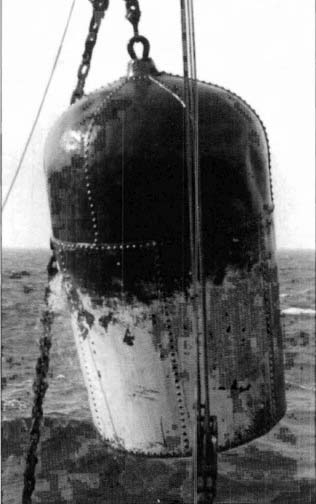
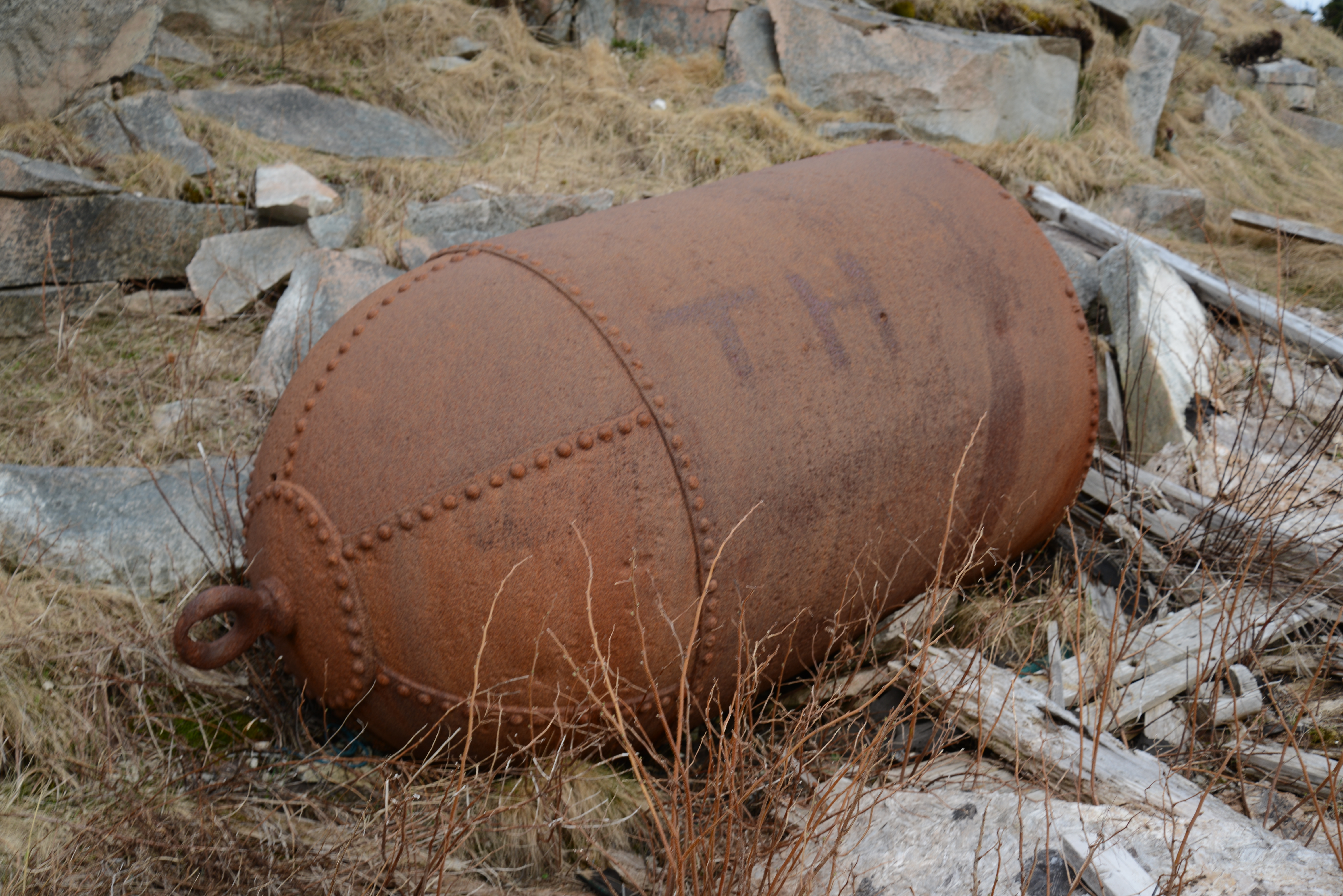
This was an Iron Buoy – an innovation that makes all of the sense in the world when you know how it worked. Though painted regularly, rusty brown patches continually appeared; none of them serious enough to penetrate the thick hull. It resembled the buoy illustrated below. You can see where the anchor chain was attached.
Round, and oblong with a tapered end, it measured approximately eight feet in length and five feet in diameter. It was made of cast iron, and assembled with rivets. This buoy is variously referred to as ‘nun buoy’ or ‘can buoy’ although a true nun buoy was tapered at both ends. The term ‘nun’ is said to be derived from the name given to an old English spin-top type toy which held a similar shape. Though typically used as a navigational aid to direct vessel traffic through a waterway, this buoy was dedicated to the need to move sailing schooners out into the harbour. At its top was a large hoop designed for attaching ropes. A sailing vessel would attach a rope to this buoy and use its hand-operated windlass or deck winch, to slowly pull itself out into the harbour until it caught the wind.
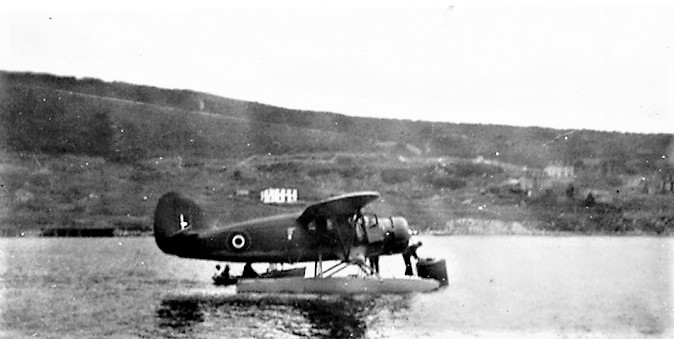
Time brings about change whether we like it or not and the days of sail powered vessels came to an end leaving many of the schooners to rot by the shore and the skills, tools and devices that shaped them, to fade. The Iron Buoy, however, remained anchored in St. Jacques harbour for many years. Dories would tie to the buoy during evenings when the squid were running, one to the buoy and others to each other in succession. It was useful to local boat owners such as Edgar Dyett who frequently moored the White Knight there or Philip Hynes who also used it to moor his boat as well. Then, there were the occasional visitors such as the seaplane shown below which found it a convenient place to secure anchor while dropping off its passenger, Harry Young, in the 1940’s.
Seaplane being secured to the Iron Buoy 1940’s
One dark night during a storm the Iron Buoy succumbed to rust. Its shackle broke from its chain and anchor, and the buoy drifted out the harbour. It came to rest on the beach in Louis’s Cove. George Hickey approached the captain of the coastal boat, Bar Haven, and asked if he would retrieve the buoy. The captain generously agreed. The buoy was transported to the government wharf and deposited at the eastern side of the wharf where it has been sitting ever since. Several generations have run their hands along its rough side in their walk along that path, oblivious to its importance in the sailing history of the community.
The Iron Buoy at rest near the St. Jacques Harbour Authority Wharf
This wasn’t the only Iron Buoy in St. Jacques Harbour. There was another positioned outside the entrance to Burkes Cove. The demise of that Buoy began on a Halloween night in the 1930’s when several enterprising young dare-devils used the buoy as a base for a bonfire. The heat from the fire either melted or burned the seal at the top of the buoy. Over time the buoy took on more water until it eventually sank. It is probably still attached to its anchor assisting the ghosts of schooners to start their voyage out the Bay.
Gone now are all of the fishermen who used those Iron Buoys to get their schooners away from the dock. Gone too are their schooners and their wharves. We are left to ponder the remnants and remember in the words attributed to Lord Nelson, those ‘wooden ships and iron men.’
The image of Santa Claus carrying a sack overflowing with wrapped presents has been on Christmas Cards for generations. He wears a red suit and carries a sack which is almost always green. As a young child in St. Jacques, I did not see a department store Santa or any red-suited character parading around my space. My Santa was the one depicted on a greeting card; a smiling, red-cheeked, white-haired man whose face filled the entire front of the card. Every year in December, as the cards piled higher, there he would be with that engaging smile and twinkling eye.
Strangely enough, he arrived in a sack himself. There was no door-to-door mail delivery in our community. Everyone went to the post office and stood in line to have the postmaster pass them their mail through a wicket. When December rolled around, the volume of mail arriving on the mail boat increased dramatically. Thick, grey, canvas bags with a drawstring at the top, and a padlock for security, bulged in comparison to other months.
Inside those bags were social networking devices – Christmas Cards. It was through them that we maintained yearly contact with relatives and friends. Oh yes, some folks wrote letters back and forth. However, the Christmas card was a collective communication tool. It said so on the outside of the envelope, with two words in the address line “… and family.” That meant everyone in our house. Each card with unfamiliar names, was examined thoroughly and an explanation was given, such as “Oh, that’s your great aunt and uncle on your grandmother’s side. They live on Patrick Street in St. John’s.” Some cards had lengthy, hand-written notes inside the cover informing us of who had died since last December, who was in hospital in July, the names of new babies, where summer vacation was spent or the names of visitors they had hosted during the year. At one level, it seems trivial, yet, it was critical information for it was often the only piece of communication for a whole year. It kept us in contact.
The “list” of those to whom cards were mailed wasn’t a list in itself. It was a combination of memory and whatever cards had survived from the previous year. Thus, cards were somewhat sacred, rarely destroyed or re-purposed until they exceeded a one-year life span. If one wasn’t received from a regular sender, it was noted. Speculation ensued. Was it a case of last year’s card being sent to the wrong address, did their card get lost in the mail, had they decided not to send cards this year, or, most dramatically, did they die? The latter had to be ruled out through inquiries of relatives by correspondence.
The exchange of cards was social networking, entertainment, obligation, family history and genealogical research. I first heard the names of distant cousins and other relatives through these cards, some of whom I would never meet, especially those of my grandparent’s generation. They were impromptu lessons in family history where I learned the names of extended family, where they fit in the family tree, as well as stories of things they’d done and places they’d been, including where they now lived and worked. Many of these names and relationships have stayed with me even though the cards stopped coming from them years ago.
In addition to the Santa Claus image, there were images of decorated Christmas trees, poinsettia leaves, holly berries against green boughs, snowmen, church bell towers, carolers, reindeer, and sometimes a simple, colourful, Seasons Greeting or Happy Holidays.
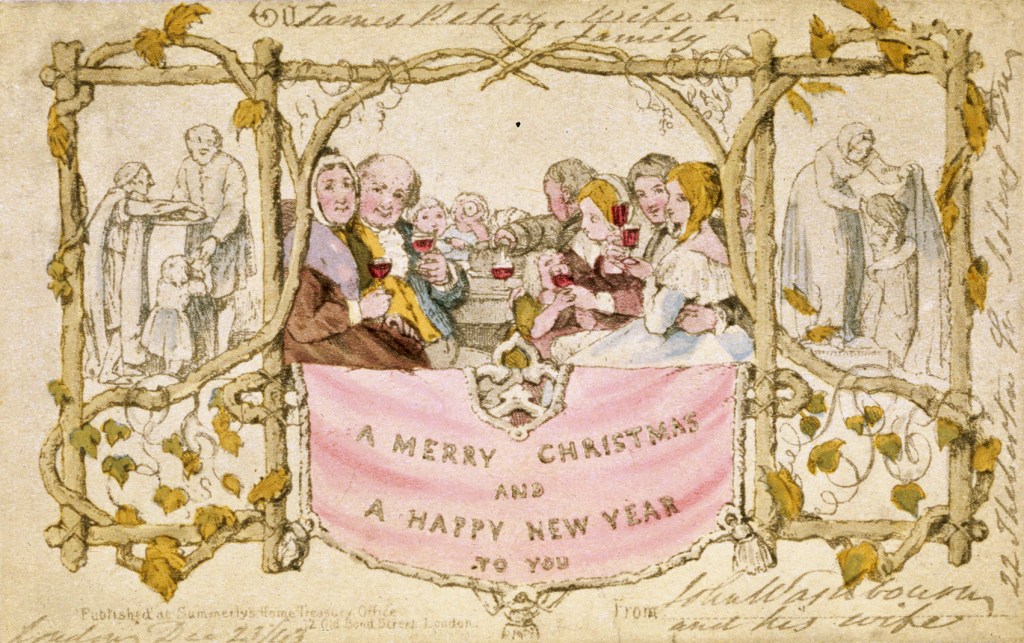
Remembering those cards got me curious about the origin of the tradition of exchanging cards at Christmas. The first documented Christmas card was sent through a mail service in 1843 by Sir Henry Cole England introduced a postal service in 1840. Christmas letters, sent by courier, were exchanged before that. That meant hand-writing a response to every letter received. Cole had a card designed and availed of cheap postage rates to send copies to his friends. The practice spread across the world from there.
Select cards from close family members, or those having a striking picture, were given a place nestled among the branches on our tree. Others were placed throughout the living room, perched on the mantelpiece or end tables. Though neighbours occasionally strung cards on a line in their kitchen, this was not a practice in our house.
Residents noted the time on their clocks when the mail boat arrived, calculating how long it would take to have the mail sorted. Minutes before the post office door swung open, the line-up started. More than once, an anxious customer would check the door to see if it had been unlocked and had gone unnoticed.
Postmasters and Postmistresses were blessed with extreme patience. Over the years, there were many who worked in that capacity in St. Jacques. The first was George Snelgrove from 1877 to 1886. His wife, Julia, assumed the role upon his death and held the position until 1899 when she retired. Patrick McEvoy then stepped into the role for two years. He was followed by Bertha Young when Patrick became a Telegraph Operator. Bertha, or ‘Aunt Buppie’, served as postmistress for most of her adult life. When she retired, the role was filled again by Patrick McEvoy. After his death, his daughter, Elizabeth (Lizzie) McEvoy filled the role. She was, in turn, succeeded by Blanche Fiander. Annie Lawrence had the distinction of being the last postmistress in St. Jacques before the postal services were centralized to English Harbour West and the St. Jacques office closed. How many Christmas Cards passed through their hands over the years, and how much joy ensued?
Despite the stereotypes, the hype, and the crass commercialism, Christmas has retained some things that are still magical. One of these is when I pull a card from its envelope, look at its cover, and then open it to read the hand-written name beneath the verse. That sharing of one’s signature speaks volumes.
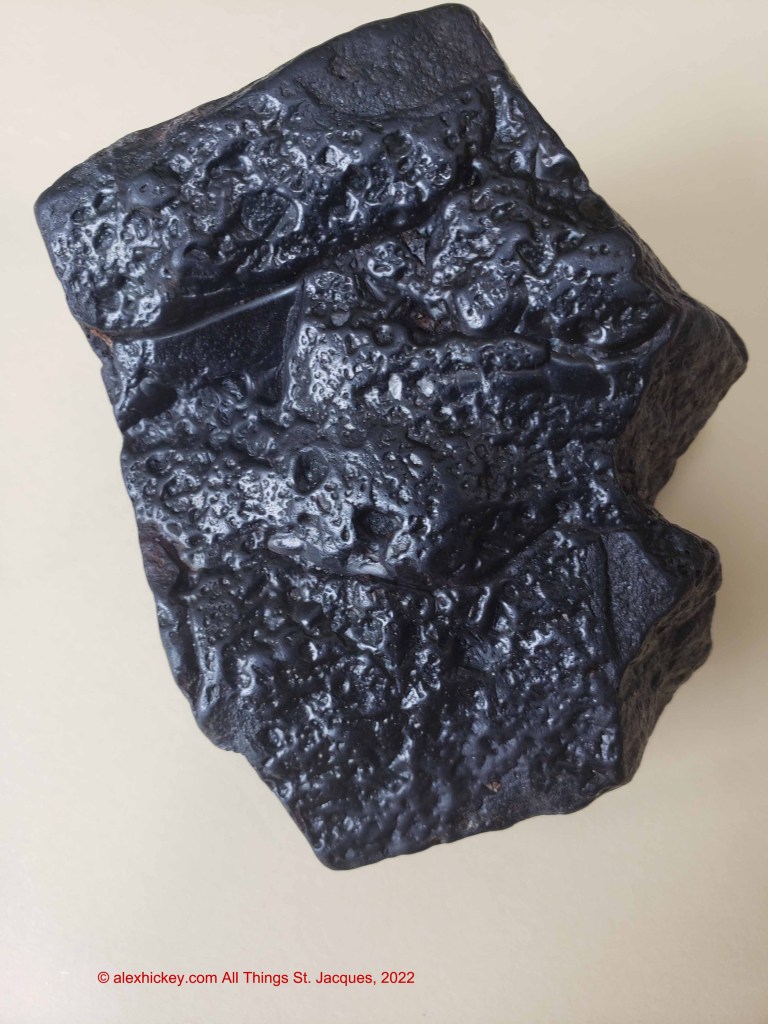
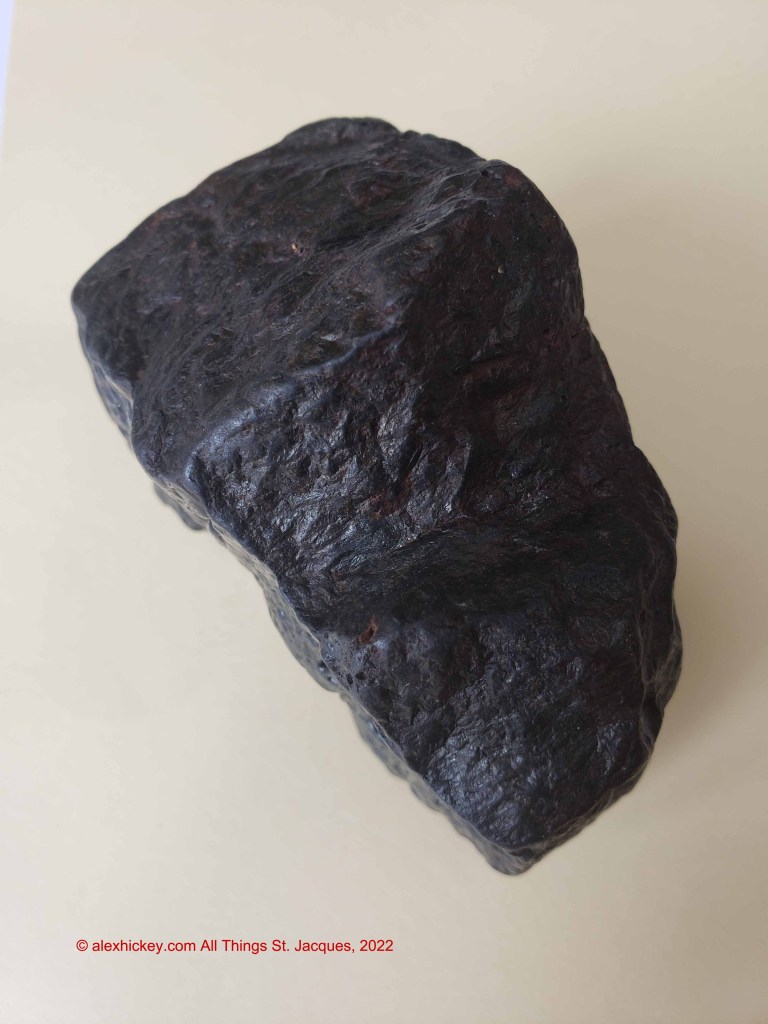
A few years ago I was wandering along the beach of St. Jacques at low tide. I was in that part of the harbour known as Burkes Cove, where, for over a hundred and twenty years the Burke family operated a variety of business enterprises. Therefore it isn’t unusual to find the bottom of a broken wine bottle from Spain, a piece of Chinese porcelain nestled among the pebbles or pieces of green, blue or clear sea glass peering from under a mussel shell. Most metallic debris from their old wharves and schooners has rusted beyond recognition by now so any colour that contrasts with the brownish tones of seaweed is apt to catch one’s eye. That day, something did. A black object about three inches square stood out from the brown, beige, grey and burnt orange rocks surrounding it The falling tide had left it and everything else slick with a sheen of water. Sunlight reflecting from that one particular object seemed brighter than others.
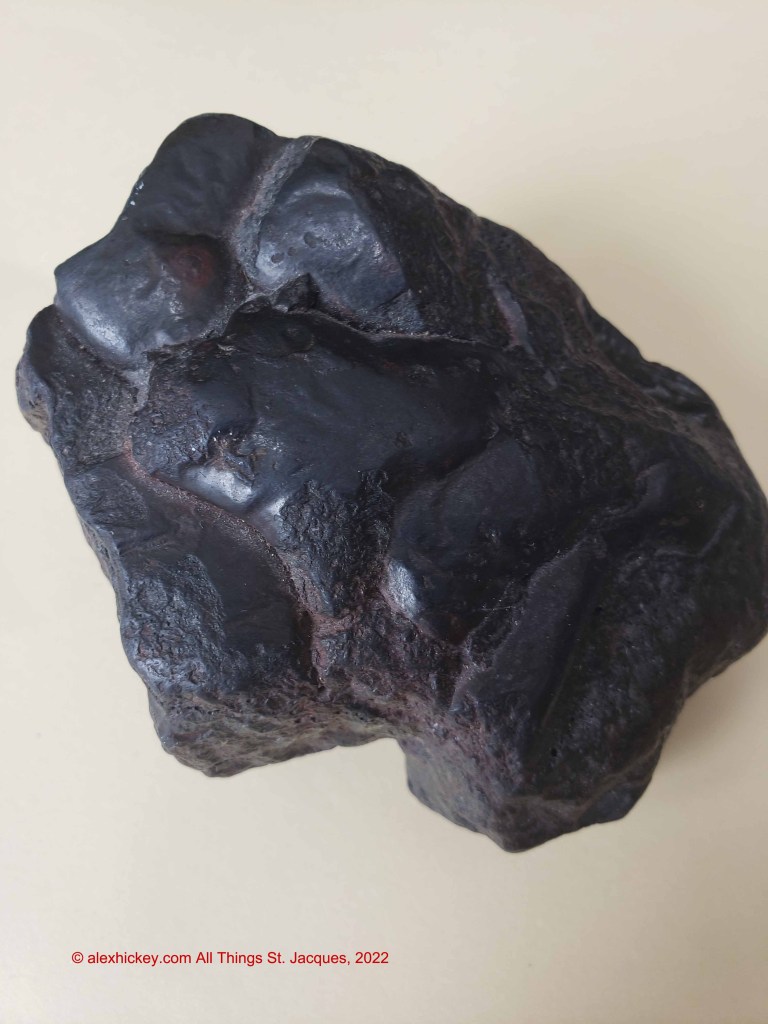
I bent over to examine what had captured my attention. At first, I thought it was a piece of coal. That is, until I picked it up. I was quite surprised at the weight of such a small object. That alone told me I was not handling a lump of coal or a beach rock. I turned it over in my hand to discover the opposite side appeared to have melted. It looked as though a hot bubbling surface had frozen in time. The sides of my newly discovered object seemed to have been fractured, broken away from a larger chunk. I had no idea what I was holding other than it was intensely black and extraordinarily heavy for its size.
Later that evening I was sitting in my living room examining the object and wondering about its origin when I had a flashback to basic high school science on meteors. After a bit of research and further examination, I felt relatively confident I had stumbled upon a meteorite that survived its entry through the atmosphere and had come to rest in St. Jacques.
In 1936, telegraph operator Paddy McEvoy sent a message to St. John’s telling of a great ‘ball of fire’ that had streaked across the sky of St. Jacques and exploded before their eyes! That got me thinking about some of the people who were living in the town at that time and how they might have witnessed the event. Here’s what I imagine three of them might have seen:
Joe Penney, lightkeeper on St. Jacques Island, was in the midst of his afternoon rounds when out of the corner of his eye a brilliant light appeared in the sky. He stopped in his tracks, stared and shouted to his assistant Harry Young. The urgency of his voice brought the faces of his wife Louise and his Aunt Elizabeth to the kitchen window. They stared, transfixed by something they’d never seen before.
Mother Alphonsus O’Driscoll pulled her coat tighter across her chest to keep out the October chill. The Presentation Convent’s front step was one of her favourite places to sit and think. Winds were light and the crisp blue sky was typical of late fall. She was remembering her sister Mother Joseph O’Driscoll who had recently passed on. They had both climbed those same steps for decades, especially during their early years upon arrival from Ireland. She closed her eyes, raised her face to the sun and smiled at the memories. Without warning, everything turned yellowish-orange behind her eyelids. Snapping out of her reveries she was confronted by a flaming ball of fire in the sky. Her hands flew into action forming the sign of the cross as she blessed herself.
Afternoon lessons were almost complete in the crowded one-room Church of England school house. Miss Gladys Price, in the second year of her teaching career, had all of her students practicing cursive writing. She slowly walked between the rows looking over their shoulders, pausing now and then to offer a suggestion. She was guiding nine-year-old Anne Marie Johnson in the formation of a capital G when she heard Melvin Allen, a senior student, frantically call out, “Miss, Miss! Look out the window!” Blazing across the sky was a ball of light leaving a dark trail behind it. “Remain in your seats,” she commanded as she rushed to the window. Students, oblivious to danger, crowded around her staring out over the harbour.
It was October 19th, 1936. What residents witnessed that day must have felt like a biblical account of the end of the world. During the middle of the afternoon around 2:30 a brilliant flaming ball, bright enough to be seen in broad daylight, appeared overhead, streaking at startling speed across the sky, appearing to get closer with each passing second. Men, women and children paused in the middle of what they were doing and stared at the sky, waiting, anticipating, not knowing what until it suddenly turned to a ball of dark smoke and a massive explosion vibrated the air around them and shook the ground beneath their feet. A collective shiver passed through everyone as they watched in awe a column of smoke high in the atmosphere that continued to move forward as it began to lose its shape. They looked around, at each other, at the sky, the ocean and the hills. Everything in the harbour seemed to be the same. Dogs began to bark. They looked in the eyes of those standing nearby with questions and waited to see if another would appear. None did. The speculation began.
By the end of the day postal telegraph reports from communities spread between Fortune Bay and Conception Bay spoke of a similar occurrence. Some places described a fiery object almost twenty feet long falling from the sky and striking the earth. One such site was Dock Ridge, near Avondale. In Placentia Bay a witness reported from Merasheen Island that an object in the sky burst into flames and dropped to earth about twenty miles to the northeast of where he was standing.
An observer in New Perlican, Trinity Bay, reported that an object about ten feet long fell into the water about three miles northwest of the town throwing a large column of water into the air. In Rencontre East, Fortune Bay, surprised residents watched as a ball of fire fell to earth a short distance to the west of their town. A large scar on Steward’s Head, west of Rencontre is still discernable today.
At Burnt Island, Placentia Bay, some believed they had seen a large plane flying in a northeasterly direction which was followed by an explosion. Fishermen at sea reported seeing fiery objects dropping into the ocean sending up plumes of water, steam and smoke. An unsubstantiated report suggested that at least one boat was hit and burned.
The St. John’s Daily News of October twentieth carried this headline, “Meteorites Fall in This Country: Flaming mass was seen Hurtling Through Sky at Several Places.” A headline in the New York Times newspaper on the same date read. “Meteor Shower Sets Skies Aflame: Newfoundland sees Balls of Fire Exploding and Striking Sea – World’s End Feared.”
We know it wasn’t the end of the world. It was an unusual daylight meteor shower. These meteorite showers which occur annually during the month of October and are known as the Orionids with the peak occurring around October 20th. Meteors are leftover particles and bits of rock and ice left behind by comets and remnants of asteroids. When comets travel around our sun they leave in their path a trail of these remnants. Each year in October the earth moves through the trail of a very well-known space object, Halley’s Comet. That comet orbits the sun once every seventy-six years. The last time it did was 1986 and will do so again in 2061. In the meantime there is plenty of debris from the 1986 visit to keep our October skies interesting for many years to come.
When the earth encounters this debris some of it collides with our atmosphere. As it heats up and glows in the sky it become visible to human eyes. At night they are what we call shooting stars that are seen for brief seconds as they enter the atmosphere. Others are larger and travel great distances, sometimes making it all the way to the surface of the earth. When they do, they can appear as balls of fire which pass overhead leaving a trail of smoke behind them as they burn up. Orionid meteors are usually very bright and fast when they come in contact with the earth.
Had a piece of this object survived the intense heat and fallen to the ground in Burkes Cove? Had I discovered a piece Halley’s Comet seventy years after its encounter with the Earth? Possibly. I have not been able to locate any other account of residents witnessing such an event before or since 1936. It is possible that the object, which I am convinced is a meteorite, may have fallen centuries earlier. However, the thought of it coming down to earth in 1936 is more to my liking.
Observing a shooting star in the sky at night is magical. It is like seeing back in time to the early days of human life on our planet when such unexplained occurances raised both fear and wonder. Come October, be on the lookout for a clear night sky, find a spot where there isn’t very much ambient light, make yourself comfortable on a blanket, watch and wait for the Orionids. If you are familiar with the night sky, these seem to oroiginate in the regiopn of Orion, hence their name. They won’t disappoint you. Imagine what it must have felt like that afternoon in 1936 when the phenomenon was witnessed in the middle of the day. There is always a chance the sky might light up as one of these bits of the early Universe gets close to earth before finally burning out with a bang right above your head!
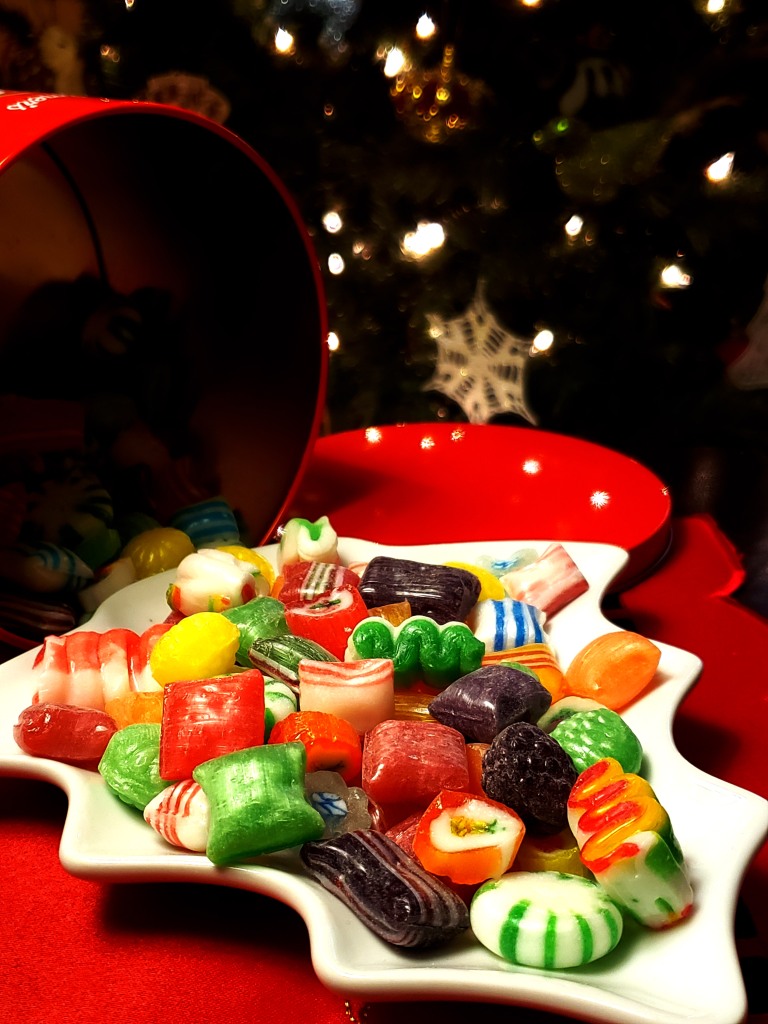
This afternoon I opened a tin of Old Fashioned Candy Mix. You may know the type. In part, it’s what Dolly Parton sings about in Hard Candy Christmas. She also includes candy canes and lollipops as hard candy. The phrase hard candy Christmas refers to times when things were tough and people had little more than hard candy for Christmas. These little sugary lumps remind us that life can be simultaneously hard and sweet.
Waiting inside the tin were oval-shaped pale green candies with a bubbled surface which look like an unripened raspberry. Around them were red, green and white pinwheels, rectangular amber ones with rounded edges wrapped in a red stripe and tapered at each end. There were blackish coloured ones which suggested licorice but, as everyone who has eaten hard Christmas candy knows, when you eat it your mouth will fill with a most strange flavour that is supposed to be grape.
The tin contained dime-sized round, tubular candies filled with multi-coloured centres, rainbow ribbon shapes, and dumpy humbugs in a variety of colours. Some were deep purple, moss green, brilliant translucent yellow, pale pink, lime green, ruby red, and white with candy apple red stripes. If you looked closely you’d see semi-transparent orange ones and an occasional white one with blue stripes.
During my childhood these were a staple at Christmas, next in importance to Gala apples imported from the Annapolis Valley in Nova Scotia. While each of the candies was savoured for taste, texture, and shape, the best part was not what was visible on top of the tin but what was waiting at the bottom. There, candy dust, sugar, broken bits and slivers had congealed, blended into a taste extraordinaire; a taste equal to none, a blend of flavours that played games with your taste buds as they spelled out Christmas in your mind. Very few things could compare to rolling chunks of broken candies over your tongue, around the mouth and then hesitating to swallow in order to prolong the sweet sugary nectar experience.
While these candies are a visual feast, they are never intended to be gazed upon for hours or adored for their colours, textures and memories. No sir! They are meant to be eaten, savoured like fine wine. Prolonged looking brings on nostalgic memories, storytelling and causes severe cases of salivation. Each one evokes warm, safe, comfortable feelings associated with positive recollections of things past. Christmas 2021 is a time to seek out those warm feelings and spread them around as much as possible.
By now I am on my fifth hard candy, letting it melt on my tongue. Soon, very soon, I will crack it into small bits then move onto number six. It is an indulgence of childhood, of innocent days and nights when snowflakes really did fall aimlessly from the sky and catching them on your tongue was a favourite sport. They provoke the hearing of voices of parents, grandparents, childhood friends, all babbling in the background of one’s mind embodying comfort and belonging, and most of all, warmth.
So, where does that take us? I know where it takes me. It leads me on a journey to remember, celebrate, and talk about the things that have brought me ‘warmth’ during the Christmas season. Part nostalgia, part memory, part fantasy, all momentary solace to the events which surround us. It is a time to draw upon experiences which have given us strength and pleasure, good things and occurrences which have impressed themselves upon our minds and woven themselves into the fabric of how we view our past. It is a time to bring them forward, a time to draw down on that investment; to use the strength we’ve embodied in them to buoy our battered spirits. Whether it is a favourite song, a carol that becomes an ear worm, a story often told this time of year or a fun memory of the season, bring it forth with a smile. It might be a childhood doll, a particular Christmas tree or a favourite fruit cake that springs to mind. Whatever it is, lean on it, share it, tell everyone you know who will listen and share a bit of your warmth with them. Most likely, they will share something in return.
This Christmas, in our smaller than anticipated gatherings, let’s turn to those family members and friends within our bubbles, hold their hands, feel their tremors, their fear and uncertainty then give them a hug. Share your warmth with each of them. That hug with its shared body heat and the security of a pair of encircling arms may be all they need to bring their Christmas into focus. It may become the memory of a lifetime. Hold someone close and tell them how much you care. Hold hands and watch the snow fall in your neighbourhood, listen to your favourite music, recall familiar stories. Don’t hesitate to retell a fondly remembered tall tale over again for it’s in the telling that we remember, that we preserve and carry on our culture and identity.
Share a drink, a special meal, eat familiar snacks, call an old friend and reminisce, wrap yourself in a warm blanket, stare out the window and think of others. Pick up the phone and call that neighbour you haven’t seen for a while. Call someone who lives alone. Ask them about their favourite candies during Christmas. If they don’t have any, perhaps a door-drop can be arranged. We have so much in our treasure chests that are memorable, things that make us feel warm inside. Reach in and pull them out. This is the year to fortify ourselves and those we cherish with our own strength. Reach out to those objects and people that make you feel good. If you have a tin of Old Fashioned Hard Candy to lean on or share, then so much the better. This may be a hard candy Christmas for many of us!
Merry Christmas to all and a firm goodbye to 2021!
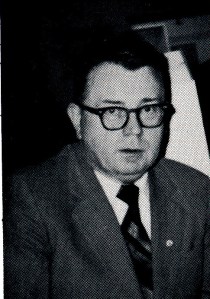
Maurice Burke was a special friend. Special for the passion we shared for St. Jacques, special for the respect and admiration he held for ordinary people who in his view did extraordinary things. We spent endless hours in conversation, mainly me asking questions, mining his rich repertoire of memories and experiences related to our hometown. In short, he inspired me to never let go of the threads a small town weaves into one’s life, to keep it’s history and heritage alive, especially for the minds of those who inherit that place. Maurice didn’t run for elected office or seek publicity; nor did he shun a bit of attention either! His generosity, hospitality and encouragement was felt by all who knew him. A trip to St. John’s was not worthwhile without a visit to 35 Craigmillar Avenue.
The last time I saw Maurice, he was near the end of his life. He was in a seniors home, having, out of necessity, forfeited his independence. My father and I sat with him for several hours near a window where the warm afternoon sun cast a glow all around us. He had his usual questions about people he knew, events since we’d last met, stories of those he remembered and moments of silence when being there was much more important than conversation. It wasn’t a final goodbye for I fully expected to be visiting him again but the course of events which unfolded after that visit were different from what I imagined. The last time I was in his presence was at his beloved St. Patrick’s church in down town St. John’s where a large number of family and friends had gathered to collectively say goodbye in a manner he would have thoroughly appreciated.
Recently, when I happened across an article he’d written back in 1959 for the Atlantic Advocate magazine, I was delighted. My heart melted as I settled back and listened to the voice of his words. There was Maurice, telling a story I had not known. Once again I was sitting beside the window on the street, sipping hot tea and savouring his mother’s (Rita) delectable sweets. I am sharing that story in it’s entirety as it appeared in the Atlantic Advocate. After you’ve read it I will come back to the story it tells and share a bit more of this ordinary/extraordinary man.
The Bluenose and the Thebaud Sail Again – Newfoundland Model Builder to Recreate Famous Race
by Maurice J. Burke,
Atlantic Advocate vol. 49, no. 12 August 1959 pp. 107-111.
For the old sea-faring men
Came to me now and then
With their sagas of the seas.
– Longfellow
Have you ever taken a good look at a Canadian ten-cent piece? If you have, you will have seen that it bears the imprint of a fully rigged banking schooner. Her name was the Bluenose and she sailed to racing fame and glory on the storm-tossed waters of the North Atlantic. Perhaps you may have wondered why the Canadian Government decided to mint a coin in her honour. Why? Because from the date of her launching at Lunenburg, Nova Scotia, on March 26, 1921, until she was lost off Haiti on January 6, 1946, she was the symbol of the sailing supremacy of the Canadian fishing fleet and she brought world renown to Canada in the five international fishermen’s races in which she competed, for in these races she was undefeated champion. She was a centre of attraction at the World’s Fair held at Chicago in 1933, at the Toronto Centennial in 1934 and in England on the occasion of the Silver Jubilee of King George V in 1935. She sailed her way into the hearts of all the people who live along the Atlantic seaboard and even today the mere mention of her name will cause old-timers to become misty-eyed as they speak in awe of her achievements, her trim lines and the way she sailed as no fishing vessel ever sailed before or since.
Captained by that redoubtable fishing skipper, Angus J. Walters, the Bluenose won her first international race against the Elsie off Halifax in 1921, the same year in which she was launched. Thereafter she successfully defended her title in 1922 against the Henry Ford off Gloucester, in 1924 against the Columbia off Halifax and in 1931 and 1938 against the Gertrude L. Thebaud in perhaps her most famous races of all. The Thebaud was skippered by Captain Ben Pine, a Newfoundlander from Belleoram, Fortune Bay.
The Bluenose and the Thebaud! Ah, what memories the names of these two famous schooners stir in the hearts of all bank fishermen! Memories of graceful, sleek ships in hard- fought races, and at stake the honour and prestige of nations! Today Ben Pine is dead and Angus J. Walters, long since retired from the sea, but still hale and hearty in his seventies, looks after his dairy business in Lunenburg. The motto of the Lunenburg Dairy is: “You can whip our cream but you can’t beat our milk.” When Angus Walters whipped his Bluenose through her paces she was the cream of the crop and you couldn’t beat him then either.
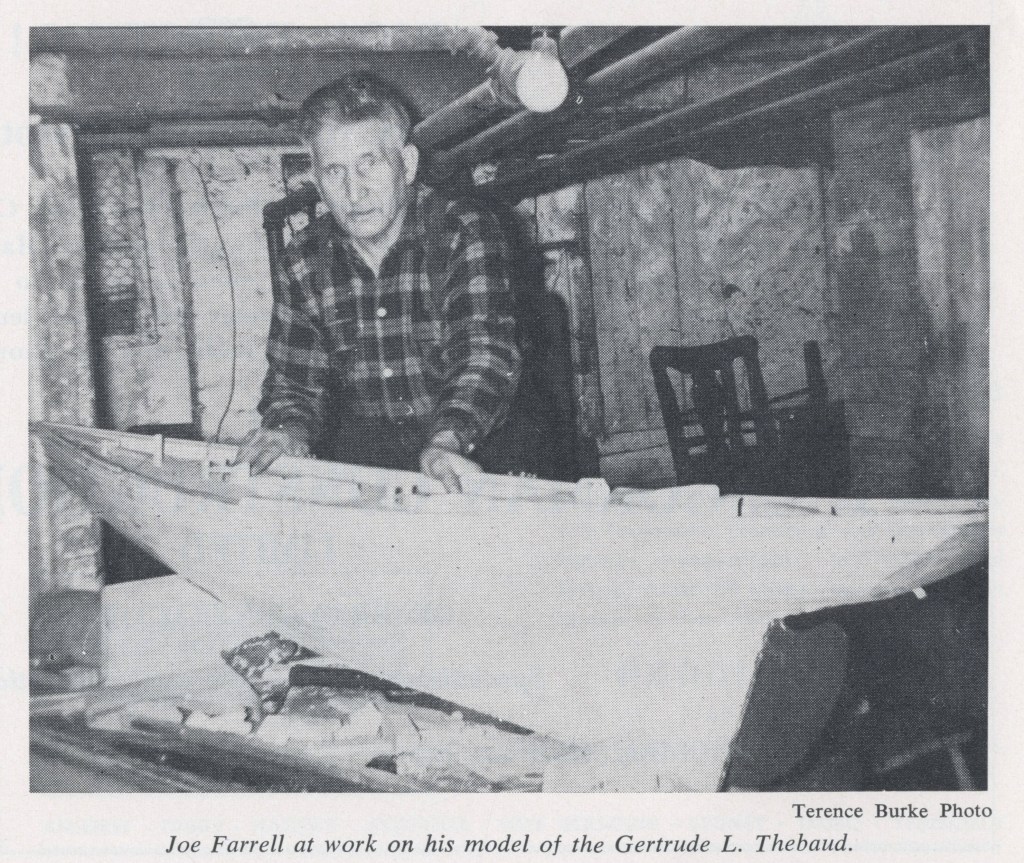
This summer in St. John’s, Newfoundland, the stage is being set to recreate in miniature the races of these two famous schooners. In the basement of his home at 2 Saunders Place, a retired bank fisherman, Joe Farrell, who has already completed a model of the Bluenose, is building one of her famous challenger the Gertrude L. Thebaud. These are not little models that you can sail in your bathtub, but man-size boats, seven feet long and just as high, made from exact small-scale blueprints of the original shipbuilders’ plans. They are complete down to the last detail and carry every stitch of canvas their namesakes did: jib, jumbo, foresail, mainsail, balloon jib, topsails and staysail.
[Terrence Burke Photo from the Atlantic Advocate, vol. 49, no. 12 August 1959. Creative Commons]
Joe Farrell was born in Bay du Nord, Fortune Bay, a section of Newfoundland that has given the pride of its manhood to the bank fishery. Joe remembers when hundreds of men went each spring to the “banks” and recalls sadly that some of them did not return. Now in his seventy-fifth year, he can look back over a period of some thirty years spent afloat, some of them as mate for Angus Walters before the Bluenose was launched. His old skipper remembers him as “a number one man” and in the language of the sea that is the greatest compliment a captain can pay to any of his crew.
Joe Farrell earned his living as a bank fisherman from the turn of the century until the end of the Second World War. He sailed out of Lunenburg in such well-known vessels as the Keno, the Independence, Muriel Walters (skippered by Angus and named for his sister) the H. J. Mackintosh, the Artisan (skippered by “Sonny” Walters, brother of Angus), the Madeline Hebb and the Lewis J. Thomas. So when Joe speaks of the bank fishery, he knows whereof he speaks. From his kitchen window he can look out across the harbour of St. John’s and he recalls that things were very different in his day of “wooden ships and iron men.” True the risks are still there (the recent tragic loss on the Grand Banks of the dragger Blue Wave with sixteen men on board is proof of this) but some of the romance has gone out of the bank fishery and the day of the banking schooner is gone for ever.
As you listen to his yarns of the old days, told with the salty humour so common to the men of his time, the bank fishery seems to come alive again and it is not 1959 any more but 1900, 1910, 1920 or 1930. The Grand Banks are teeming with cod and the majestic schooners go gliding by, reaping the silver harvest of the deep. You can picture the men hauling their trawls, their little dories bobbing on the Atlantic swell around their mother ship as they are rowed to her side, laden to the gunwales with the codfish, the real “currency” of the Maritime Provinces. Then the hardy fishermen are singing lustily as they heave up the anchor and hoist the sails for the race back to port is on, to take advantage of the best market price. And then when the fishing season is over, it’s racing time and it’s Bluenose and the Thebaud again. Always the conversation comes back to the Bluenose and the Thebaud. And in imagination you can picture the two of them tacking back and forth over the choppy waters off Halifax or Boston. Ben Pine and Angus Walters, the “Captains Courageous” of the Atlantic, are shouting orders to the crew and men are running to and fro, trimming the sails to catch each favourable breeze as they round the buoys and are off on another tack. And you seem to feel the same thrill as these men feel as they stand proudly on deck and see their vessel heeling to port or starboard, “dragging her cabin” in the water and they will tell you that there is no greater thrill than this . . . seeing your schooner overtaking her rival in a close race. It is something that makes you want to stand up and cheer. And Angus Walters is standing proudly at the wheel, dressed in his oilskins and sou’wester, the salt spray flying in his face as the Bluenose skims swiftly over the waves and races for the finish line . . . the winner again.
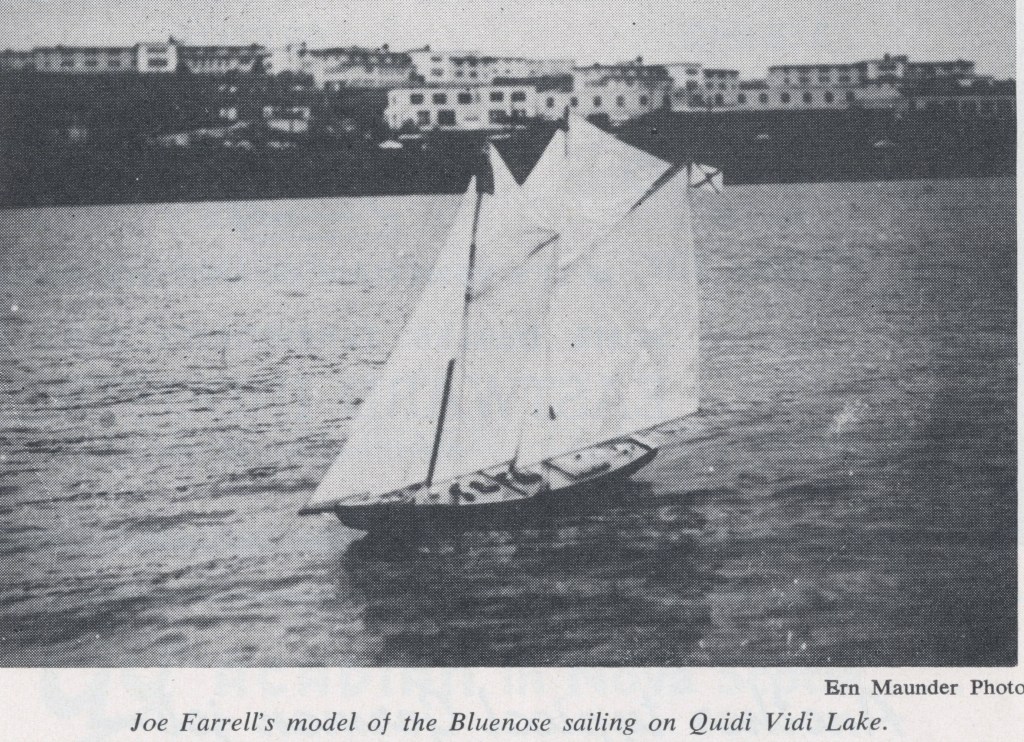
Everyone who grows up in an “outport”* is born with a love of the sea and sailing ships. Joe Farrell is such a man. He is not an author to write wonderful stories of his seafaring days or an artist to paint beautiful landscapes. He is, however, a craftsman and his love of the sea finds its expression, as all true love ultimately must, in the creation of something beautiful to represent that love. Joe Farrell builds his model boats and his work is a masterpiece of perfection right down to the last detail, sails, masts, rigging, windlass and hatches . . . everything is perfect. It takes many painstaking hours of work but Joe Farrell is a patient man and for him it is a labour of love. In the basement of his home he spends hours studying actual blueprints of the vessels and makes his models to an exact scale. His wife stitches the sails and puts up patiently with the endless puttering around his workshop. He sailed his Bluenose last summer on the Quidi Vidi Lake, on the outskirts of St. John’s, and was very pleased with her trial runs. Some time this summer the Thebaud will be ready and then he will realize his dream of racing the two. The clock will be turned back twenty-one years. It will be 1938 once again and the waters of historic Quidi Vidi will take the place of the North Atlantic as the two old rivals race each other again.
I wish that Angus Walters and Ben Pine could be there to witness the event. What a time they would have with reminiscences about the old days, and theories about just what went right and what went wrong in 1938! But Joe Farrell doesn’t expect an audience and doesn’t need one. It will be sufficient for him that the two models of his own creation will battle each other and for a short time he will relive a little of the past glory that once belonged to their famous namesakes. In a day when the public’s interest in sailing ships is very low, few people will be present, but Joe Farrell will experience a little of the thrill of his sea-going days, and when he watches from the banks of Quidi Vidi, there will be a twinkle in his eye and his step will be lighter as his two ships prove their mettle. I asked him which boat he thought would win but he wouldn’t hazard a guess. I suppose it really doesn’t matter. The main thing is that a dream will come true to gladden the heart of an old bank fisherman and be an occasion for joy among his many friends. In sport they say that it is always best to stick with a champion and I’ll put my money any day on the pride of Lunenburg and of its first citizen, Angus J. Walters . . . the Bluenose. May she rest peacefully in her watery grave under the blue waters of the Caribbean!
That’s the Maurice I knew, driven to celebrate the accomplishments of others, eager to push someone he knew into the limelight, then step back and smile as the attention shifted away from himself. Joe Farrell was known for his depth of knowledge of sailing vessels as both a sailor and a builder. His story is quite fascinating; maybe that’s another post for a later date. Like you, I too wondered if the Bluenose and Thebaud raced against one another on Quidi Vidi Lake as he had planned. They did. The Bluenose was victorious once again!
[Ern Maunder Photo from The Atlantic Advocate, vol. 49, no. 12 August 1959. Creative Commons]
Louise Whiteway published an article in the Fall 1967 edition of the Newfoundland Quarterly titled, “The Bluenose in Newfoundland” which took Joe Farrell’s story to the next step. I have included a link to that magazine below. Read it to find out about Joe Farrell’s models of these two famous ships and find out where you can go to see one of them on display anytime you are in St. John’s.
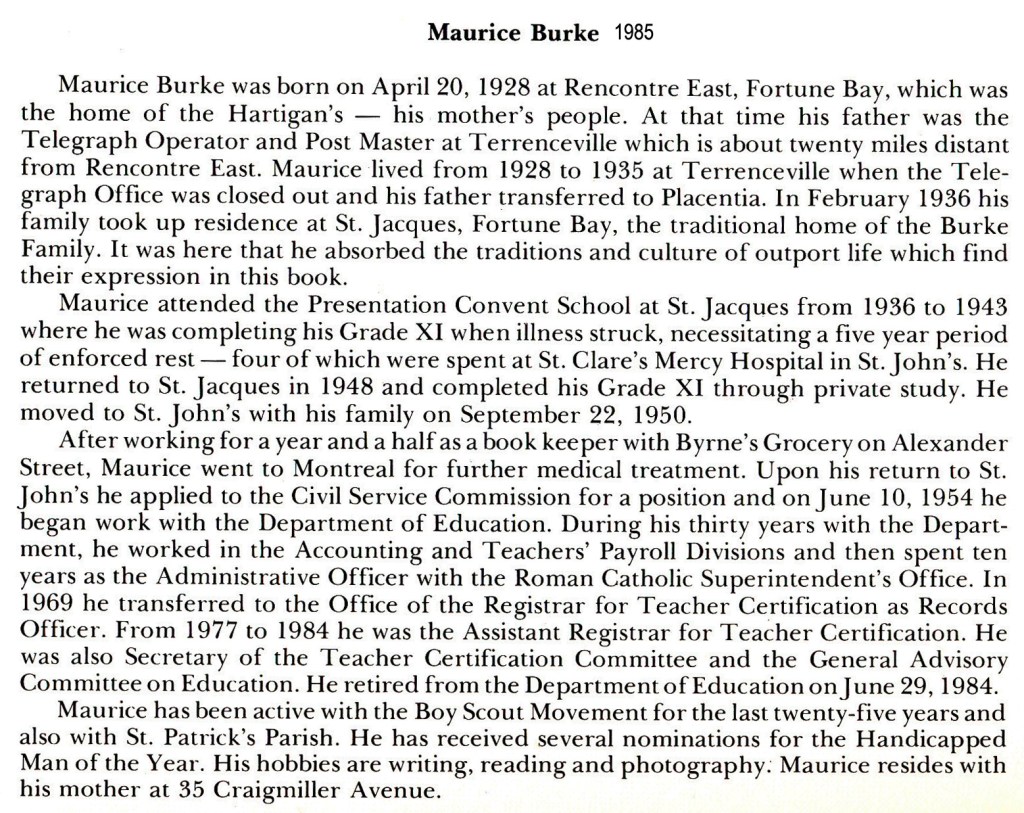
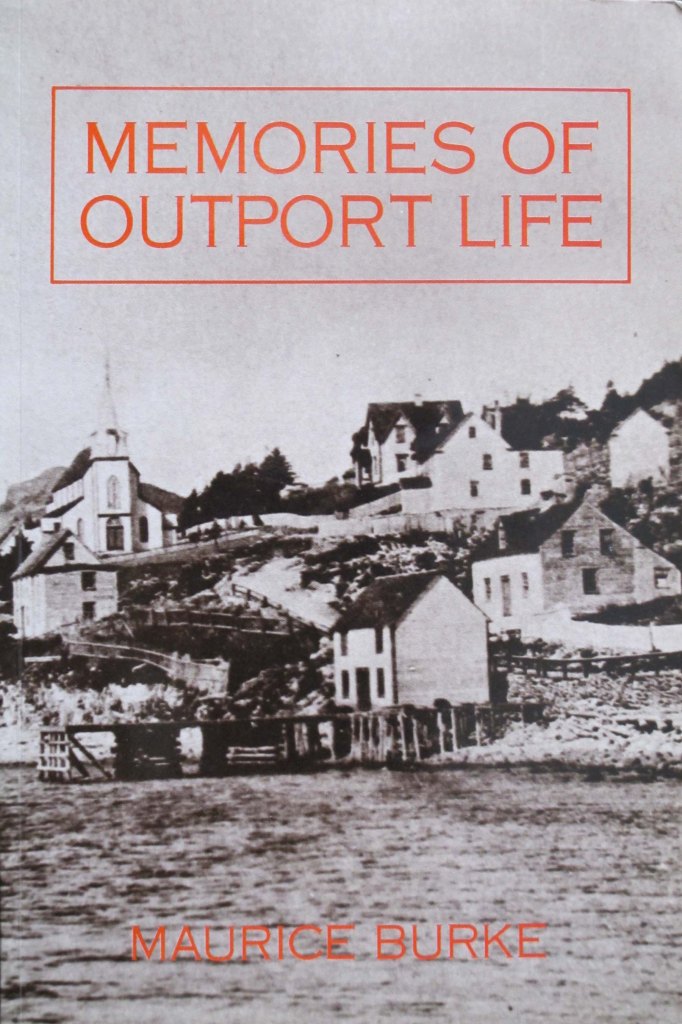
Maurice Burke published many articles about St. Jacques during his lifetime, primarily in the Monitor newspaper and the Newfoundland Quarterly. He also published a book titled Memories of Outport Life. Sadly, it is no longer in print. It shows up occasionally in used book stores. Before you wander off in pursuit of his other writings, read through the profile of Maurice which was published in his book. I’ve included it here as it appeared. You’ll get background information that will add greater depth, definition and understanding of who he was.
Maurice’s brother John, who resides in Ontario, recently shared on social media a story of a pivotal event in Maurice’s life as a young man. Once you’ve read it, you will gain even greater appreciation for him.
Maurice was third in line in our family of eleven, a healthy boy, until he contracted tuberculous from having spent a lengthy time visiting and reading to his friend, a victim of that disease. The disease left him paralysed from the waist down. He went to St. Claire’s Hospital in St. John’s, not to the Sanatorium where most tuberculosis victims were treated. He lay there for some three years and was sent home with the sad reality that there was no cure for his disability.
For years Momma prayed fervently to St. Anne for a cure for Maurice. But, it was not St. Anne who gave Maurice the miracle he wanted. It was his brother, Michael! This was not just an act of brotherly love that brought about this miracle. This was years of blood, sweat and hard, hard, overtime work that Michael needed to do to raise the money for the operation needed to allow Maurice to walk again.
Michael had discovered that there was a Doctor in Montreal who did this new type of surgery, who could operate on Maurice, a Doctor Shannon.
Maurice arrived in Montreal. He was hesitant to go through the operation. You can well imagine Michael’s disappointment to hear that Maurice was not wanting to go through with the surgery. Apparently, a patient in a nearby bed to Maurice had claimed that it was tried on him and that it did not work. With Michael’s pleading, explaining the wonderful reputation of Dr. Shannon, and arguing that he should go ahead with the operation, eventually Maurice consented.
Maurice walked again!!!! Michael was his ‘saint’ who sacrificed so much for his brother. Both of my brothers passed away some years ago. Michael ‘s act of brotherly love stands as an example of true brotherly love, no matter what the cost ! God Bless him!! I suspect God already has. (Burke, John. Facebook, October 08, 2020. Used with permission.)
My earliest memory of Maurice is of a well-dressed man in a dark three piece suit walking along the gravel road during one of his ritual visits. He would walk from the eastern side of the harbour where the road now ends, the location of his once family home, to the Roman Catholic cemetery and back, chatting with everyone he met along the way. Every visit to St. Jacques included that walk as though it was a way to remind the hills, trees, rocks and shoreline that he was back. He visited old friends, made new ones, paid his respects to the deceased and set aside time to pray in Sacred Heart Church. He always had the appearance of a man who felt at home during that pilgrimage, one whose heart beat to the rhythm of waves, sea breezes and the flapping of seagull wings over the harbour. As everyone who knew him can attest, he lived in St. John’s but he never left St. Jacques.
“On Leaving Home,” Maurice Burke in The Newfoundland Quarterly, volume 078, no. 4 (Spring 1983) pp. 11–12.
“Memories of Outport Life,” Review by David Bryant in The Newfoundland Quarterly, volume 082, no. 2, Fall 1986. [Burke, Maurice. Memories of Outport Life, Creative Publishers, 1985.]




 All Things St. Jacques, NL