Posted by: alexhickey | September 12, 2013

“radiant maiden from st. jacques“©

I Love You More Than God

stealing-genius-cd-by-ron-hynes-2011

Stealing Genius CD, Ron Hynes

Singer, song-writer Ron Hynes has never set foot in St. Jacques yet on his latest album Stealing Genius he includes a love song that applauds a girl whose “home bears a good French name”. He sings of a “radiant maiden from St. Jacques” who he does not name.  When Ron sings this song his voice rises and falls with adoration, with notes ascending then gently fluttering to the level of a heart beating with love. As you listen to Ron singing I Love You More Than God pay attention to the last verse which begins with, “I love you more than Christ on high” to hear what I mean.

Stealing Genius is a masterful effort in interpretation of existing literary works, mostly written by Hynes during a writing retreat in the Gros Morne region of Newfoundland. There is no theft here but tribute to such established writers as A

cover=ot-the-singers-broken-throat-by poet-des-walsh

Des Walsh, The Singers Broken Throat

ll Pittman, Randall Maggs and Des Walsh. The beauty of this collection of original songs lies in the originality and genius which Ron Hynes draws out of those works which inspired him.  Read a review of the CD on No Depression: The Roots Music Authority.

The song I Love You More Than God is based upon a poem by renowned Newfoundland poet Des Walsh from his book of poetry, The Singer’s Broken Throat published in 2003.  In much the same way that W. B. Yeats wrote A Poem to his Beloved in 1899, Walsh has penned passion in verse that stands ones ears at attention.  Hynes read the poem and with a few modifications brought it to life as a song on this CD. Listen to the song as performed by Ron on Live performance on “East Coast Countdown Live”, ECMA 2011.

I Love You More Than God

Ron Hynes and Des Walsh, 2010

I Love you more than God my dear

Your beauty dims the brightest star

I love to watch you as you pass

Adoration first and last

The way your hair falls ‘cross your eyes

Your breast as warm as summer night

I love you more than God above

With all the simple purity of love

I know your history and your fame

Your home bears a good French name

The foreigners watch you when you walk

Radiant maiden from St. Jacques

The Walshes and the Hynes boys tell

How they’ve loved you long and well

The one renowned in history

All the way from Ferryland to Fleur de Lys

I love you more than Christ on high

Forever will until I die

If there be an afterlife

There will yet my love survive

So in closing let me say

This true heart will never stray

I love you more than God above

With all the simple purity of love

With all the simple purity of love

With all the simple poetry of love

Here in its entirety is Walsh’s poem to the ‘radiant maiden from St. Jacques.

I love you more than any God, not falsely

Des Walsh, 2003

I love you more than any God, not falsely,

for reasons that would dim the brightest star

Your family knows this, they see it when

I genuflect when you pass.  It isn’t simply

how your hair falls across your eyes

or how your laughter subdues

the most anxious of moments

or even how your breasts lay beneath me,

it’s the simple purity of love.

I know St. Jacques and the history

Of where you’re from, it’s a French name.

Perhaps that’s why foreigners circle you

like half-starved crows, thinking their

accents are enough to impress

the most wandering flower.

My family has a history as well,

we watch you everywhere.

Did you know there are Walshes in Fleur de Lys?

Although there has not been a French presence in St. Jacques for centuries the town owes the heritage of its name to the French people who lived and fished along the south coast, particularly on St. Pierre and Miquelon.  Like many communities and landmarks along the coast the French influence is present in the names we still use.  This song sends a salute to that heritage while laying bare a pledge of love to one whose birthright is this treasured little town.

Two Interesting Articles

Two Newfoundland Poets by Stuart Pierson

The Music of Poetry

Des Walsh Books of Poetry

1974       Milk of Unicorns

1972       Voices Underground: Poems by Des Walsh, Michael Wade, Drew, Eric Hoyles

1980       Seasonal Bravery (Canada’s Atlantic poets) by Des Walsh

1989       Love and Savagery, 1989

1992       Who would kiss the mottled birch: poems, Des Walsh; Gerald Squires

2003       The Singer’s Broken Throat

Ron Hynes Recordings

1972       Discovery

1978       The Wonderful Grand Band (with The Wonderful Grand Band)

1981       Living in a Fog (with The Wonderful Grand Band)

1987       Small Fry: The Ron Hynes Album for Children

1993       Cryer’s Paradise

1997       Face to the Gale

1998       Standing in Line in the Rain

2001       The Sandcastle Sessions

2003       Get Back Change

2006       Ron Hynes

2010       Stealing Genius
Posted by: alexhickey | August 17, 2013

A Proud Canadian ©

 A Proud Canadian (lyrics)

I’ve travelled across this country from the east coast to the west,

I’ve met up with a lot of people, some I would like to forget;

Most of them were friendly and made me feel at home,

But some were not so easy, they said I just didn’t belong.


If you see me in Ontario or on Prince Edward Isle,

In Manitoba or Québec, greet me with a smile;

In Nova Scotia, New Brunswick, Alberta or B.C.,

Or Saskatchewan, I’m from Newfoundland, a Canadian I’m proud to be;

A Canadian I’m proud to be.


I may not speak the way you do, but God loves me just the same,

He made us one big family, so let’s be a happy one;

And though we have our troubles, we must not be overrun,

‘Cause if we work together, we shall overcome.


If you see me in Ontario or on Prince Edward Isle,

In Manitoba or Québec, greet me with a smile;

In Nova Scotia, New Brunswick, Alberta or B.C.,

Or Saskatchewan, I’m from Newfoundland, a Canadian I’m proud to be;

A Canadian I’m proud to be.


If you see me in Ontario or on Prince Edward Isle,

In Manitoba or Québec, greet me with a smile;

In Nova Scotia, New Brunswick, Alberta or B.C.,

Or Saskatchewan, I’m from Newfoundland, a Canadian I’m proud to be;

A Canadian I’m proud to be.

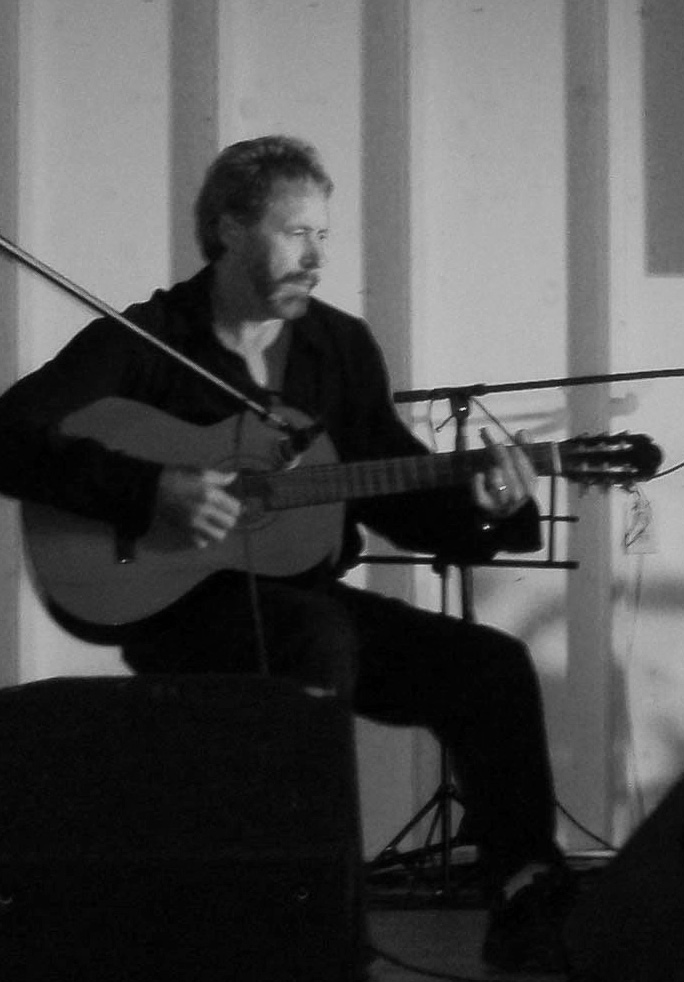
The Fortune Bay Sons released this song on their first self-titled album, The Fortune Bay Sons, in 1980.  It is credited to the band with no reference to the actual songwriter.  The group, formed in 1974 actively played throughout Newfoundland until it disbanded twenty years later.  Originally the group consisted of five members – Tom Keeping on vocals; Jim Vallis on lead guitar; Cyril Brown on bass guitar and vocals; Gerald Stoodley on accordion; and Winston Keeping on drums and vocals.  Upon Tom Keeping’s departure the group carried on as a foursome.  A few years later Gerald Stoodley left the group and was replaced by another accordion player, Harry Keeping.

The band re-grouped for special events such as the annual South Coast Arts Festival where they were perennial favourites. In 2008, on the opening day of the twenty-third Festival, lead guitarist Jim Vallis, who had spent his entire married life in St. Jacques, died after a brief pancreatic illness.  His death sent a shockwave through local communities.  Suddenly, questions of one`s mortality lurked around the corner.  Though Jim was a quiet band member, his stage presence was always front row centre with someone invariably asking, “Would Jim Vallis please come to the stage!”

jim_valis_seated_playing_acoustic_guitar

Jim Vallis 2007

The next night when the Fortune Bay Sons took the stage at the Festival they dedicated their set to their missing band mate and performed a crowd favourite, one of the songs Jim had written, A Proud Canadian.  They were joined on stage by his daughter Jillian who contributed to the vocals.  Several days later he left the church to the concluding chorus line, A Canadian I’m proud to be.

 Listen to A Proud Canadian in this YouTube video.

What inspired Jim to write this song? In post-confederate Newfoundland where many songwriters have lamented Newfoundland’s voluntary loss of independence by becoming Canada’s tenth province, this song stands out.  It sings the praises of being Canadian while maintaining one’s identity as a Newfoundlander.  Jim wrote this song from the heart.  He was born in July of 1949, one of the first born Canadians on the island of Newfoundland; a distinction and event that was not lost on him.

Though a fierce Newfoundlander he loved his new country; so much so that he enlisted for a period of time in the Canadian Army. That experience gave him exposure to other recruits from across the country at a time when Newfoundland had been a Canadian province for less than twenty years.  Jim didn’t remain with a military career.  Upon his return to Newfoundland he chose other career paths and carried on with playing guitar, an instrument he was passionate about.

The first song he learned to play on that guitar was Mendicino by Sir Douglas Quintet.  After hearing the song played at a teenage dance in the Royal Canadian Legion in his birth town of Belleoram, he returned home and worked on that song until he had mastered it, sometime after daylight the next day.  Music threaded its way throughout Jim’s life.  He played in numerous bands prior to joining the Fortune Bay Sons.

As a songwriter he didn’t share his compositions until he was absolutely certain the writing process had been completed.  A Proud Canadian first saw the light of day when planning was underway for the first album of the group.  Winston Keeping provided vocals for the song.  On their second album, Stay at Home Lad, Jim contributed the song, The Happiest Day of My Life, with vocals by Cyril Brown.

A Proud Canadian does not speak rapturously about being a Canadian.  It reflects the harsh realities of being a relative newcomer in the country where not everyone welcomed Newfoundland into Confederation.  It speaks to meeting people who were not friendly, whose interactions he would like to forget.  That has been a common occurrence for many Newfoundlanders living and working in parts of Canada for generations.  Fortunately the vast majority of Canadians do not carry ill-well or misgivings about their fellow countrymen; however, when it does occur, it affects one profoundly, as stated in the song: “But some were not so easy, they said I just didn’t belong.” He harbours no ill-feeling towards those he encountered and speaks kindly of the majority when he says, “Most of them were friendly and made me feel at home.”

Is it a protest song?  In a way, yes, in that it raises an issue which has dogged Newfoundlanders whenever they travel and work throughout Canada.  At the same time as it raises these issues the song offers an olive branch to people who feel that way, emphasizing “I may not speak the way you do, but God loves me just the same,” thereby appealing to a greater universal brotherhood that stands above pettiness and individual differences.

Is it a song of nationalism? Yes. His pride of Newfoundland heritage is evident as is his pride in being a Canadian. After listing the Canadian provinces he has travelled and asking fellow Canadians to greet him with a smile, he states, “I’m from Newfoundland, a Canadian I’m proud to be.”  He then ends the chorus with a repetition of “A Canadian I’m proud to be.” How much more emphatic can one be than that!

Few of us get the opportunity to offer our views on such great issues outside of close friends and family.  Then there are many of us who never share such observations despite having passionate views.  Do you know how the folks around you feel about being Canadian? The songwriter has an advantage over most of us if the song is recorded for it can echo our own thoughts and feelings without us ever having to risk making them known.  This song spoke for the quiet Jim Vallis and now speaks across time for him still.

We may forget the exact words you said, but we will never forget how your music made us feel.

There has been a great deal written about Newfoundland song writing around this and similar topics.  A few of the documents listed below may be of interest.

Glenn Colton, Imagining Nation: Music and Identity in Pre-Confederation Newfoundland, Newfoundland and Labrador Studies, Volume 22, Number 1 (2007).

E. David Gregory,  Vernacular Song, Cultural Identity, and Nationalism in Newfoundland, 1920-1955, History of Intellectual Culture, Volume 4, No. 1, 2004.

Terry McDonald, Proud To Be An Islander: Newfoundland Identity as Revealed through Newfoundland Song, University of Southampton.

Sara Beth Keough, Promoting and Preserving Cultural Identity Through Newfoundland Radio Music Broadcasts, Aether: The Journal of media Geography, Winter 2011.

Pollara Poll, Newfoundland’s Place in Canada,  Royal Commission on Renewing and Strengthening Our Place in Canada, Government of newfoundland and Labrador, 2003.

 Newfoundland Referendums

 Letter of Prime Minister Louis St. Laurent to Newfoundland

Posted by: alexhickey | July 30, 2013

Top Ten Things to do in St. Jacques in the Summer ©

There seems to be a top ten of almost everything you can think of these days; the top ten places to visit, things to do, people to meet, places to eat, and so on. Of course any top ten list is arbitrary and dependent upon the interests of the individual compiling the list. After discussing with friends and family I have created a top ten list of things to do in St. Jacques during the summer time.  After you’ve read this, leave a comment sharing your favourite things to do in St. Jacques during the summer.

Despite St. Jacques being a small community it has a large inventory of things to do as long as you are willing to go outdoors and take advantage of the many activities open to residents and visitors alike. In an order which presents the number one thing to do last, here are my top ten things to do:

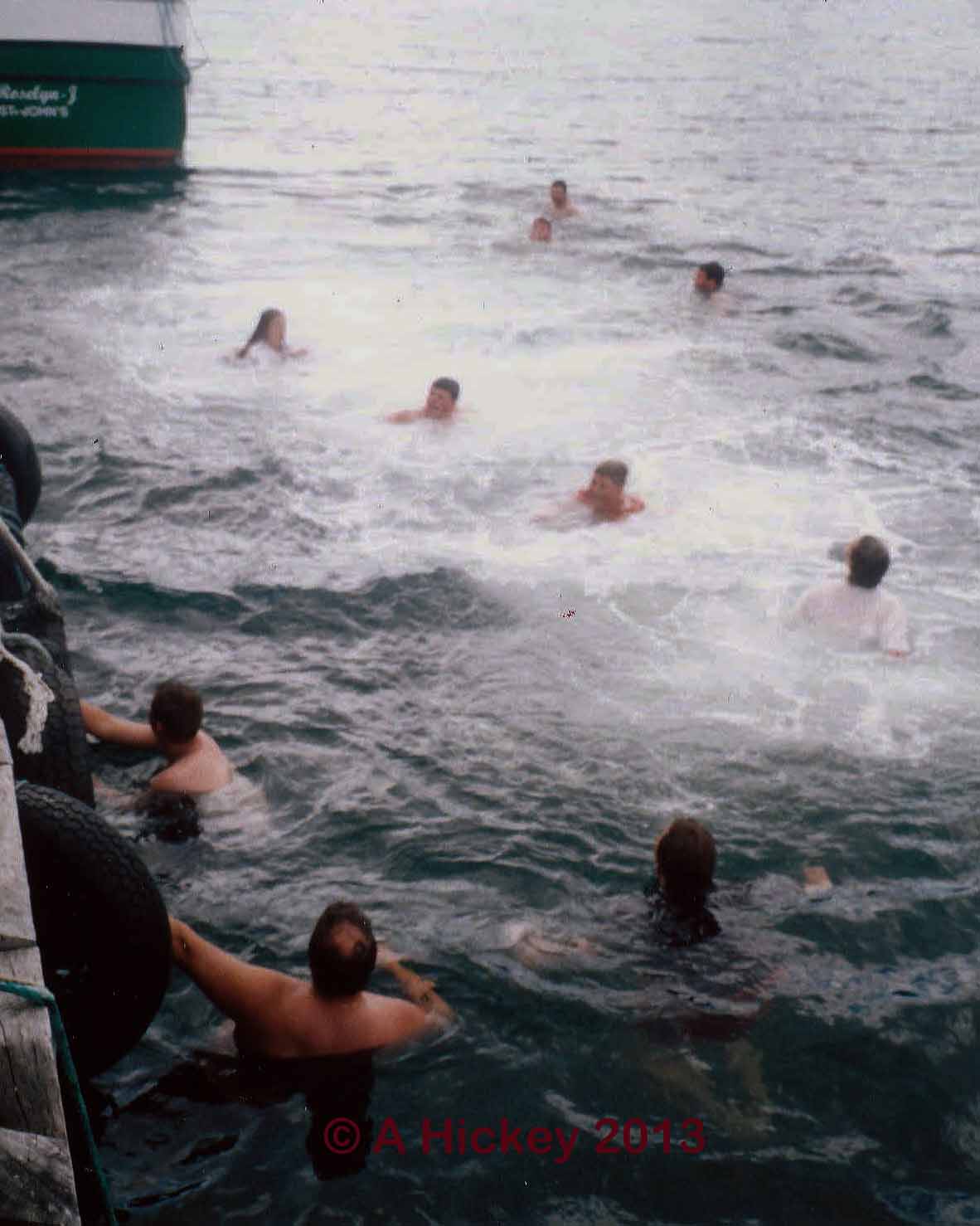
10. Dive into and swim in the cool Atlantic waters off the nearest wharf

diving off the wharf in st jacques in the summer

Diving off the Wharf

When the fishermen`s boats are not tied to the apron of the wharf it presents a golden opportunity to dive headfirst into the clean crisp water.  At high tide the water depth is approximately 20 feet.  On a calm warm sunny day water splashes and squeals of delight can be heard across the harbour as children and adults experience the buoyancy of swimming in salt water.  Most will dive or jump from the edge of the wharf while the more daring can occasionally be seen climbing atop four foot high fish vats for a higher jump-off location.  The water temperature in July averages around 17.2 degrees Celsius or 63 degrees Fahrenheit. Be sure to bring dry towels.

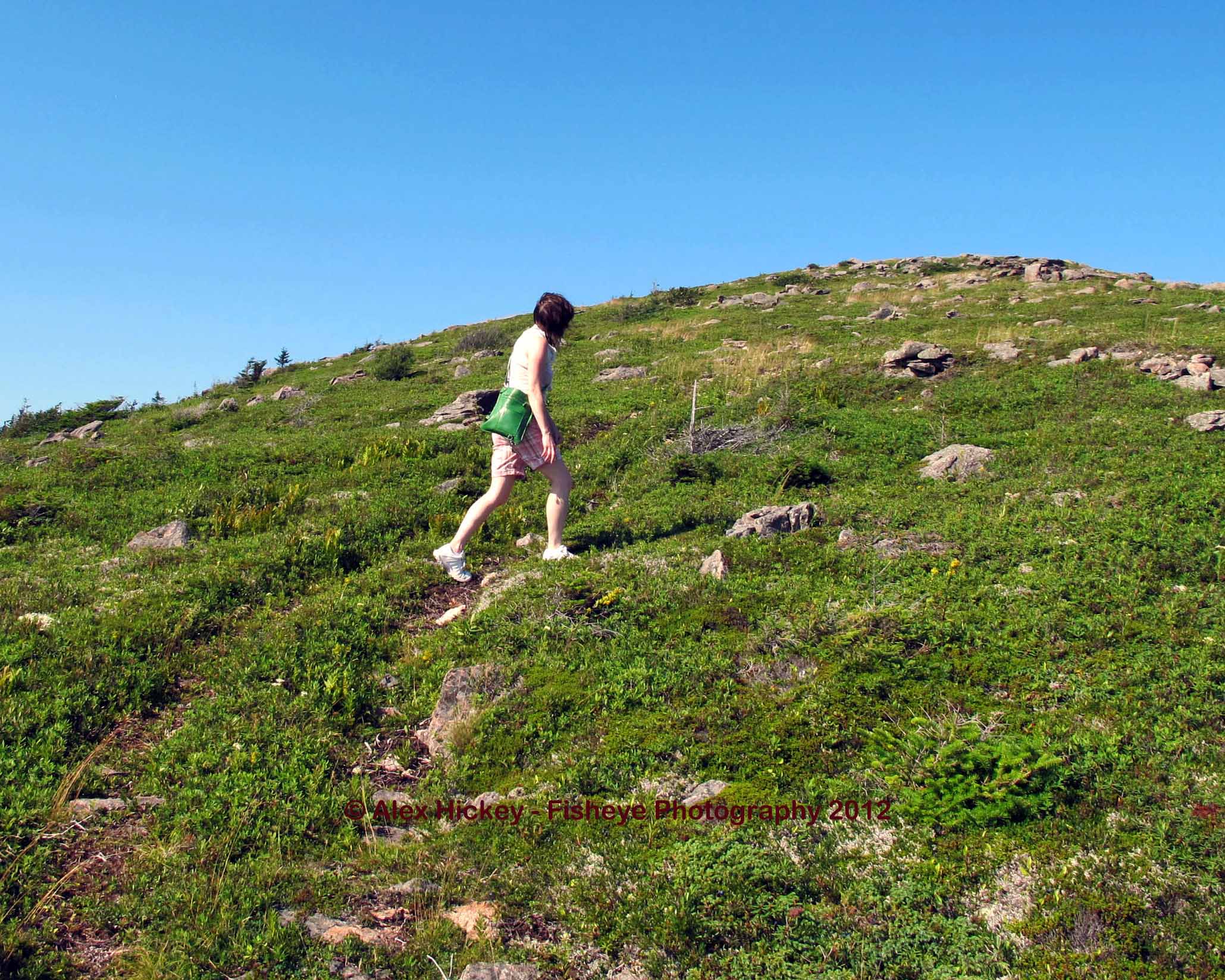
09. Hike Big Hill for a panoramic view of Fortune Bay

hiking big hill in st jacques

Hiking Big Hill

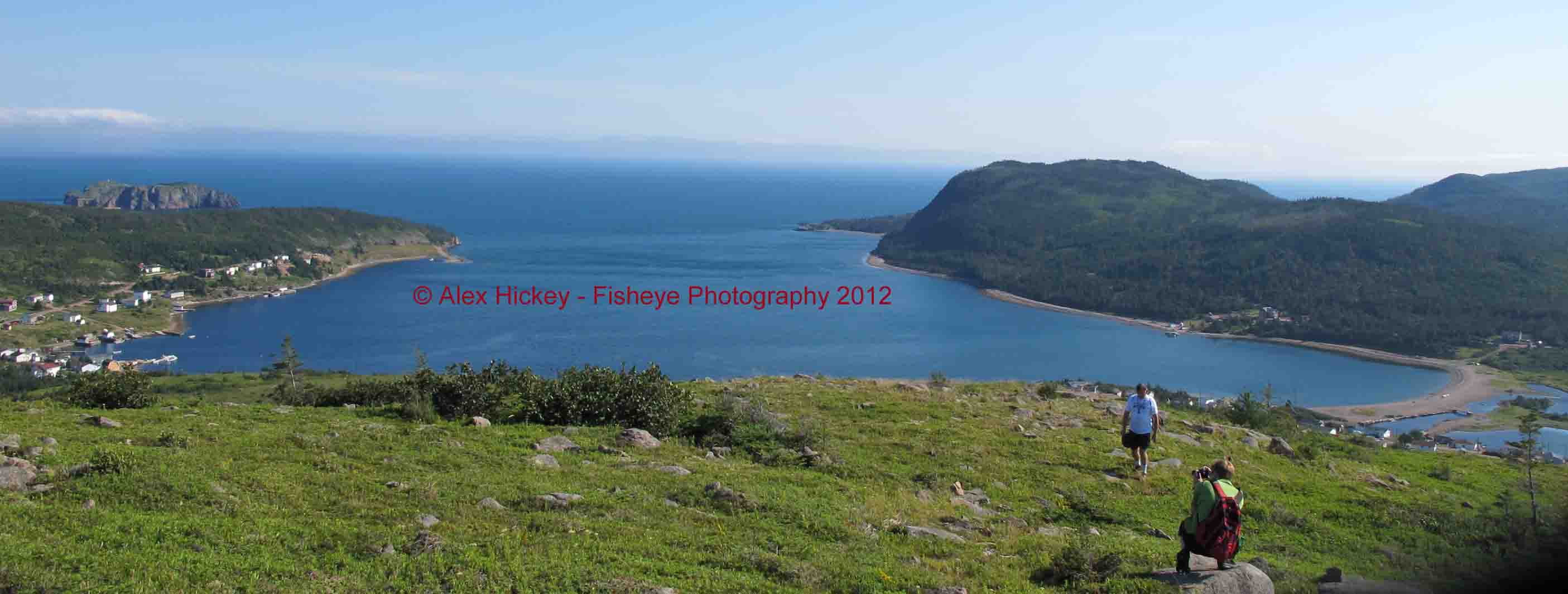
The mouth of St. Jacques Harbour opens into Fortune Bay in a southeasterly direction. Standing on the shore at night a viewer can see the lights of the town of Garnish across the Bay on the Burin Peninsula.  If you want to get a sense of the breath and depth Fortune Bay or just where most other landmarks are located in relation to St. Jacques, then a hike to the top of Big Hill is mandatory.  This is a hike of moderate challenge with a trail that winds across and gently upward in most locations. It will take about forty to sixty minutes to climb depending upon how many times you stop to pick and eat the plentiful blueberries which line the trail.   Once at the top the view is spectacular.  You will immediately wonder why something this high is called a hill instead of mountain.  The answer is that the grandeur of the view diminishes the immensity of the land-form.

08. Join neighbours at a fire on the Barachoix Beach

bonfire on the beach in st jacques

Bonfire on the Beach

Along the western side of St. Jacques harbour the ocean has washed over stretches of beach rocks since long before Captain James Cook sailed into the harbour in 1765.  These pebble beaches are ideal locations for lighting a bonfire in the evening.  Plan the event a little in advance, dress for slight temperature changes as night arrives; allow time to gather driftwood for the fire and a magical evening is ready to unfold. In determining a location for the fire and where you will position yourself, try to recall what you learned for elementary school geography about the relationship between land and sea breezes.

07. Pick blueberries along the hillsides overlooking the harbour

berry picking hills overlooking the harbour of st jacques

Berry-picking Hills

Summer sun in combination with the moisture from Spring rains nearly always ensure a bumper crop of delicious blueberries.  Step off the road anywhere, climb a hillside, or simply wander along time-worn footpaths and you will encounter this delectable berry.  Once in bloom they remain on their bushes for almost a month providing ample opportunity to harvest enough to last the long Newfoundland winter.  Picking blueberries is a solitary experience where one becomes oblivious to all others around; focused primarily on selecting the biggest and best berries from each cluster just as one would in a vineyard of grapes.  The only distractions tend to be the songbirds that flit from tree to tree mere feet from your face.  If you choose a spot where there is a slight breeze you can minimize the impact of ever-present black flies.
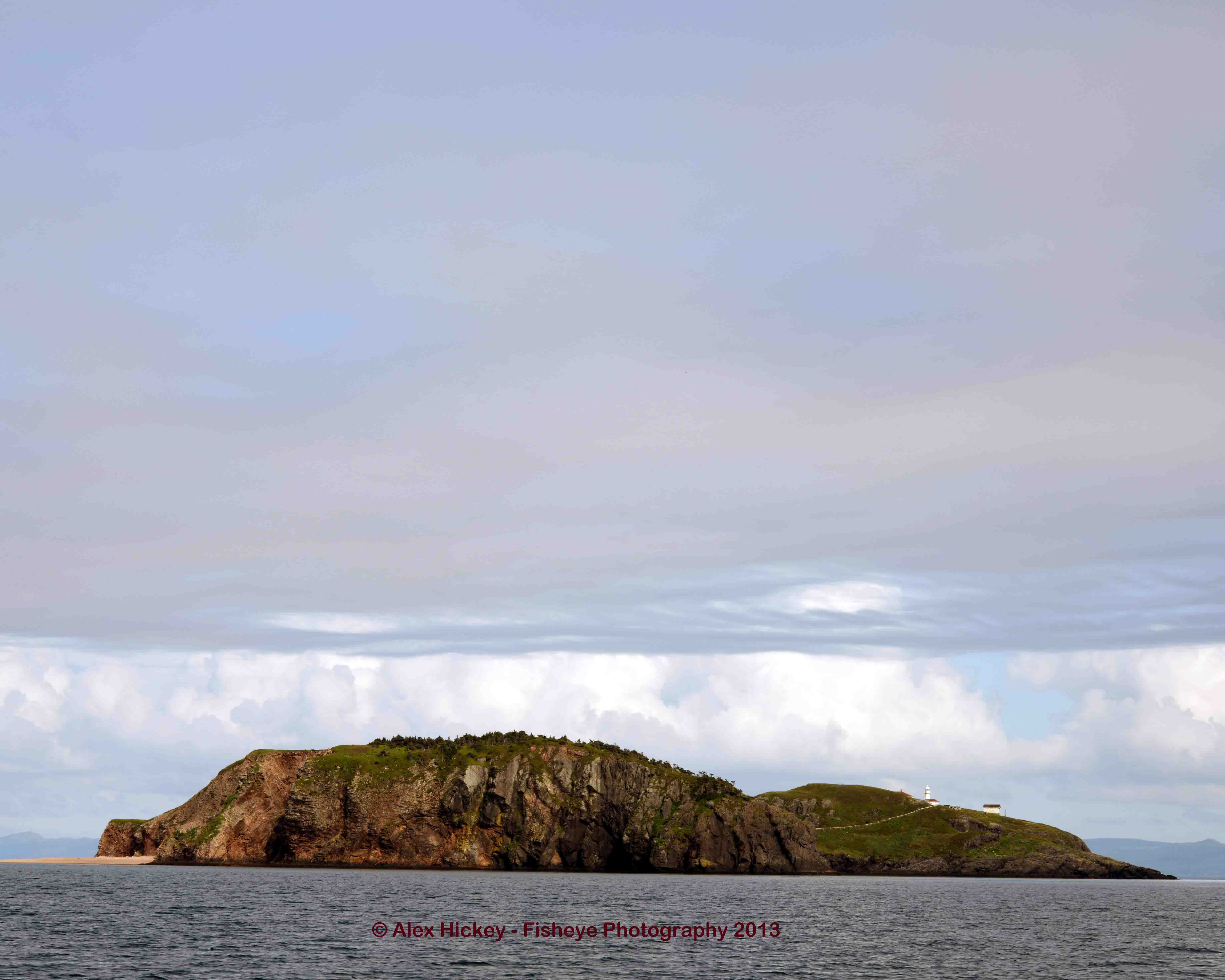
6. Take a boat trip to St. Jacques Island

st jacques island viewed from the western side

St. Jacques Island

Steeped in the murkiness of the fogs which frequently swirl around its jaw-dropping cliffs, the history of St. Jacques Island is still to be documented in its entirety.  Its sentinel position near the mouth of the harbour makes it a prime location for fortification in defense of the harbour.  Oral history supports such a use of the island.  Today it features a solar powered light and foghorn.   Until recently it was manned year-round by light keepers and their families.  Its 1907 cast iron lighthouse is still standing at the edge of the island ready to cast a warning light to mariners.  Known as the Fortune Bay Light, this beacon has been a friend to boaters for many generations.  As of 2012 the St. Jacques Lighthouse Heritage Corporation is in the process of acquiring the property for preservation and utilization as a tourism attraction.

 05. Watch the sun set over the western side of the harbour

sunset over st jacques harbour viewed from the eastern side of the community

Sunset over St. Jacques

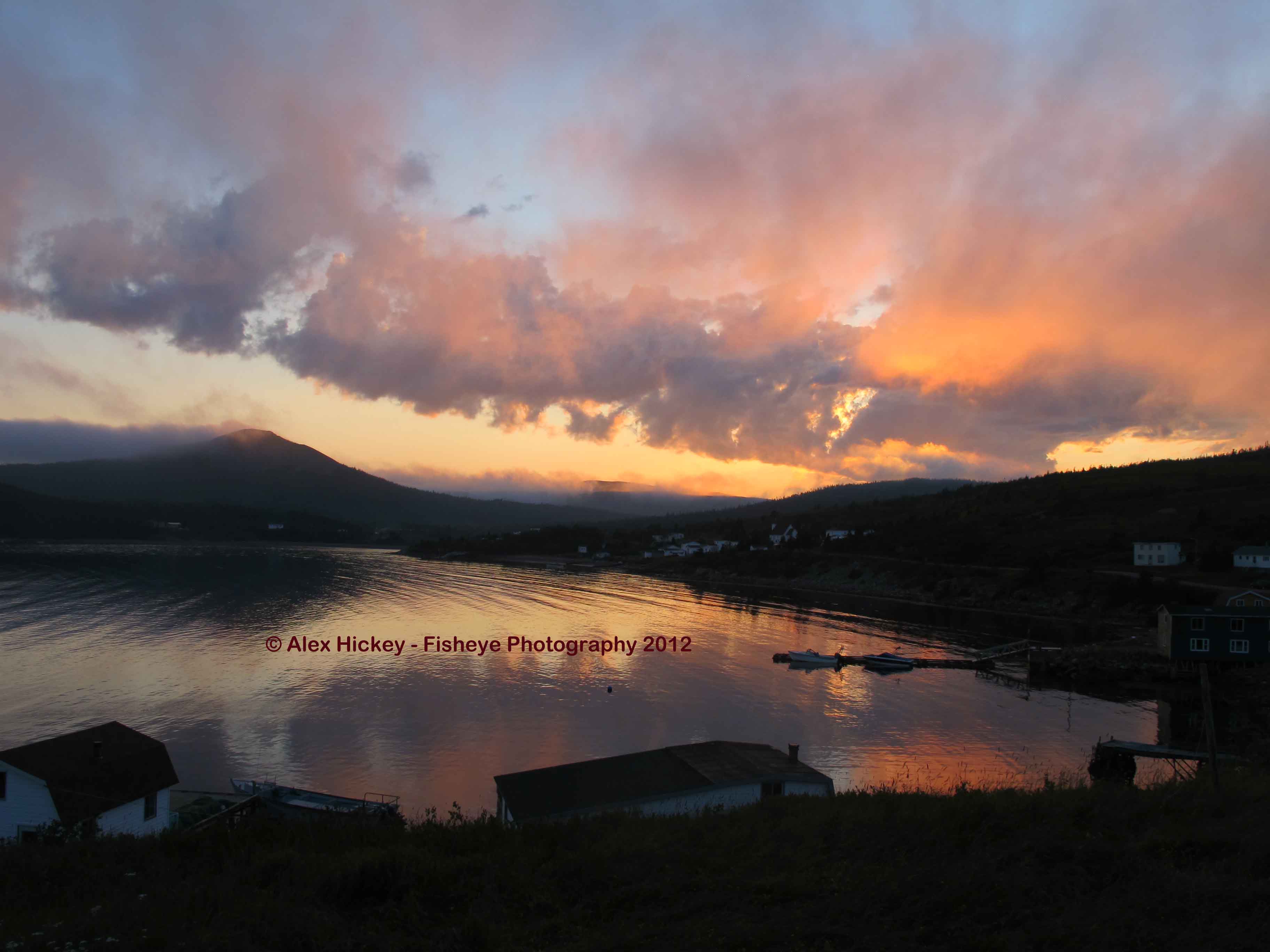
Sunsets can be spectacular anywhere on earth; however, watching the sun slowly travel into evening behind Bottle Hill casting palette of reds, yellow and orange across the waters of the harbour can make your heart skip a beat.  Combine this with evening cumulus nimbus clouds which are readily seen on the western horizon and the scene is magnified.  On those occasions when tendrils of fog creep into the harbour adding another layer of atmospheric filtration to an already impressive light show the scene is complete. There`s little more one can say.

04. Take your camera on an afternoon excursion to Louis’s Cove

louis's cove viewed from eastern side of the community

Louis’s Cove

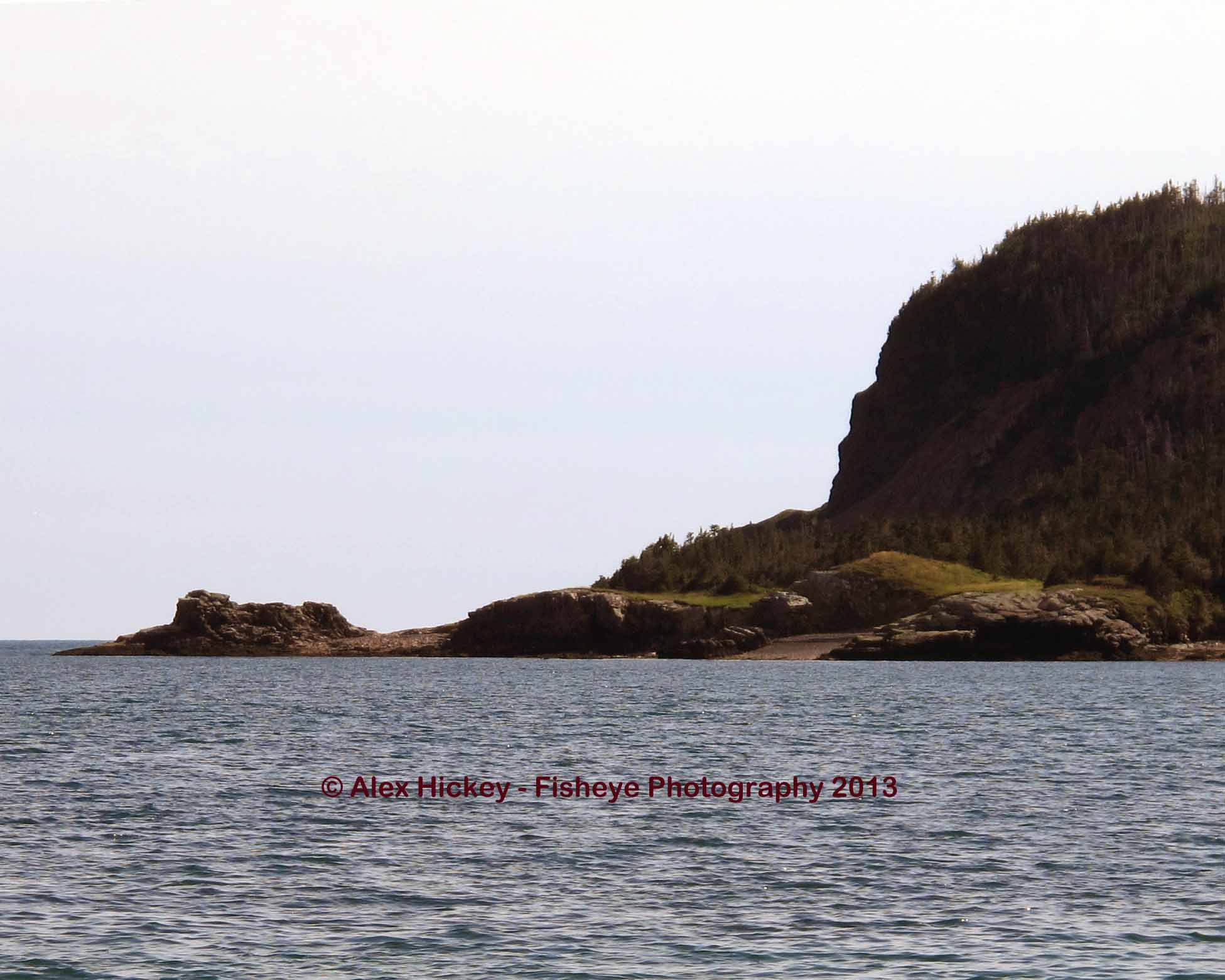
Louis`s Cove is located at the western side of the harbour mouth; a prominent headland sheltering several pebble beaches.  The view of St. Jacques harbour from Louis`s Cove is well worth the hike along the shoreline to get there.  It is a ninety minute hike over a variety of beach conditions which range from small pebbles to large boulders.  At one point a climb over a small headland is required so one must be agile to make the trip.  An alternative is to make the trip by boat.  Either way, there are places to explore amid the tuckamore evocative of secret dwellings and hidden travel routes; rock formations to examine, headlands to climb, ocean waves which invite the feet to dance, and towering cliffs which drop straight into the sea. Don`t forget the camera.

03. Organize a wiener roast on the beach below Hatchet Cliff

wiener roast on the beach near hatchet cliff on the western side of the harbour

Wiener Roast on the Beach

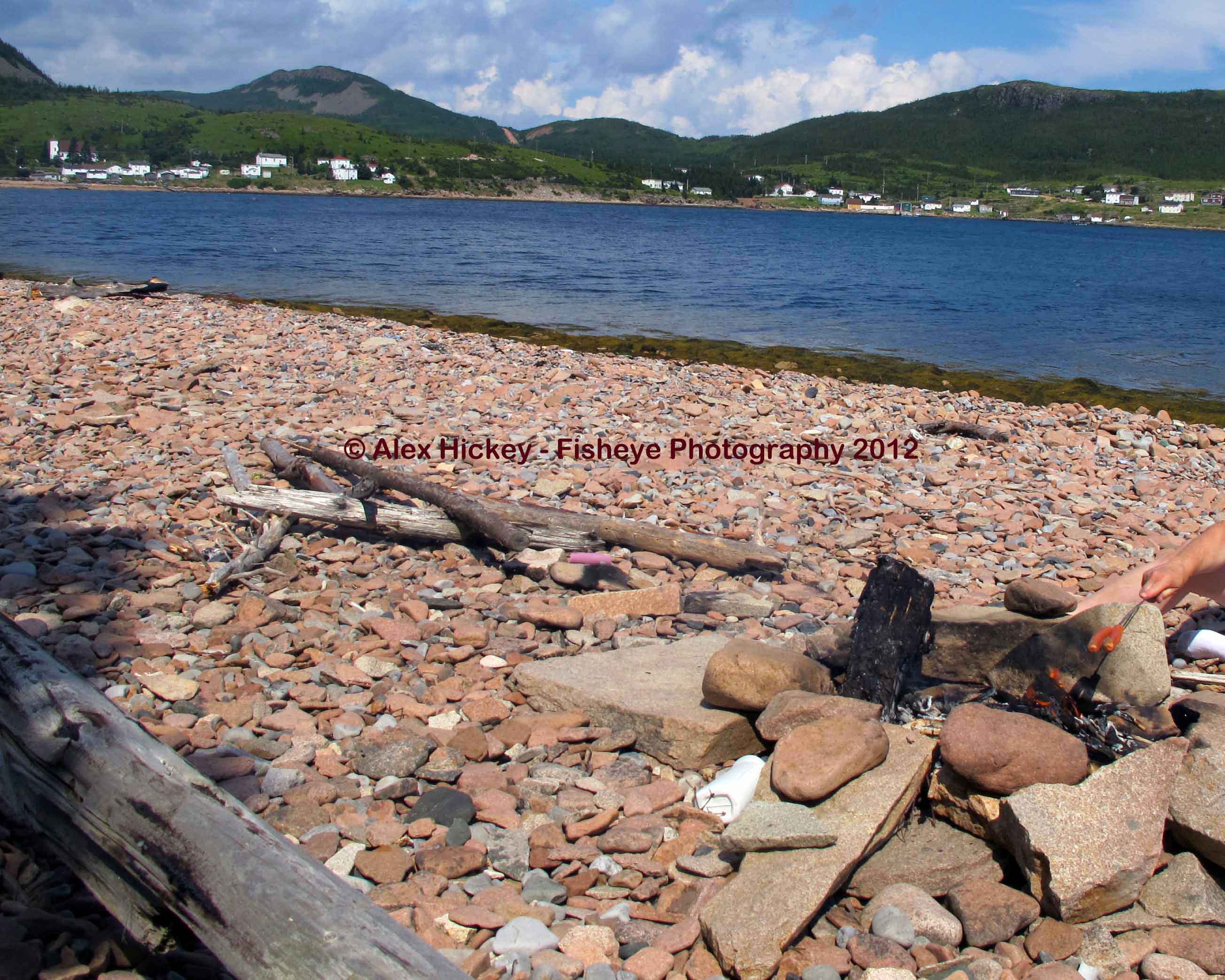
During afternoons when the beaches have absorbed enough heat to radiate warmth to all who sit on it the time is right to gather driftwood and build a fire.  Hatchet Cliff or Hatches Cliff as it is known to some, sits behind a section of beach that transitions from pebbles to flat rocks and then to smaller pebbles.  Cool, refreshing ground water runs from cracks in the rock face offering moist relief from afternoon heat. Along the beachhead driftwood carried in on high tides and bleached white from the sun can be found.  A few minutes of gathering will result in enough tinder get the fire started.  As it burns down to cinder, break out the wieners and impale them on the skewers you`ve just made from tree branches.  Enjoy the aroma and take in the panoramic vista of St. Jacques harbour.

02. Harvest mussels on the beach outside the point at Burkes Dock

shoreline at low tide outside the area known as burkes dock in st jacques

Shoreline at Low Tide

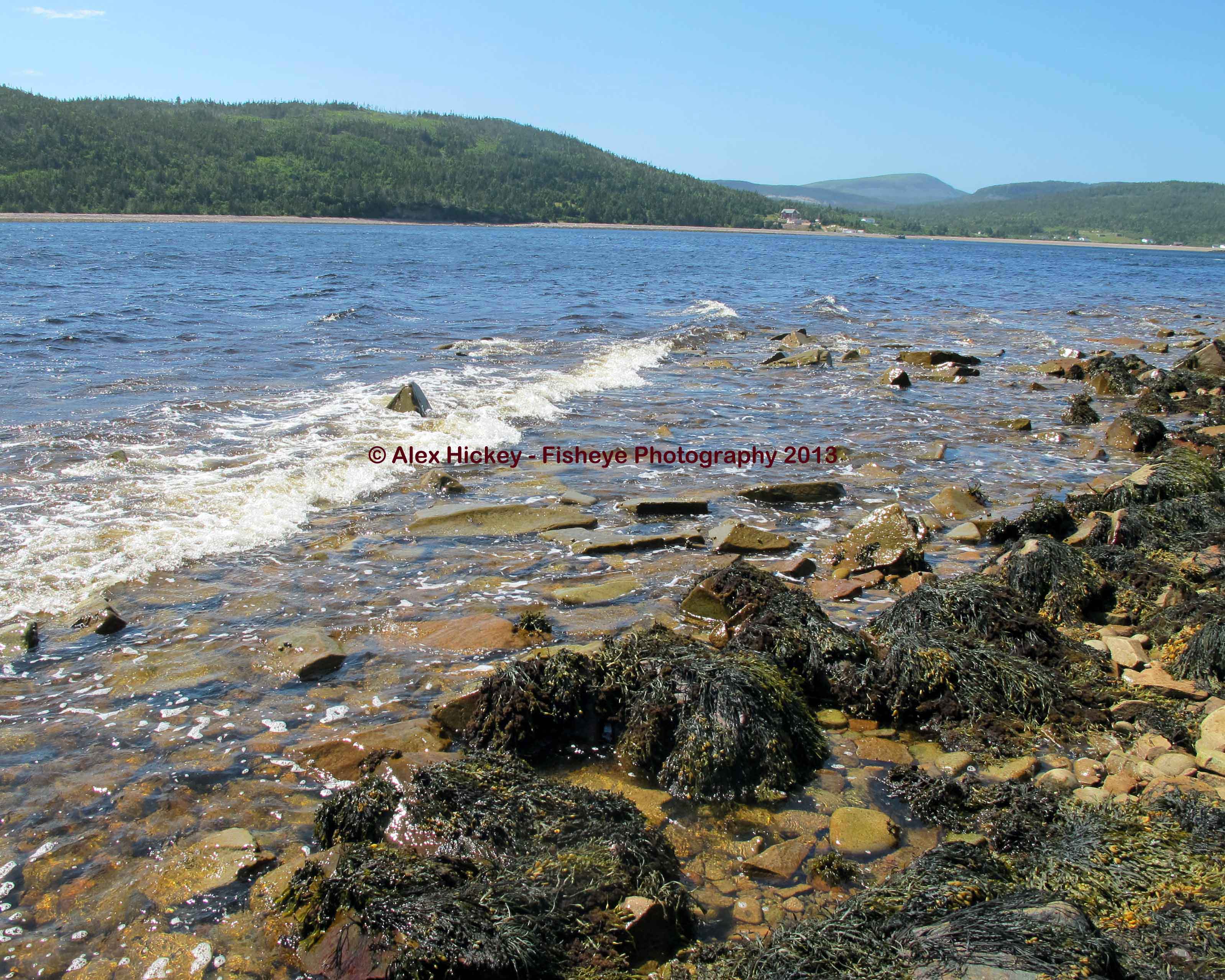
Harvesting mussels at low tide requires a sense of adventure and a willingness to get wet from wading among the rocks.  Burkes Dock was once a thriving and bustling business centre during the days of banking schooners and international fish trade.  Today it is a picturesque cove flanked by grass covered banks on one side and a land spit on the other.  The land spit is naturally occurring; however, throughout the nineteenth and twentieth centuries it was shaped by a lengthy breakwater which offered shelter to sailing vessels moored in its wake.  On the harbour side of the land spit is where you can find blue mussels like none other.  Wear foot protection in the water else you may end up hobbling home with remnants of spiny sea urchins in your feet.  Look in crevices between rocks and simply reach down and pry them loose.  Take only what you need – leave some for the next group to come along.  Steam them there on the beach or take them home as an evening appetizer.

01.  Attend the South Coast Arts Festival

view of backstage at the south coast arts festival hels during the second weekend of august each year in st jacques

South Coast Arts Festival

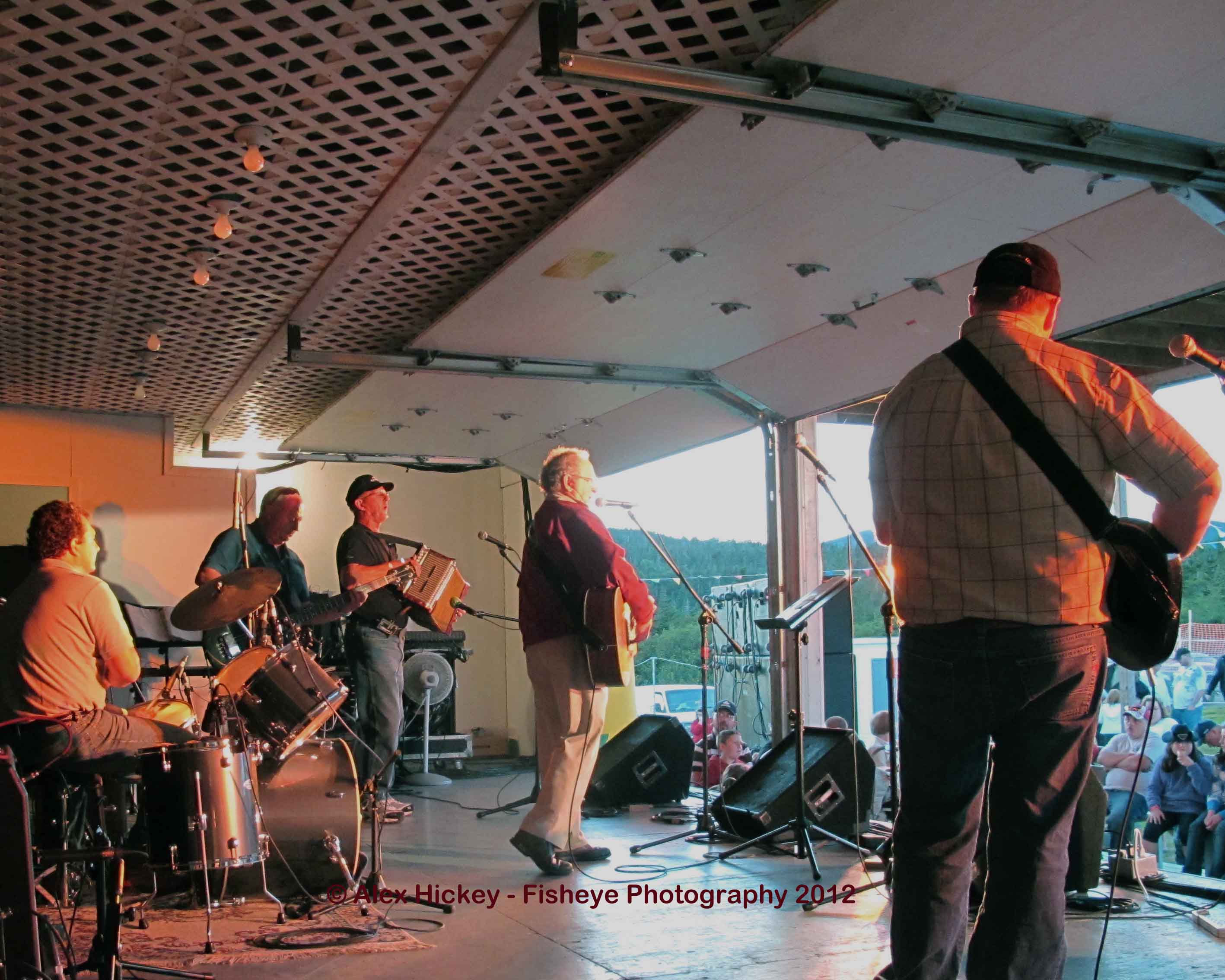
During the second weekend of August St. Jacques hosts one of the most unique arts festivals on the coast. This three day event is held on its permanent site in St. Jacques Barachoix just below the western side of Big Hill.  This festival, run completely by volunteers including all of the performers, has been running uninterrupted since 1986.  Inside the gates is a well-developed grass covered field with washrooms, bar service, food service and emergency attendants.  Music can be heard on the main stage from early afternoon to early morning. Dance floors are located in front of the stage and in the reserved bar area.  There will be music for all tastes ranging from traditional accordion to contemporary adult alternative and rock. Keep your ears attuned for you`ll be sure to hear some of the songs written by the award winning Bud Davidge of the local duo Simani.    You never know who you will meet at this event for it attracts people from many different places in Newfoundland and Labrador and from away.  Families from the region plan summer vacations to coincide with `The Festival`. Bring sunscreen and your dancing shoes! This is without a doubt the number one thing to do in St. Jacques in the summer!

Posted by: alexhickey | July 12, 2013

James Johnson ©

Though the name Noseworthy has disappeared from the list of families now living in St. Jacques the family has not disappeared without a trace.  There are at least four houses still standing where Noseworthy members once lived.  John Noseworthy moved from Harbour Grace to Belleoram and then to St. Jacques with his wife Phoebe around 1900.  They had twelve children. One of their daughters, Netta, married Joseph Johnson of Stones Cove; originally from Jacques Fontaine.

joe johnson house

Johnson Family Home – St. Jacques

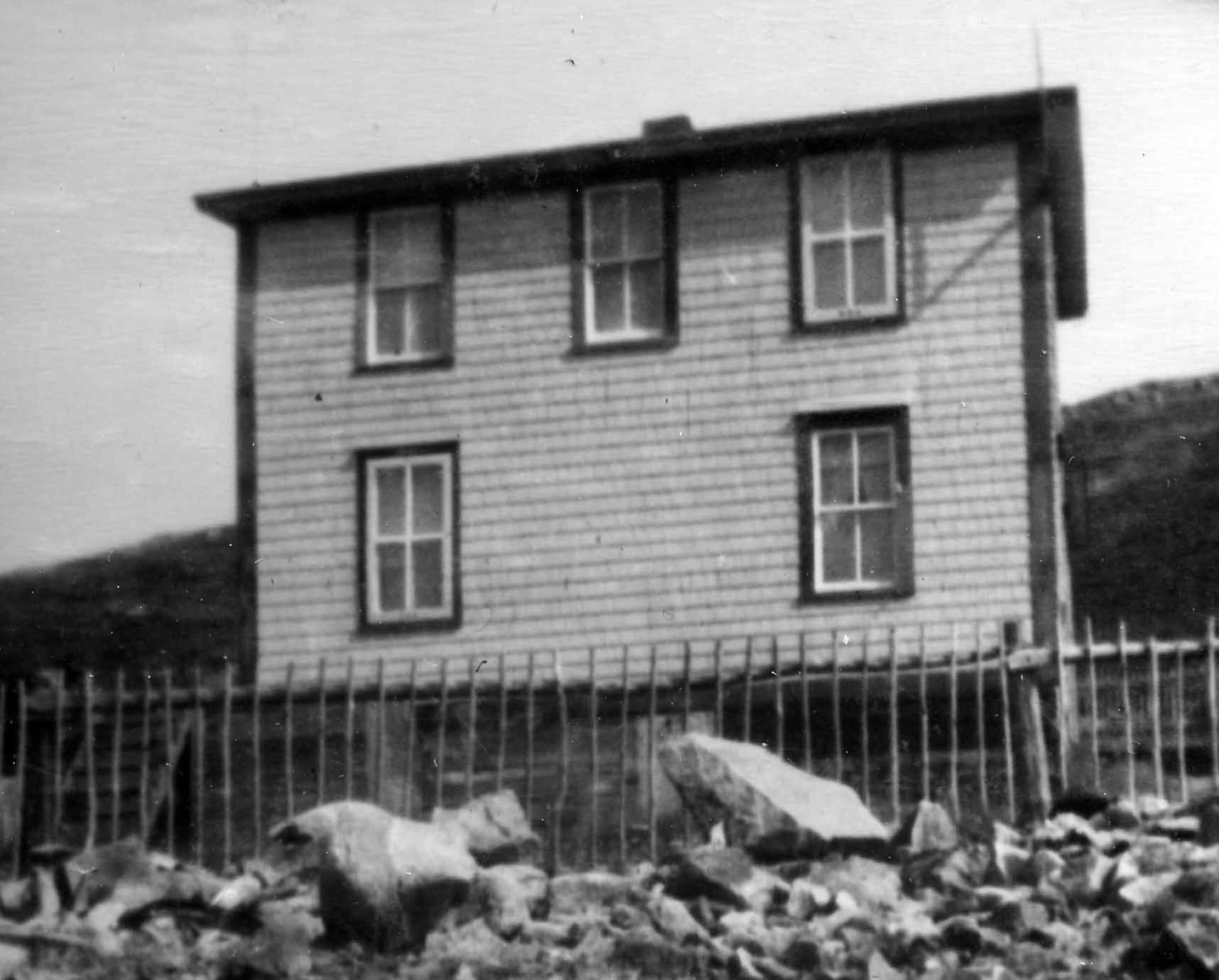
Joe Johnson built a house for his family from materials he had acquired from dismantling another house elsewhere in Fortune Bay; a common practice at the time.  The photograph of the Johnson home on the left was taken in the early 1950’s.

It is through this connection we find James Johnson, retired naval officer of the Royal Canadian Navy.  James or Jim as he is variously know to family and friends alike is the youngest of two sons born to Joe and Netta. Though Jim and the rest of his surviving family moved away from St. Jacques in 1951 to take up residence in Halifax Nova Scotia following the death of his father, he has maintained a close liaison with current and former residents of his hometown.  Every piece of news about St. Jacques is welcome to his ears.  Near his telephone stand at home is a list of numbers of current and former residents who Jim finds time to connect with from time-to-time.

I first met James Johnson in the early 1980’s while residing in Halifax.  Since then I’ve come to know the stories of his childhood and those of his working life.  Jim can keep you listening and intrigued for hours.  Ask about what life was like growing up in St. Jacques and you will hear of how in 1944 at the age of nine, at the request of his father who had suffered a stroke, he was sent to English Hr. West to acquire the materials to build his father’s casket. Children grew up fast in those days and Jim was no exception. At age fourteen he dropped out of school to work in Edgar Dyett’s Herring Factory for ten cents an hour in an effort to support the family.  A year later he was working at John Marshall’s fish plant in Belleoram for thirty-five cents an hour.

Upon moving to Halifax he secured employment with Maritime paper products on Almond Street, then at Maritime Accessories on Argyle Street.  During those years Jim watched the ships of the Canadian Navy come and go from port. By 1953 he was convinced there was a future for him on one of those ships. The basic requirement of having a grade eight education for entry didn’t prohibit him from getting in.  A sworn affidavit to that effect was taken and he was accepted for twenty-two weeks of basic training. In his own words, “When the Sargent typed up the paper for me to sign, St. Jacques was spelled St. Jack’s so I didn’t feel guilty and signed the paper which the navy accepted and off I went for basic training which resulted in thirty-one years in the Royal Canadian Navy, retiring in 1984.”

Jim served on ten ships and in five establishments during his career; some more than once.  He retired with the highest non-commissioned rank in the Armed Forces – Non-Commissioned Officer, First Class (NCO) which he held for the last eleven years of his service, serving on his last two ships as Senior Engineering Chief.  His last posting was as Divisional Chief of the Nuclear, Biological, Chemical Warfare and Damage Control School in Halifax.  One of Jim’s stories tells of how he served as  Petty Officer 2nd Class on the HMCS Victoriaville, the same ship that Captain Lester Hickey from St. Jacques commanded, when the German submarine U190 surrendered to the Canadian Navy off the Grand Banks of Newfoundland at the end of WWII.

hmcs huron

HMCS Huron

hmcs magnificent

HMCS Magnificent

hmcs kootenay

HMCS Kootenay

During his career Jim visited in excess of thirty-three countries. He served on both sides on North America in the Pacific and the Atlantic Oceans and served as far north as Resolute in the Northwest Territories of Canada.  During his career several highlights stand out.  Among them was a posting on the HMCS Huron as Last Ship for the Governor General and Staff for his visit to the Baltic Countries in the 1960’s. He found himself aboard the HMCS Magnificent in Egypt during the Blockade of the Suez Canal in 1955-57 and as host ship to Queen Elizabeth II on the HMCS Kootenay in 1959 when she presided over the opening of the St. Lawrence Seaway.  Jim was On Station (ready for deployment) in the North Atlantic aboard the HMCS Victoriaville during the Cuban Missile Crisis of 1962.

After retirement Jim was hired as Chief Engineer of a building in Halifax where one of the side jobs was a special constable with the Halifax Police Department.  Today James Johnson and his lifelong supporter, his wife Glenda, spend their time between their home in Halifax and a farm owned and operated by his son in Lunenburg County, Nova Scotia.

forget me not

Forget-Me-Not

Jim’s interest in Newfoundland extends well beyond his hometown.  He has always been a supporter and mentor for other Newfoundlanders making their way in the Canadian Navy.  A particularly proud moment of his post-Navy career occurred when he was informed by award winning Newfoundland songwriter Bud Davidge that he had written a song about the almost forgotten symbol of Memorial Day in Newfoundland and Labrador – the Forget-Me-Not flower.

Jim had long lobbied Davidge to write such a song by providing him historical background information and constant encouragement to do so. Below is a You-Tube video of The Little Blue Forget-Me-Not as recorded by Bud Davidge.

You can read the lyrics to this song here accompanied by explanation of some of the background to events mentioned in the it. When Bud Davidge was awarded an Honorary Degree by Memorial University for his contribution to Newfoundland and Labrador’s musical heritage in May 2012, he acknowledged in his acceptance speech the significant contribution that James Johnson made to his writing of the song.  In the audience, unknown to Davidge was his supporter and motivator, James Johnson who had traveled to Corner Brook for the occasion. It was at that event that Jim had the opportunity to meet another hero of his – General Rick Hillier.  The three of them are in the photograph below.

gereral rick hillier everard bud davidge james johnson

General Rick Hillier, Everard (Bud) Davidge, James Johnson

Meanwhile, back in St. Jacques, Joe Johnson’s house still stands.  Across the street is the house his grandparents lived in as they raised those twelve children.  Just west of that house is one that was owned by his Uncle Clem Noseworthy and further along a house in which his Aunt Minnie lived.  The rich history of the Noseworthy family in St. Jacques remains to be told.  Jim Johnson’s story is but one of many.

Posted by: alexhickey | June 20, 2013

The Hills Surrounding St. Jacques ©

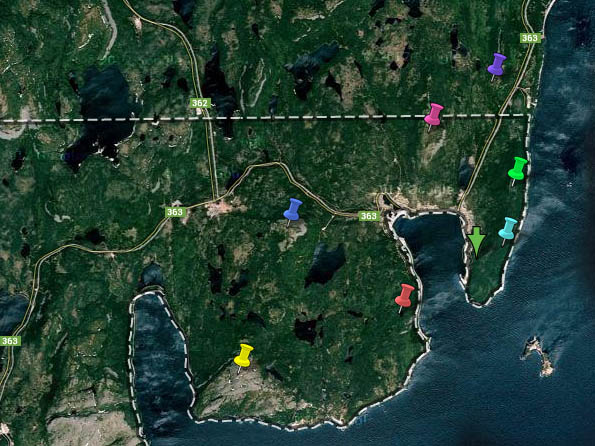
location of hills around st. jacques

Location of Hills around St. Jacques

  • St. Jacques Hill – Light blue pin
  • Bottle Hill – Dark blue pin
  • Winterhouse Hill – Green pin
  • Hare Hill – Orange pin
  • Buttercup Hill – Yellow pin
  • Big Hill – Pink pin
  • Bungay’s Hill – Purple pin
st jacques hill

St. Jacques Hill

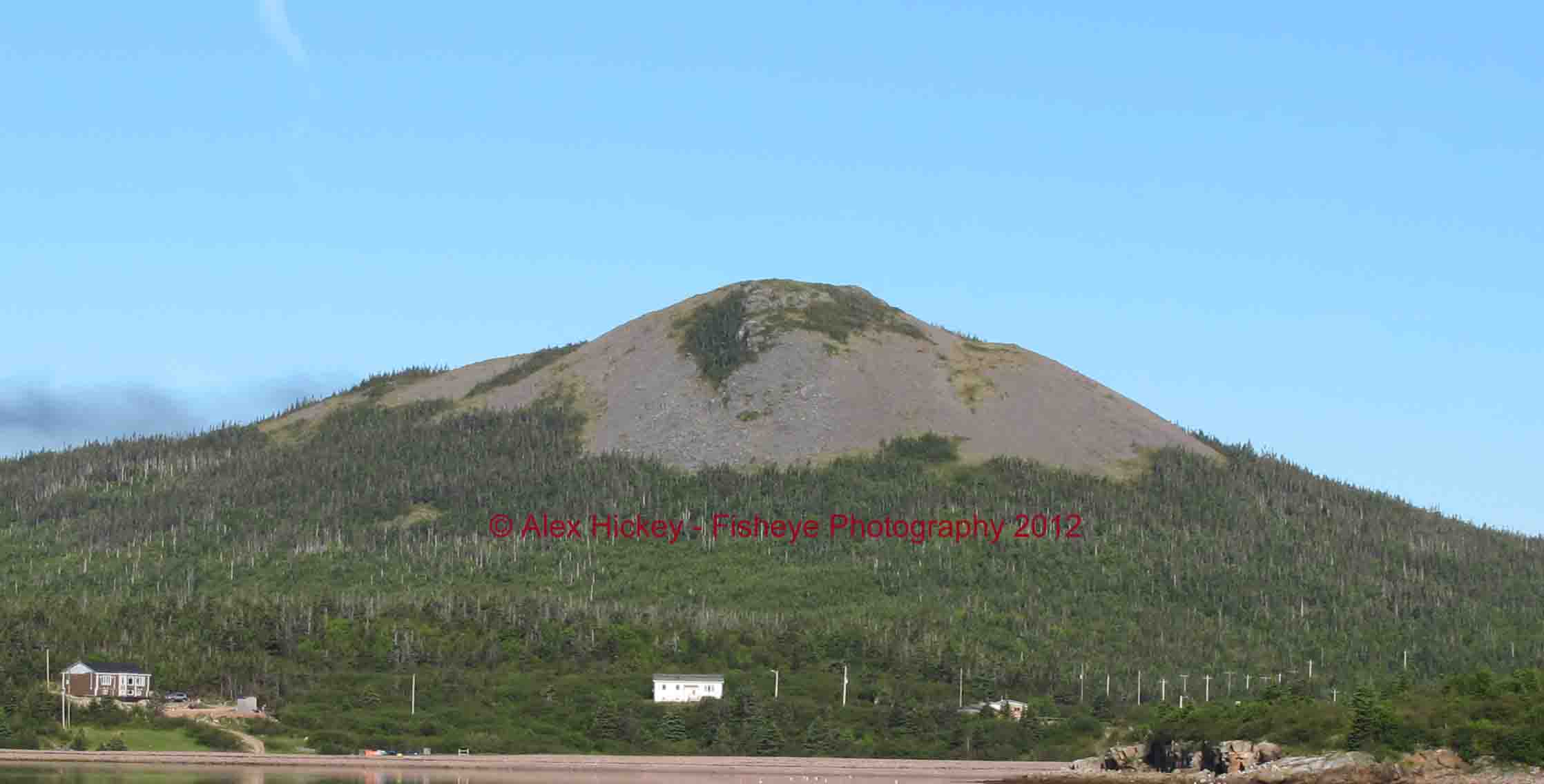
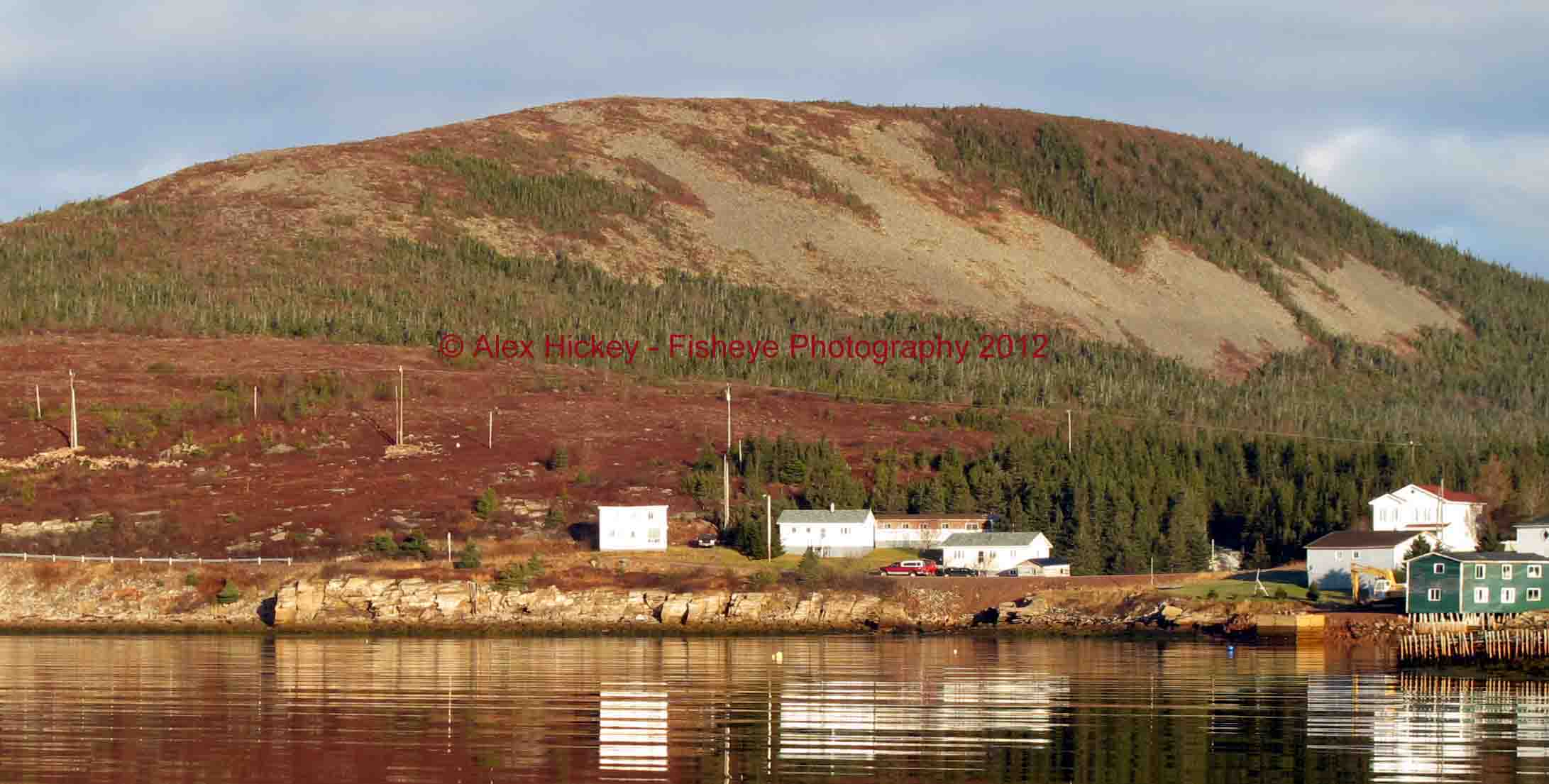
I look around me at the imposing hills which embrace the harbour of St. Jacques and wonder what the earliest settlers who cleared trees from the shoreline to build their rudimentary, primitive houses were thinking about when they gave them names. Parallel to the waters of Fortune Bay, overlooking the eastern side of the community is a hill that emerged almost directly out of the ocean and forms a protective arm to St. Jacques Harbour.  It is at the base of this hill that a great deal of the commercial history of the community unfolded.  On the Fortune Bay side of the hill the beaches of Back Cove mark its entry into the sea.  On the harbour side its transition to the sea is marked by the wharves of fishermen.  This is St. Jacques Hill.  The only printed reference to its name that I have been able to locate is on a land grant from 1897 where the surveyor’s bearings note that a direction on the document points to St. Jacques Hill.  If you stand on that spot and look in the compass direction provided by the surveyor your eyes come to rest on a space above where the old Presentation Convent was located.

winterhouse hill

Winterhouse Hill

The hill adjacent to St. Jacques Hill offers an explanation of the origin of its name – Winterhouse Hill. Winterhouse Hill stands with an exposed cliff to the community and its back to Fortune Bay thereby sheltering most of the harbour for easterly and north-easterly winds.  Early settlers in many parts of Newfoundland were hunters-gatherers-fishermen who migrated to a location other than where they lived during the summer in search of shelter, firewood and food sources during the winter months.(Encyclopedia of Newfoundland, Vol. 5, p. 594) They moved inland from the shore during harsh winter months to be near wild game, to have easy access to a fuel supply and perhaps, most of all, to seek shelter among the tall trees near the base of the hill from the cold winds and snow that blew in from the waters of Fortune Bay.

hare hill

Hare Hill

On the other hand there is Hare Hill on the southwest side of the harbour.  The origin of this name isn`t obvious and I have never heard a local explanation of its name. I was an adult before I found out that the creatures we hunted in the woods behind our houses were Snowshoe Hares and not rabbits as everyone called them. The Snowshoe Hare was introduced from Nova Scotia into Newfoundland between 1864 and 1876 by Stephen Rendall, president of the Newfoundland Agricultural Society.  They were shipped in crates and released by Magistrates in all parts of the island. (Encyclopedia of Newfoundland, p. 834) It is understood that this was done to increase the food supply of small game and to provide opportunities for hunting.  It is plausible that in St. Jacques the local magistrate of the day chose to release a pair of hares into the woods in the area of the harbour that had the least human population and regardless of the name that may have been attributed to that area prior to this, it became known as Hare Hill.

buttercup hill

Buttercup Hill

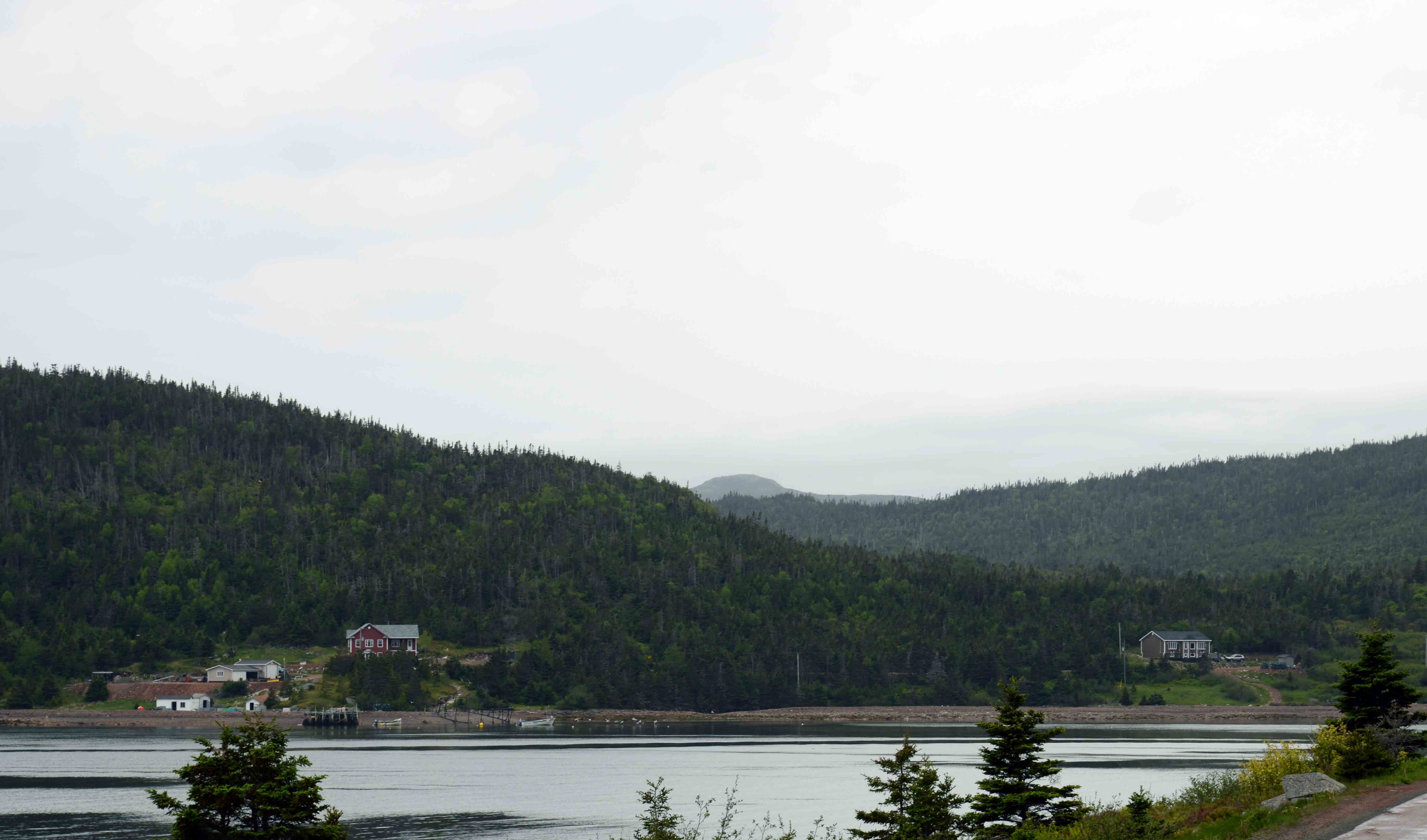
Beyond the Hare Hill, its peak visible onlyfrom certain viewing angles in the harbour is a hill known as Buttercup. It is located at the entrance to Blue Pinion Harbour. The name seems to derive from the common flowering plant ranunculus or buttercup; a bright yellow flower which may be viewed as an enhancement or a weed.  In St. Jacques children would hold a buttercup below the chin of a playmate to determine if that person liked butter.  The answer to the question became evident if there was a yellow reflection cast from the flower to the underside of the playmates chin.  Buttercup Hill is 605 ft. above sea level. It ranks as the 654th highest mountain in Newfoundland and Labrador and the 13,176th highest mountain in Canada.

bungays hill

Bungay’s Hill

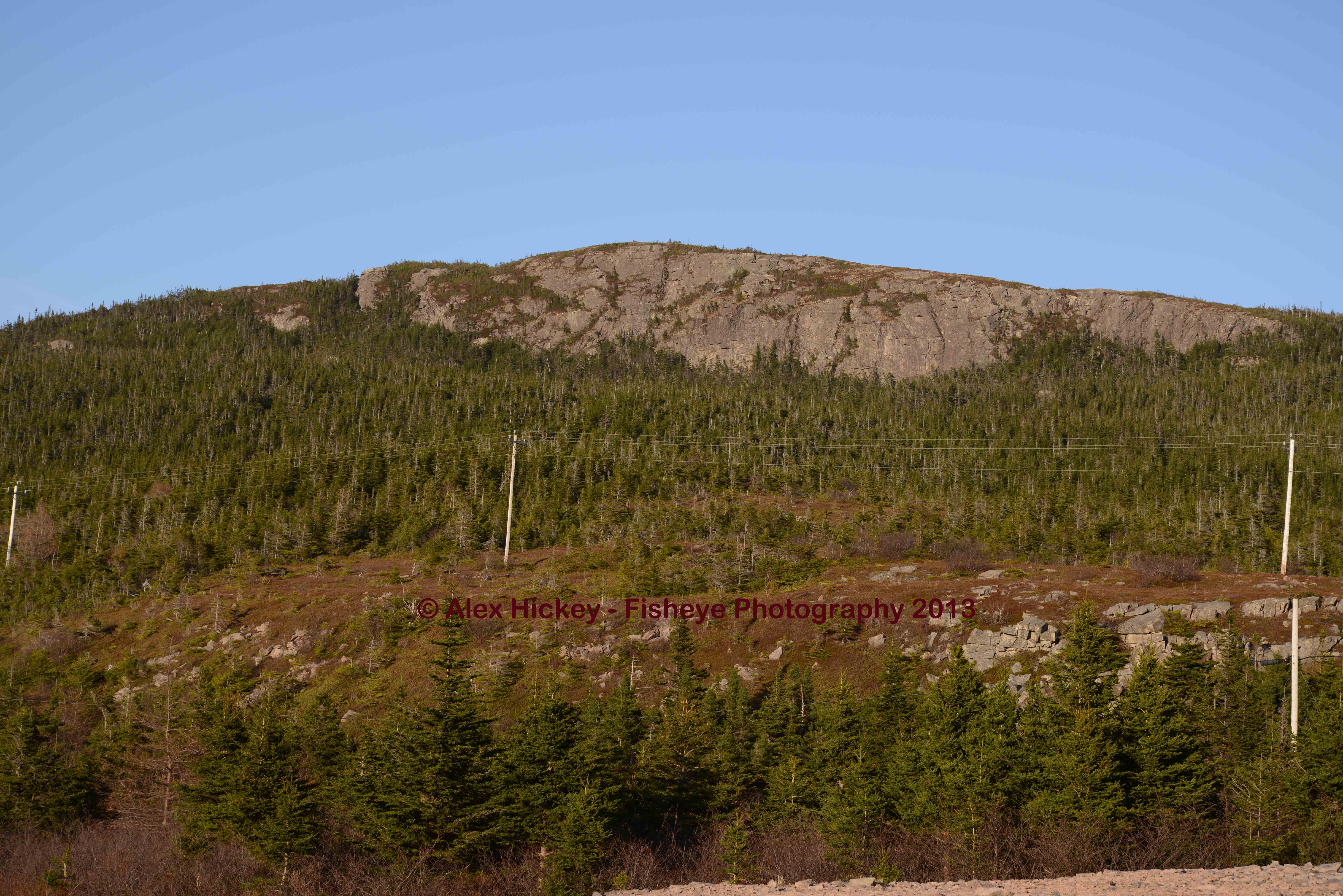
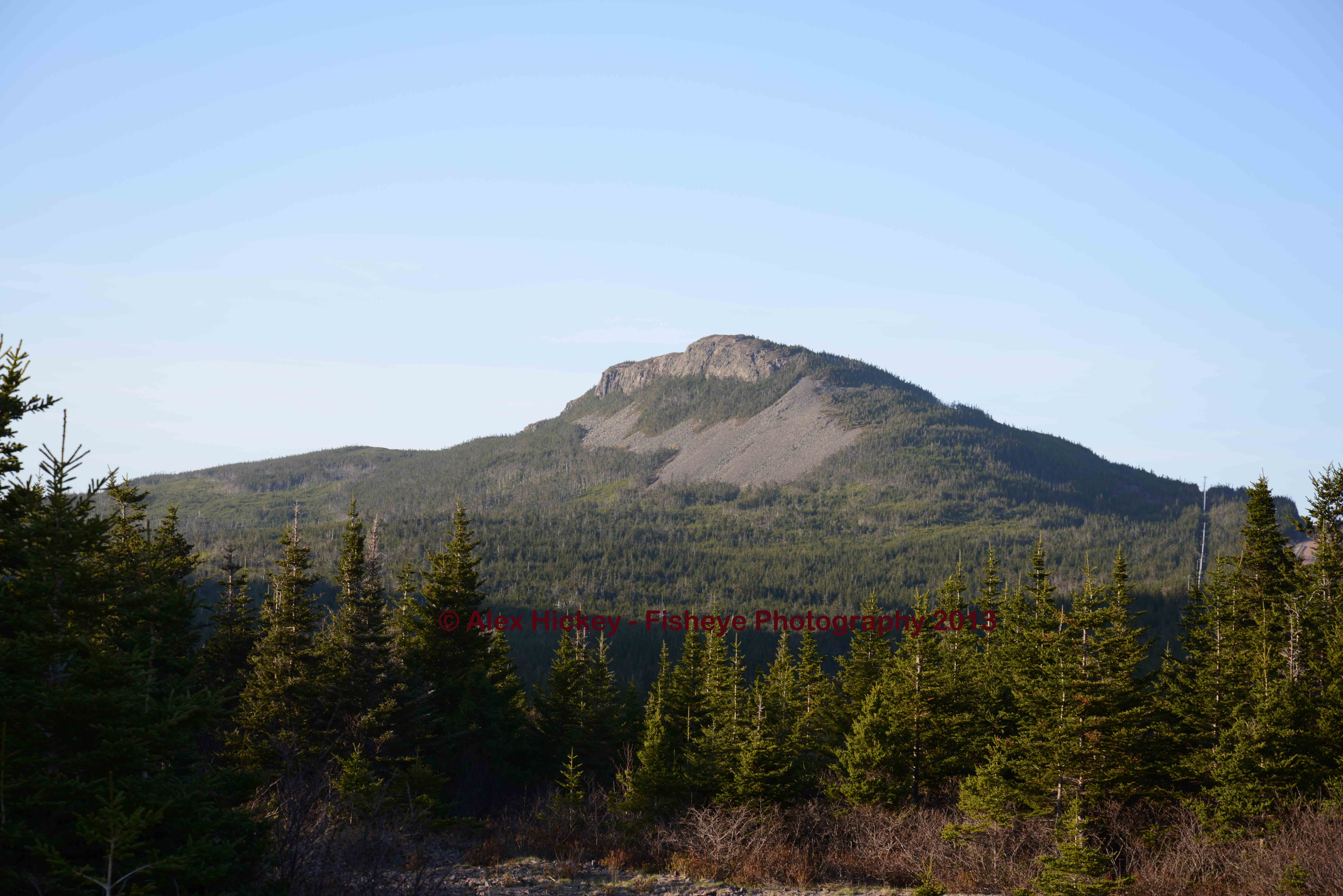
On the north side and set back from the community is Bungay’s Hill. One would expect there to be local history around the person after this hill was named, yet no one seems to know. A magnificent cliff face fronts onto the community with a rocky debris field, properly called talus but locally known as rubble, between the tree line and the top of the hill. The drive to the community of Belleoram takes you up a steady incline as you approach Bungay’s Hill.  This affords a delightful view of the landform as it draws nearer.

bottle hill

Bottle Hill

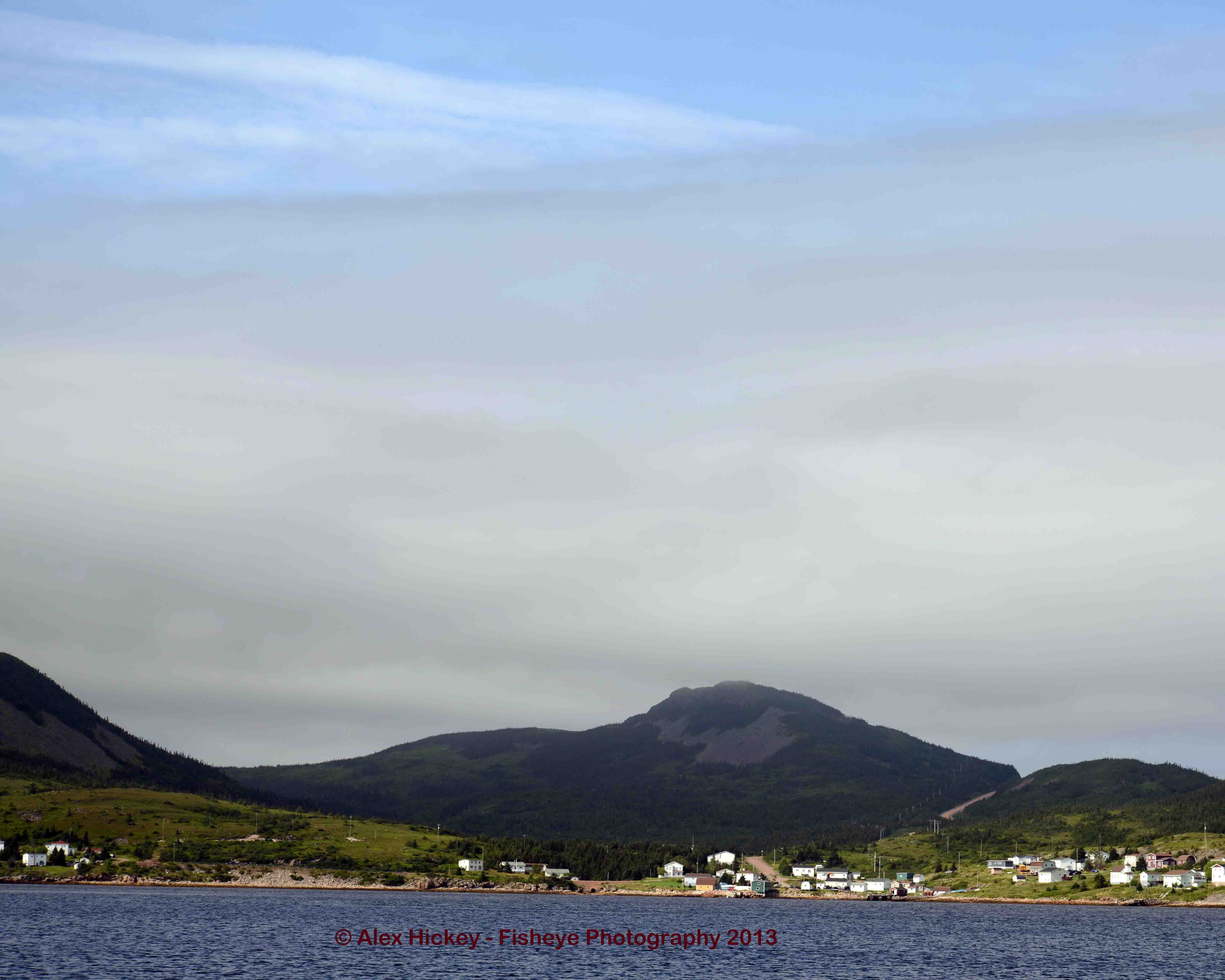
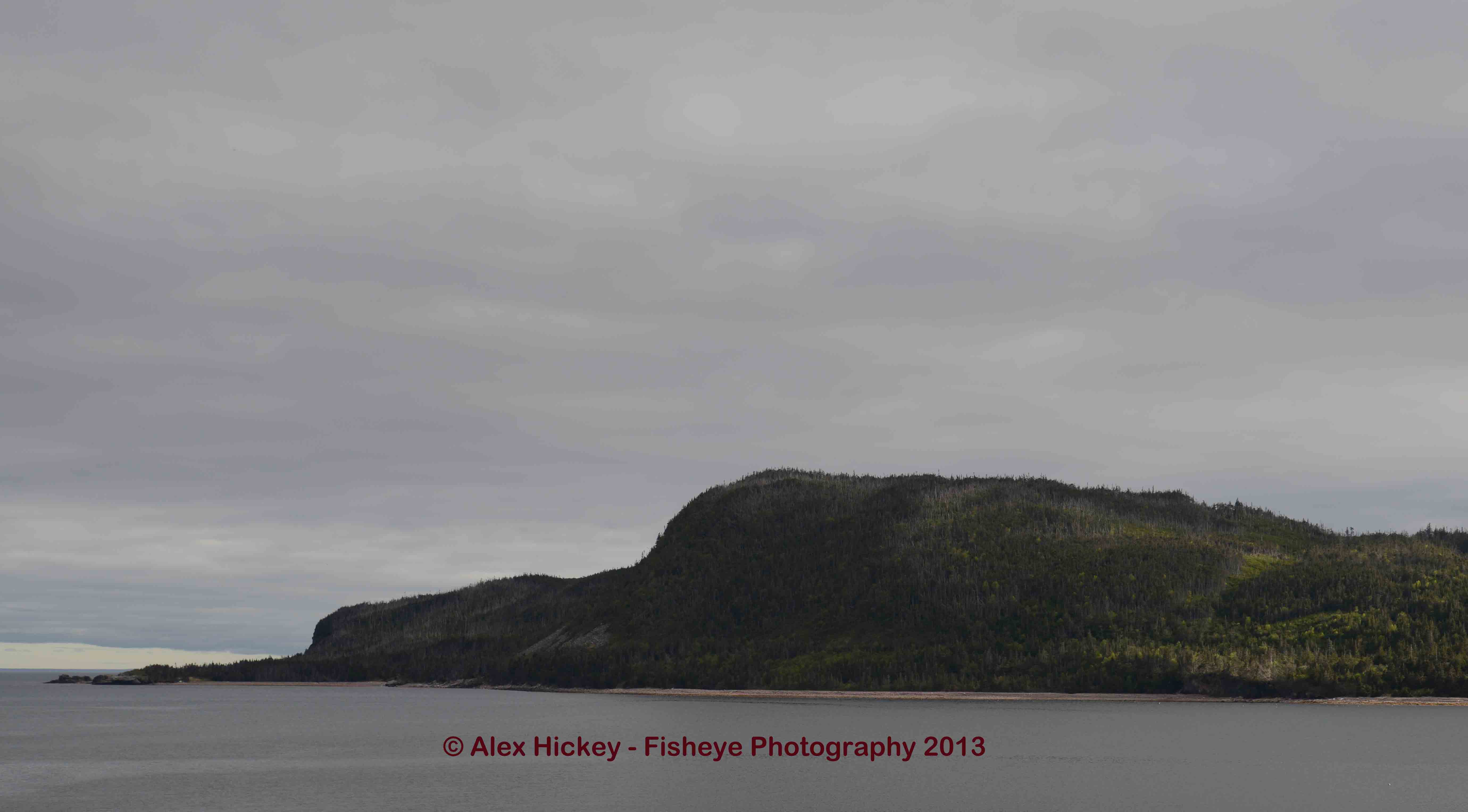
Then there is the hill whose name is even less accessible – Bottle Hill.  Bottle Hill neither resembles a bottle nor has any known connection to glass or glass works. It stands prominently against the western sky and attracts the eye of anyone looking upon the harbour from the east or north. Its green forested slopes of balsam fir and spruce give way to exposed boulders which form a collar around the hill.  At its top is a thin layer of topsoil supporting a variety of berry bushes and low-growing shrubs.  The name Bottle Hill is found in County Cork, Ireland and near Devon, in England. Given that many of the settlers on the South Coast of Newfoundland came from England, who knows; perhaps it was a bit nostalgic to name the hill after a feature back home.  There is also a community in Northern France called La Bouteille (Bottle).  We know the French occupied the harbour for some time in its early history, so who knows.

big hill

Big Hill

Finally we come to Big Hill.  How unassuming can one be naming such a geographic feature?  Big Hill rises gradually from the ocean and extends for about a kilometer northwards; its sides covered with low growth plants and trees. Like Bottle Hill it sports a rocky area on its eastern side.  Should you hike to the top of Big Hill in mid-July and make your way back over the hill you’ll come to a small marshy area which supports the delectable bakeapple berry.  As children we would never pick them because we knew that Mr. Joe Drake would be making a trip up the hill once he felt they were ripe enough to pick.  If you make the trek in August allow a bit more time than normal because of the proliferation of delicious blueberries along the path.  Take a container with you and the trek takes even longer!  September is another time to climb and feast on the tart partridge berries which grow in open spaces.  There is no doubt that it is a big hill.  This becomes obvious to anyone who has climbed its sides and walked its entire length.   The top of this hill gives you a panoramic view of Fortune Bay and all of the surrounding countryside, coupled with a birds-eye view of St. Jacques.  In this case the going up is much harder than the coming down.

st jacques harbour from big hillIf you walk around the harbour of St. Jacques look carefully at the seven hills.  Think about their names and the fact that the names have been there all of your life and for all of the lives of your parents and grand-parents.  Their names will be passed to new generations and long after your name and mine is forgotten folks will still refer to Winterhouse Hill, Bungay’s Hill, Big Hill, Bottle Hill, Buttercup, St. Jacques Hill, and the Hare Hill.

Below is a Google Map view of the seven hills.  Zoom in for a close-up of each hill or zoom out to see the big picture, to view the topography of the hills.

Posted by: alexhickey | May 31, 2013

Almost One Hundred Years Later ©

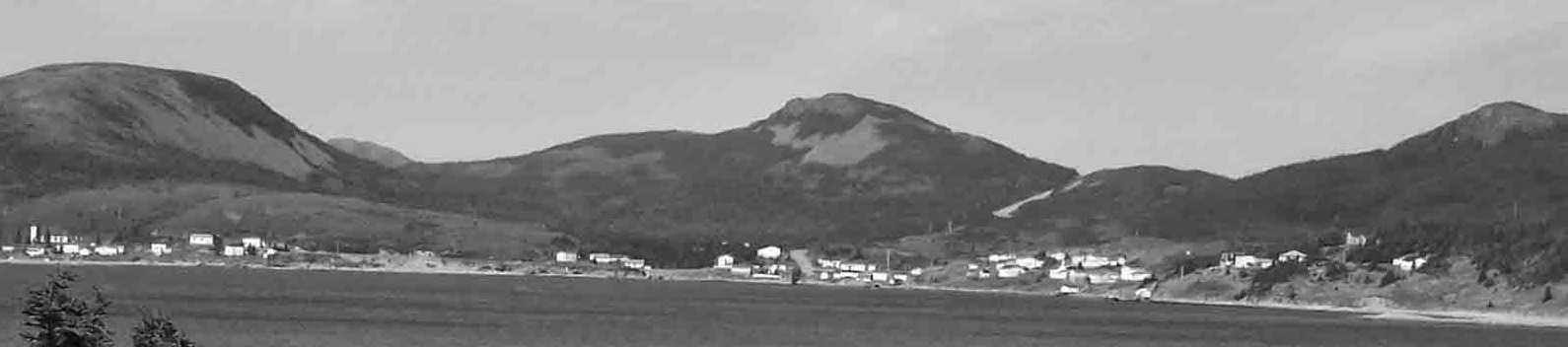
Last year a descendant of the Young family of St. Jacques sent me an old family photograph.  The photo was taken during an afternoon excursion across the harbour on the beach in Louis’s Cove.  It shows a group of people seated on the ground engaged in a picnic.  The picnic took place sometime around 1930.  It is quite an interesting image to explore. The people, the picnic site, the way people were dressed, who they were, and many other things are fascinating.  One of the most interesting things is the background for it shows the northern side of the harbour; that is the portion of the community that runs from the Barachoix Point to that area where the  slipway is now located on the Lower Road.  As you might expect when enlarged the image is somewhat blurry, however, we can see the shapes of buildings and the general lay of the land. Below is that section of the photograph.

northern side of st. jacques c 1930

Northern side of St. Jacques c.1930

On the left of this image we see the vague shape of a house near the bottom.  That house was once lived in by C. Pope and is now lived in by the family of G/J Evans.  To the right and slightly higher in the picture is the old St. Micheal’s and All Angels Anglican School.  Almost directly below that is a house  owned by a member of the Noseworthy family; now owned by R/K Dominix.  Next we can see another house once owned by another member of the Noseworthy family, later by T/ M Stoodley and now by C/S Dodge. Slightly above this house is another one built by J. Johnson from St. Bernards who married N. Noseworthy and is now owned by the family of T/B Lawrence. Look a little further along and your eyes will observe the sharp peak of a house below the road that seems to be perched on the edge of the bank.  This house was also owned by the Noseworthy family but is no longer standing.  Take some time to wander along the roadway over to Pittman’s Brook and beyond.  Try out your historic knowledge of the community and find who lived in the various houses that are visible in the photograph.

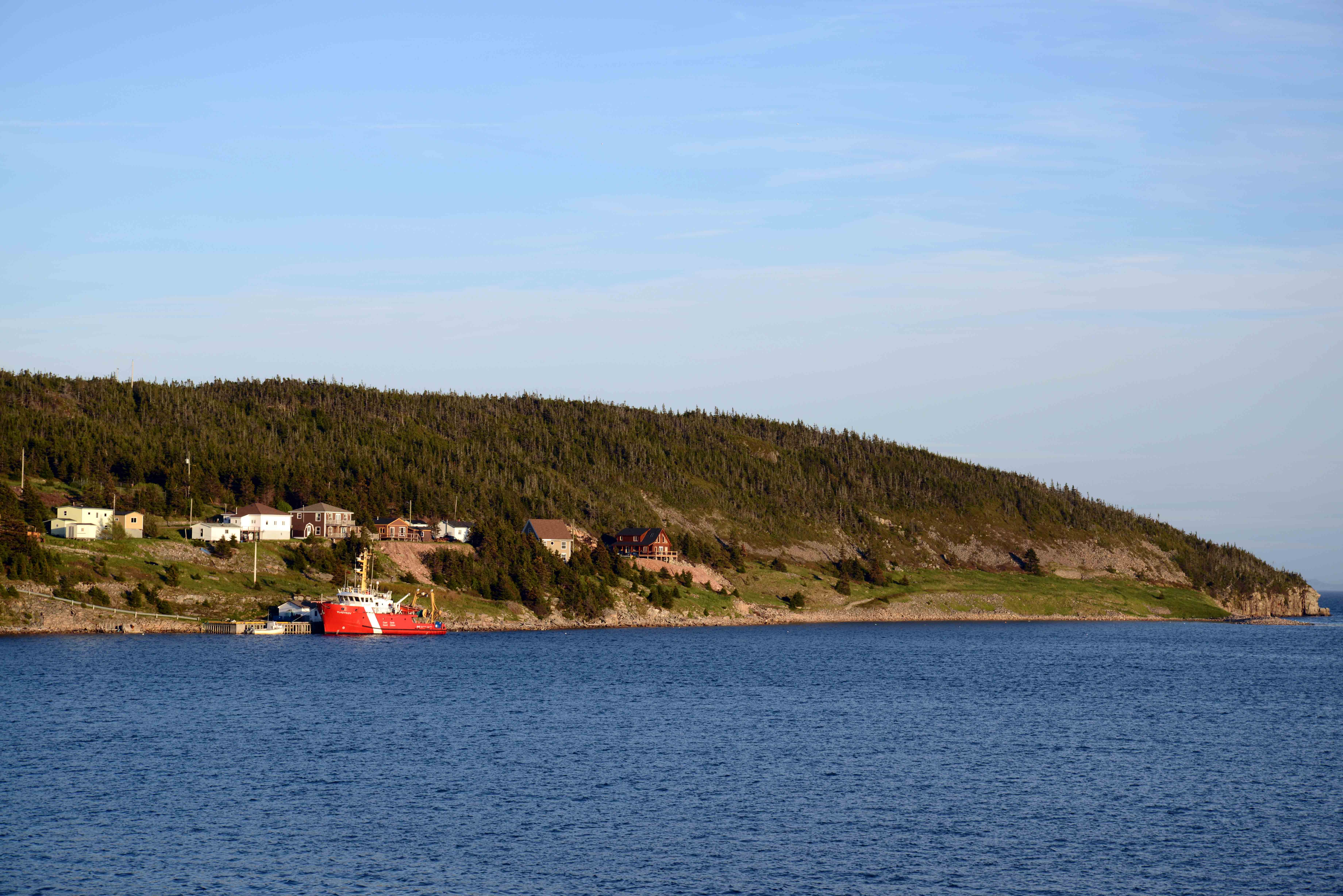
Below is a photograph which I created about five years ago that includes that same section of the community.  We can see Big Hill, Bungay’s Hill and Winterhouse Hill in the background as well as a bit more space than in the older image.  This picture was taken from a slightly different location with a wider angle lens thus more of the harbour is visible.  Take some time to compare both photographs and see how much change has occurred in almost one hundred years.

northern side of st. jacques 2009

Northern side of St. Jacques, 2009

If you have old photographs of St. Jacques which you’d like to share, please send it along to me at stjacquesblog@gmail.com.

Posted by: alexhickey | May 13, 2013

Spring Awakens in St. Jacques ©

Between bursts of sunshine and showers of rain the calendar changes in St. Jacques as elsewhere on the planet, a little later than other parts of Canada.  Temperatures fluctuate from comfortably warm to uncomfortable cold.  An afternoon suitable for sitting on the deck listening to the songbirds swarm the feeders in the trees soon turns colder as the sun reaches the horizon.  A northerly wind coming down from Big Hill is more welcome than a southeasterly at this time of year.  The first brings dry air from the interior; the latter, moist air from the Atlantic Ocean and the ever-present threat of fog.

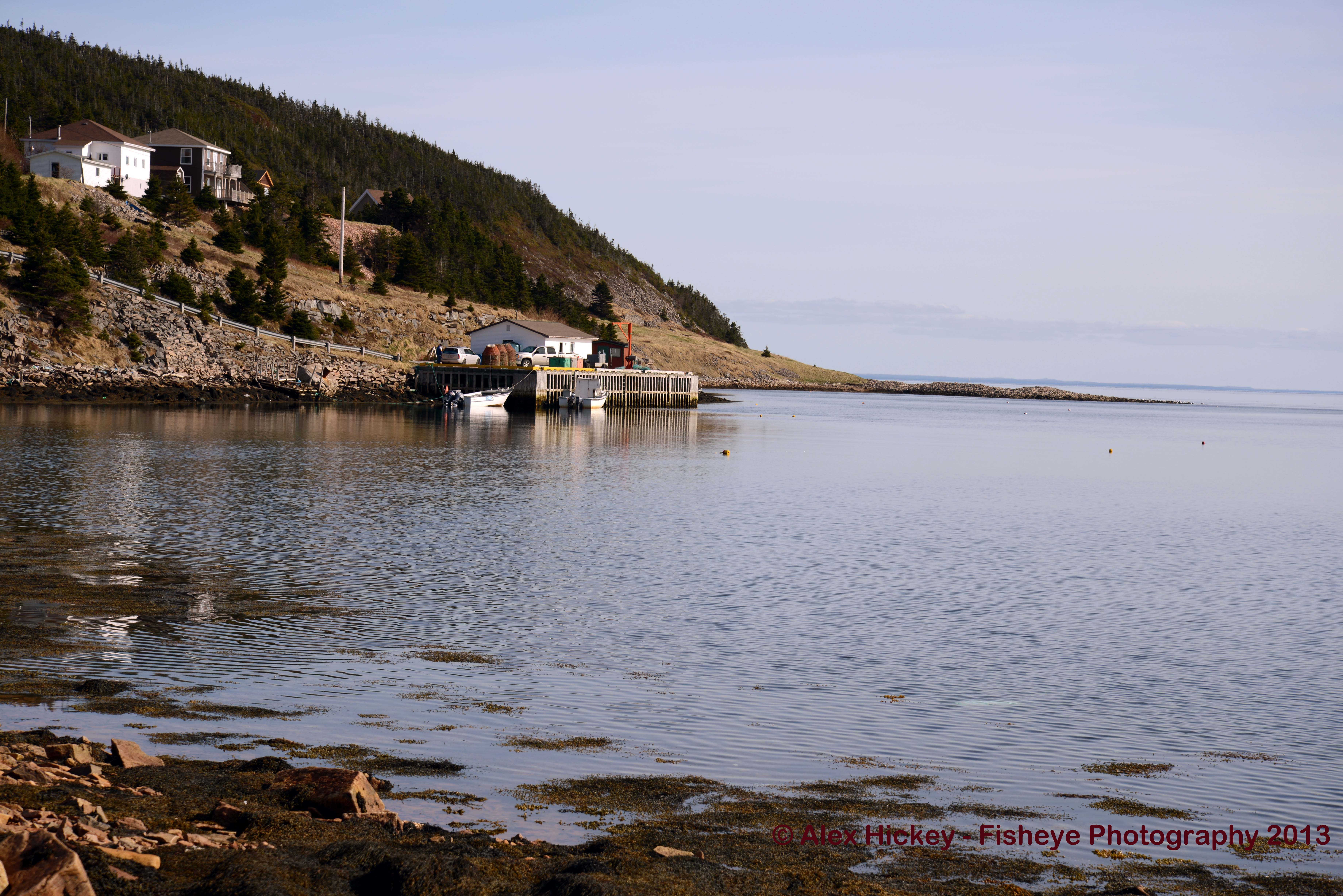
community wharf in st. jacques, newfoundland

Community Wharf, St. Jacques

Down on the community wharf fishers line up to offload their catch of crab for the day.  Trucks with vats of ice come and go as fresh crab heads to processing plants elsewhere on the island.  The fishers take a break then head back into their boats to check lobster traps. For lovers of the crustaceans this is nirvana.  The taste of lobster cooked just hours after coming out of the ocean is almost spiritual in its freshness and flavour.  One can say the same for crab legs steamed in a pot on the stove.  Ah, the flavour of spring!

Seagulls alert the community to the time when fishers begin hauling their lobster pots.  Hundreds of them flock overhead, watching, waiting, anticipating there will be discarded scraps of old bait, only to be disappointed since fishers will not bait the grounds where they are trying to lure lobsters into a pot.  The ritual repeats itself each day, their calling and squabbling blending in complete discord, bordering on dissonance.  Occasionally, a bald eagle glides through the air surveying the scene below then passes on the party, returning to a perch on the side of Big Hill.

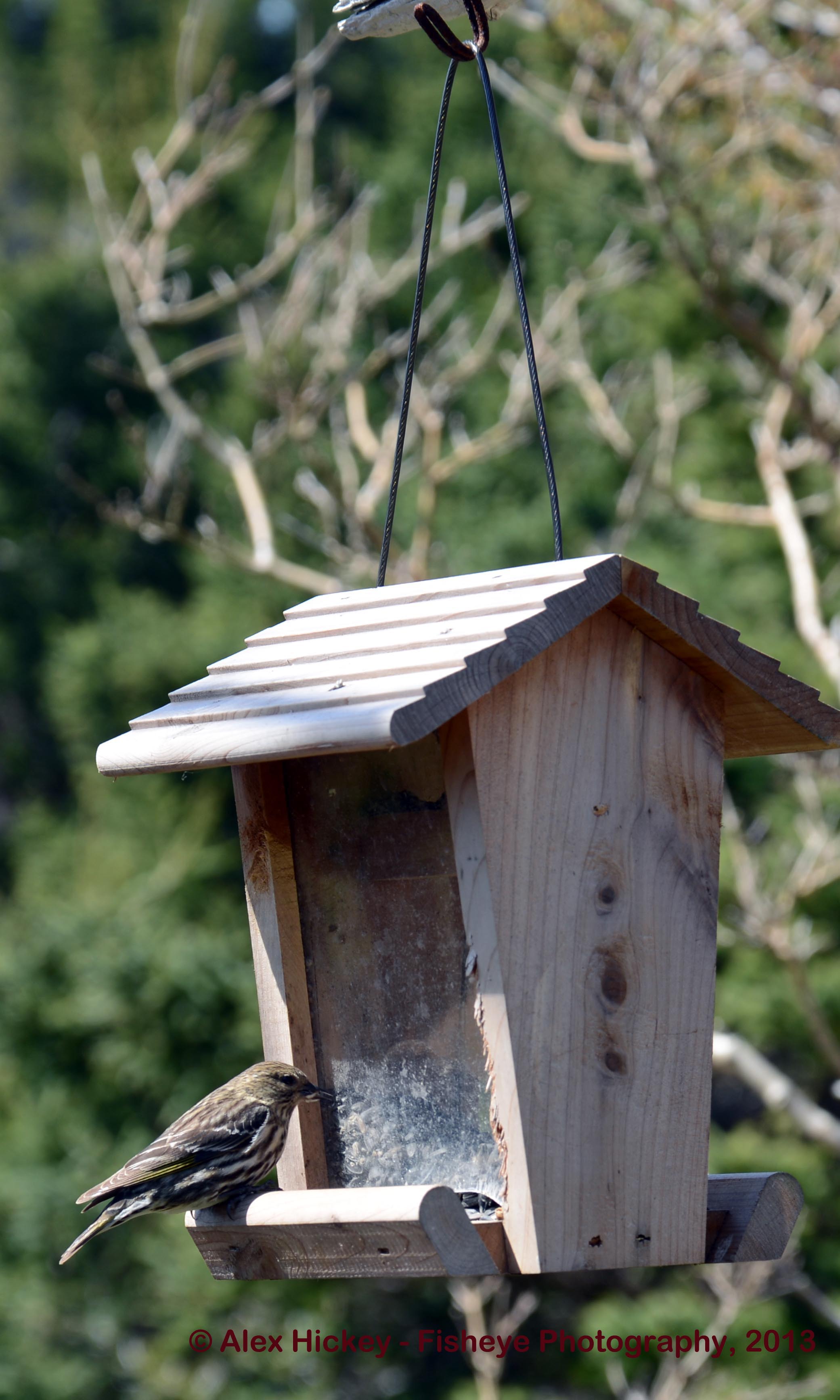
finch at backyard feeder

Finch at Backyard Feeder

Songbirds have returned, bringing the sounds of spring.  Mornings are filled with nature’s Songbird Idol competition in every backyard with a bird feeder.  Robins wander through the blades of green grass now pushing skyward, their heads cocked to one side seeking a morning snack.  American goldfinches and Juncos feed together, occasionally having a disagreement which leads to a flurry of wings in the air. Now and then a small feather drifts to the ground.  Mating rituals are being played out minute-by-minute.  The male purple finch, bedecked in robes of red, stands watch over his harem of females.  White throated sparrows fight for time at the feeder, intimidating the smaller birds.  In turn, the Common Grackles disperse all of them when they decide it’s time for a snack.

Flowers, shrubs and trees emerge ever so slowly during cool days then burst forth after a day of warm sunshine.  Leaves on the lilac, maple, balsam poplars, ash, birch and choke cherry trees are forming and adding welcome

daffodils in bloom, st. jacques, newfoundland

Daffodils in Bloom

additions to the bare branches of winter.  Forsythias get yellower each day. The columbine, Jacobs ladder, geraniums, tulips, bleeding hearts, monkshood, hostas, ladies mantles, forget-me-nots and hydrangeas are all working to their fullest to make themselves noticeable.   Rhubarb, chives and parsley are all getting closer to the dinner table.  They are all contributing to the colour of spring.

An early morning visitor leaves traces of its presence like batches of brown beads throughout the backyard.  Rabbits tend not to stay much beyond nine in the morning and return again after five in the afternoon.  This one has a number of stops as it makes it way throughout the yard; now and then stretching up to nibble on the low branches of a spruce tree. During those morning hours when the rabbit is visiting, the ocean sends its wondrous scent to shore, blending with the aroma of spruce and fir trees.  Soon the flowering plants will add their specialties and we will have the complete smell of spring.

After a couple of days of rain the water level in St. Jacques Pond has risen, adding to the flow over Pitman’s Brook Falls.  White water, foaming and spraying in all directions, flows day and night over the step-like rock formations which make up the falls, on down to the harbour to complete its cycle.  Stand near the Falls and you will feel the miniature drops of water land gently on your face, soothingly washing away the last traces of winter. That is the feel of spring.

Posted by: alexhickey | May 4, 2013

Burnsie Lawrence at 80 ©

Burnsie Lawrence

burnsie-blog-postHow many octogenarians do you know? Not many, I bet; however you probably know more than your grandparents did. Overall, people are living longer and maintaining a more active lifestyle than previous generations. A fine example of there being life after eighty is Burnsie Lawrence of St. Jacques.

This spring she crossed the threshold of having lived for eighty years in St. Jacques, the town in which she was born.  With that distinction she joins approximately 117,000  other octogenarians in Canada.  In addition to other qualities this milestone places her in some unique company. Born in that same year were country singer Willie Nelson and comedienne Carol Burnett.

It was a Thursday when she breathed for the first time the salt scented breeze that finds its way in from Fortune Bay.  That was one year before Newfoundland lost its independence to Commission of Government, six years before the outbreak of World War II, fifteen years before she left school and twenty years before she would marry J. Thomas Lawrence.

If you ask Emma Amelia Burns Lawrence (Skinner) why she is so uniquely called “Burnsie” she will be burnsie-as-childdelighted to tell you the story of how she was named for a nurse, Amelia Burns, who was working with the local doctor, Dr. Conrad Fitz-Gerald who assisted with her birth.  Amelia Burns was a relative of Keturah Fitz-Gerald (Partridge), wife of Dr. Fitz-Gerald.  Amelia was born on Saturday, February 17, 1872 in Cape Breton. She married Samuel Drake Burns with whom she had two children; Gladys Anna and George Richard.  It was some time after her husband died in 1924 that she came to Newfoundland to work in Fortune Bay as a nurse.  Amelia Burns passed away on November 9th 1955 in North Sydney, Cape Breton, Nova Scotia.  Her first name Amelia has now been around for one hundred and forty one years and her married name Burns for approximately one hundred and thirteen years. [Ancestra.ca] The next time you speak to Burnsie you’ll remember Nurse Amelia Burns.

Read about Burnsie’s experiences growing up in St. Jacques and her involvement in the community in this article, Memories of St. Jacques, by Clayton Hunt of The Coaster which was carried by The Weekend Telegram on August 30, 2008.  In that article you will read about why she left school in grade 10, how she first worked as a domestic servant, then a store clerk and how she met her future husband and the unique experience that marriage brought to her life.

Visit Burnsie at her home in St. Jacques and you will notice a Captain’s hat displayed prominently in her living room. Ask and you will hear of the love of her life; a man who first went to sea as a teenage deckhand on sailing schooners to the Grand Banks and rose to captain of a variety of trawlers fishing out of Hr. Breton.  At the end of his career he was ‘Skipper’ on the Zweelo, a state-of-the art stern trawler owned by Fishery Products. Captain Tom Lawrence was a high liner fisherman and a well-respected member of his home community.  His untimely death in 1987 at age fifty-seven was a family tragedy and a significant loss to the community.

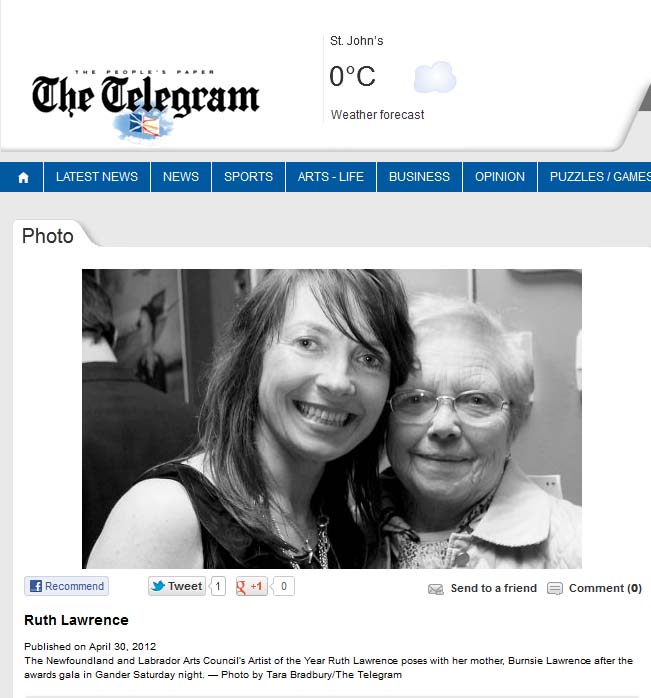
Ruth and Burnsie at Arts Awards TelegramRaising a family in a small rural community is both a challenge and reason to celebrate. Actor and filmmaker Ruth Lawrence isn’t shy about sharing the influence her mother has had on her development as an artist and woman. In an interview with the Newfoundland and Labrador Arts Council following being awarded Artist of the Year in Gander, Newfoundland, on April, 2012, she had this to say in response to the following question:

NLAC: What was accepting the award in Gander like for you with your mom being there?

Ruth Lawrence: It was a wonderful moment; late that afternoon my sister Hazel sent me a text saying that she was on her way from St. Jacques.  I remember saying to Des (Walsh), what if Mom is with her?  I was a little unnerved, I wasn’t expecting to win.

But when they said my name, she leapt to her feet beside me.  When I was in my early 20’s she observed, “I don’t know what happened to you; you don’t have any pride.” She was referring to my distinctive wardrobe, as I recall.  But, I disproved her completely that night.  She’s 79 so I was pretty proud to have her with me.  Burnsie Lawrence really is a remarkable woman.  She taught me about community, there’s no doubt. I was happy to share that moment of pride.

You can read the entire interview on the Newfoundland and Labrador Arts Council Web Site  During her acceptance speech at the Arts Awards Ruth commented that a great deal of her mother shows up in her acting and film work whether her mother is aware of it or not.

The town of St. Jacques was no stranger to The Great Depression of the 1930’s into which Burnsie was born.   Living conditions were determined by resources at hand and opportunity to earn income. People who lived through that event tend to have a deep appreciation for how tough and challenging life can be at times.  Burnsie is certainly one of these.  She has risen to whatever challenges have come her way throughout her eighty years and today can look back on a family whose members have touched all continents of this earth.  She can look out the window and see her hills of home and reflect in those quiet moments on all those people who have passed through her life and also called these hills home.

In celebrating this new octogenarian, this eightieth birthday, we celebrate her life, our life and the lives of all around us.  We celebrate the existence of human kind and its uniqueness on this planet while focusing on the single person who has reached this milestone – Emma Amelia Burns Lawrence.

Posted by: alexhickey | April 18, 2013

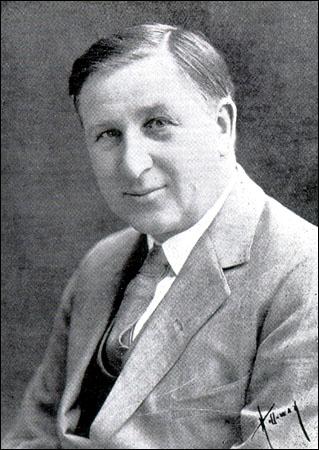
Dr. Vince Burke

Dr. Vince Burke

Vincent P. Burke was born in St. Jacques on August 3, 1878 to Patrick Isaac and Alice Burke. He was educated in St. John’s at St. Bonaventure’s College and at Columbia University, New York. He was the first Newfoundlander to be a licensed superintendent of schools in New York. At the age of nineteen he became principal of the High School in Torbay.

Burke was appointed Superintendent of Roman Catholic Schools in 1899 when he was only 21 years old.  The University of Ottawa awarded him an Honourary Doctor of Laws degree in 1914 for his work in education in Newfoundland.

He became Newfoundland’s first Deputy Minister of Education in 1920.  Dr. Burke was passionate in pursuing the establishment of a University in Newfoundland.  He went to New York and arranged a grant of $300,000 from the Carnegie Corporation which started what is now Memorial University. He chaired the first meeting of Memorial’s first Board of Governors in 1925 when the college was established and was chairman of the board from 1936 to 1951.

Burke was named to the Order of the British Empire in 1917 for his work during World War I. He became an officer in the Order in 1931 and Commander of the British Empire in 1946. His work was also recognized by the Vatican when he was knighted by the Pope in 1940.

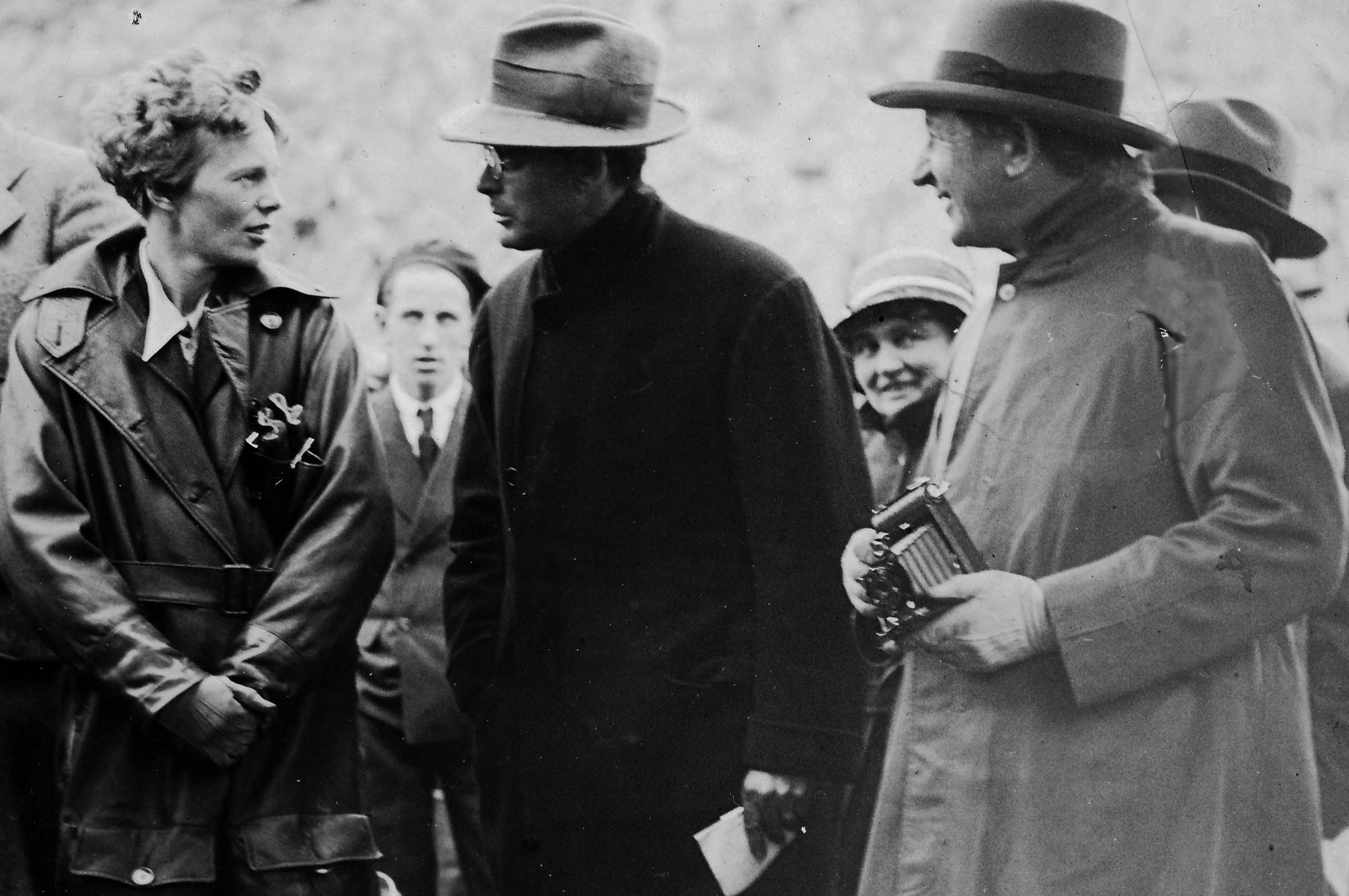
Amelia Earhart, Unknown man, Vince Burke

Dr. Burke, on the far right, was one of the dignitaries representing the Newfoundland government who met Amelia Earhart in Harbour Grace in 1932 prior to her solo transatlantic flight from Harbour Grace, Newfoundland to Ireland.

He was appointed as Newfoundland’s first Senator to the Canadian Senate by Prime Minister Louis St. Laurent on January 25, 1950 and served as a Liberal senator until his death in late 1953 after having been ill for two years.

Burke House residence on the main campus is named after Dr. Burke.  Dr. Burke is considered one of the fathers of Memorial University of Newfoundland. Read about this in an excerpt from The Nine Lives of Paton College by S. J. Carew and in an article, The Foundation of Memorial College by Brother G.R. Bellows.  The Government of Newfoundland and Labrador awards the Dr. Vince Burke Scholarship in his memory each year.

Posted by: alexhickey | March 11, 2013

Marion Fiander ©

Marion Fiander

Marion and Ralph Fiander

There are many perspectives on Country Music. This is what country singer Faith Hill has to say.

 Country music is the people’s music. It just speaks about real life and about truth and it tells things how they really are.  – Faith Hill

Gary Allan recently recorded a song titled, Life Ain`t Always Beautiful, which demonstrates how well country music is able to capture all sides of life:

Life ain’t always beautiful
Sometimes it’s just plain hard
Life can knock you down, it can break your heart
But the struggles makes you stronger
And the changes make you wise
And happiness has its own way of takin’ its sweet time

Gary Allan

On the western side of St. Jacques harbour is a pebble beach where our earliest settlers dried codfish and hauled their boats during stormy weather. The beach extends from the Barachoix along the shoreline halfway to Louis’s Cove.  These days a few fishermen still use it.  During warm summer evenings it is a popular location for bonfires that reflect their flames in the windows of houses across the harbour.

It was here on the beachhead that Marion Fiander wandered as a child and took in the immensity of St. Jacques harbour and its surrounding hills.  Given the love for singing she exhibited later in life one can only assume that even then there was music in her soul the words of familiar songs falling from her lips.  There was evidence that Marion felt the entertainer within.  Throughput the years she sang at community concerts and at private gatherings when opportunities arose.

By the time Marion formally performed in public she had lived through the life experiences of marriage and children.  She knew firsthand many of the subjects that country song writers draw upon to capture our emotions and thoughts.  She knew the song book of such country legends as Kitty Wells and Loretta Lynn and sang from them frequently.

Along with her husband Ralph, Marion formed the duo which they called Country Dream.  I had the privilege of shooting some publicity images for them early in their recording career.  I still have a poster from that period of their lives together.

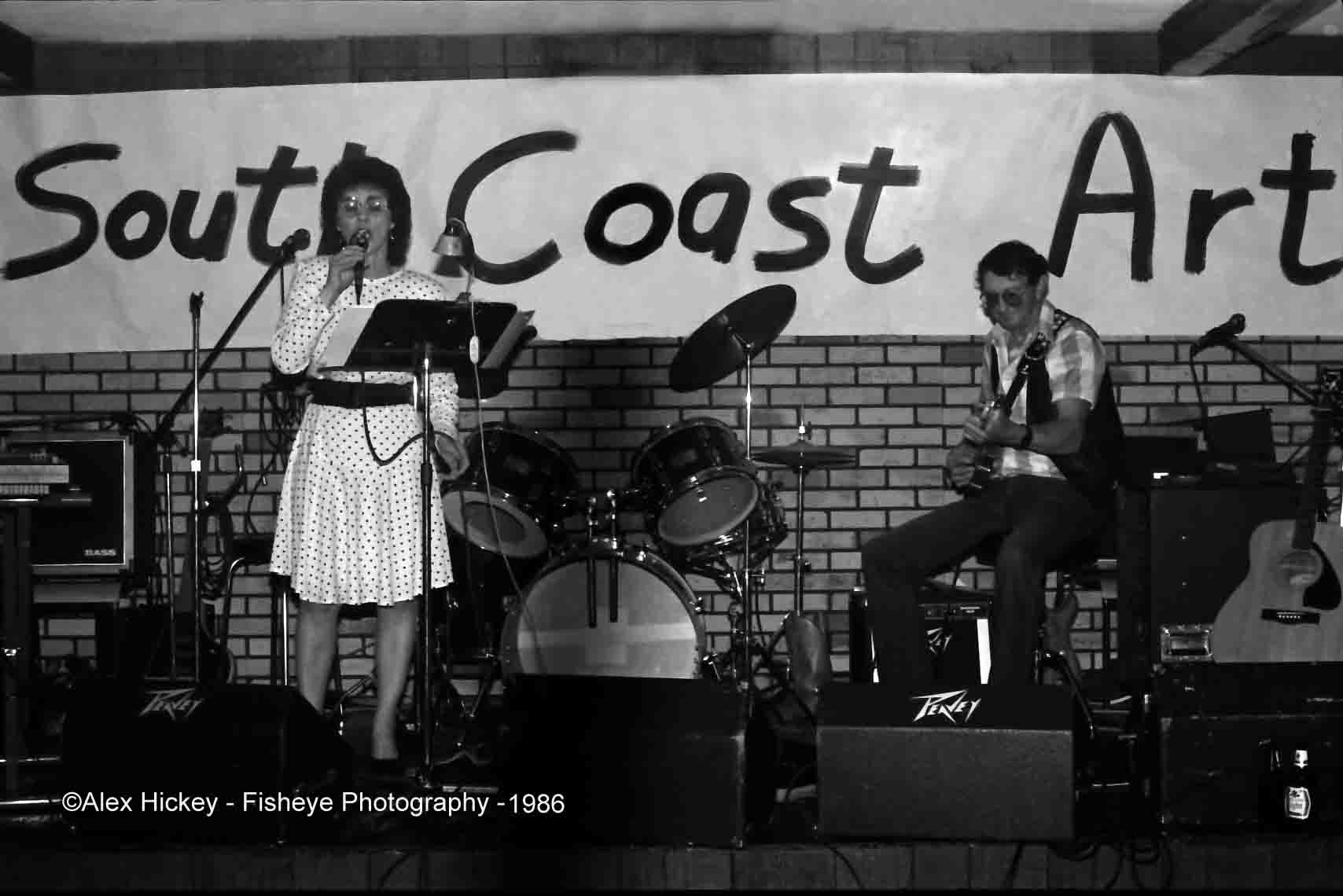
When a small group of us decided to establish an Arts Community on the south coast that would support growth in all art forms along the coast, one of the first performers to volunteer their time in support of that initiative was Marion and Ralph.  In February 1986 many local performers volunteered for a fundraiser for the newly formed South Coast Arts Community.  Marian and Ralph were there to contribute their musical and vocal talents.

marion-ralph 1986-lorez2

To the best of my knowledge she recorded ten albums.  Her first efforts were at Clode Sound Recording Studio in Stephenville with Claude Caines and Neil Bishop.  When Sim Savory opened his recording studio in Belleoram Country Dream was regularly at the microphone.  The albums are listed here from most recent to first.

  1. Love of a Sailor, 2000
  2. Marion Fiander Sings Pure Country, 1999
  3. Marion Fiander Sings Kitty Wells Hits, 1997
  4. Take Time for Jesus, 1995
  5. Small Town Girl, 1993
  6. Traveling Around, 1992
  7. Good Hearted Newfoundland Girl, 1991
  8. That Man of Mine, 1989
  9. Just for You, 1987
  10. Fisherman’s Daughter, 1986
  11. Gospel Favourites

Country Dream grew to heights of popularity that surprised even Marion.  Throughout rural Newfoundland their CD’s flew off the shelves and people flocked to their performances.   Country Dream spent many long days and nights on the road as has been a necessary fact of life for anyone seriously building a musical career.

To everything there is a time and the disappearance of live performance venues such as nightclubs and lounges made it more difficult to reach audiences.  Instead of slowing down Marion shifted gears and focused instead on recording and marketing her music through CD sales which she became quite adept at doing.  Too soon, it became evident that there was a health issue to contend with and Marion decided to withdraw from the world of recording and performing.

In recent years she has resided in Ontario where she sought medical treatment and where most of her children reside. During the 2012 Come Home Year in St. Jacques Ralph Fiander was interviewed by The Coaster for an article titled Back Home Again. He had this to say:

We moved to Ontario from St. Jacques seven years ago to be with our family as my wife has Parkinson’s. We thought she would receive better treatment in Ontario but in the end I don’t think it has made great deal of difference in her condition. I was home three years ago and this time around my four grandchildren bought an air ticket for me to come back for the 2012 Come Home Year event. This activity here today brings back a lot of memories as my wife (Marion) and I played in number of these festivals years ago.

On March 09, 2013 we awakened to the sad news that she had passed away.   Though her voice hasn’t been heard in live performance for some time I can still recall the times she performed on stage at the South Coast Arts Festival and at the after parties in the Community Centre in St. Jacques.

Sim Savory  video taped one of her recording session at Sim’s Studio in Belleoram.  You can watch and listen to her sing in the clips below:

Small Town Girl

Coat of Many Colours

Beyond the Horizon

One Day at a Time

Just to be With You

« Newer Posts - Older Posts »

Categories